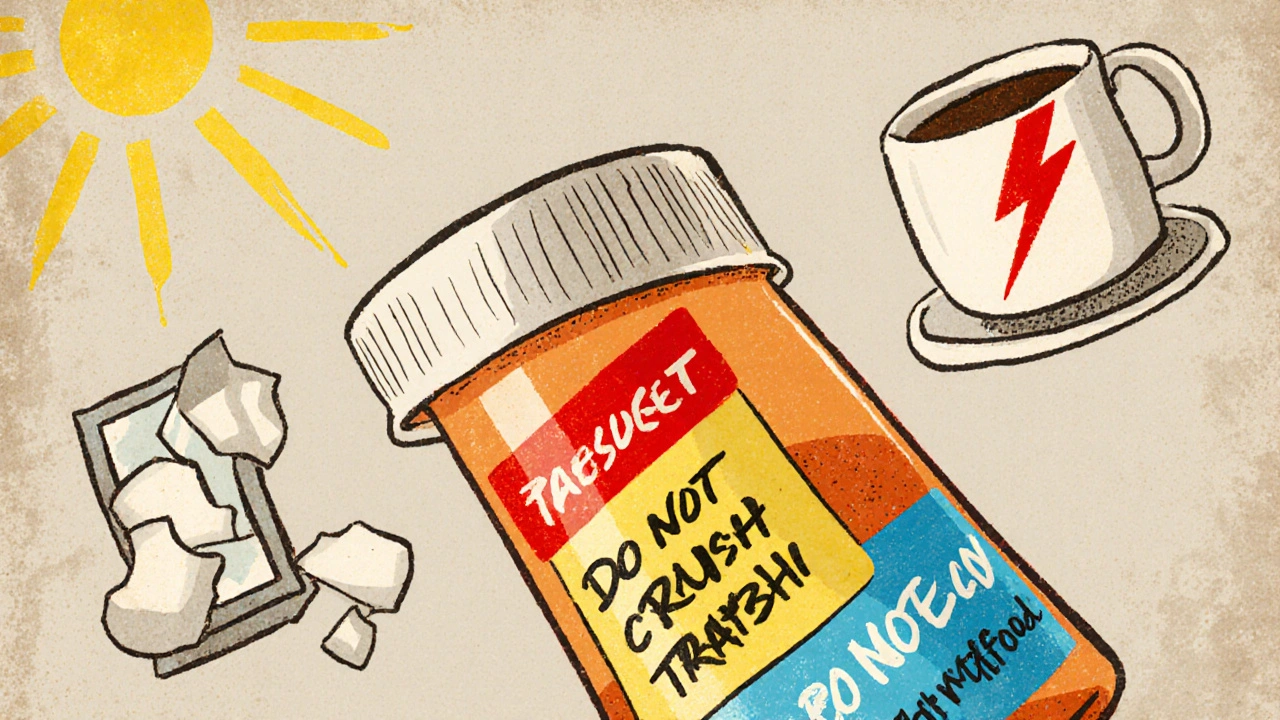
Prescription Label Warnings: What You Need to Know Before Taking Your Medicine
When you pick up a prescription, the prescription label warnings, clear, legally required instructions printed on your medicine bottle that tell you how to use it safely and what dangers to watch for. Also known as medication safety labels, these warnings are your first and most important line of defense against harmful mistakes. They’re not just legal paperwork—they’re life-saving notes written in plain language so you don’t end up in the ER because you mixed your pills with grapefruit juice or took too much too soon.
These labels connect directly to other critical health concepts like medication safety, the practice of using drugs correctly to avoid harm, overdose, or dangerous interactions, and drug side effects, unintended reactions that can range from mild drowsiness to life-threatening organ damage. You’ll also see references to pharmacy instructions, the specific directions your pharmacist gives you based on your health history, other meds, and allergies. These aren’t separate topics—they’re all parts of the same system. A warning about alcohol? That’s tied to side effects. A note about taking it on an empty stomach? That’s part of pharmacy instructions. Ignore one, and you risk breaking the whole chain.
Most people glance at the label, see their name, and toss it in the pill organizer. But the real danger isn’t forgetting to take your pill—it’s taking it wrong. The prescription label warnings tell you when to call your doctor, what foods to avoid, which other drugs can turn your medicine toxic, and even how to store it so it doesn’t lose strength. That tiny note about "may cause dizziness"? That’s why you shouldn’t drive after taking it. The warning about "do not crush"? That’s because the pill’s coating controls how fast the drug enters your body. Crush it, and you could overdose. These aren’t guesses—they’re based on real cases, clinical trials, and FDA reports.
Our collection dives into the real-world impact of these labels. You’ll find posts on how certain drugs like Timolol require regular eye exams to catch side effects early, how Beers Criteria flag dangerous meds for older adults, and how desloratadine can quietly fog your mind. You’ll see how tracking expiration dates keeps your cabinet safe, how immunosuppressants need constant lab checks, and why some allergy pills are safer than others for your brain. These aren’t abstract ideas—they’re stories of people who missed the label, and others who read it closely and stayed healthy.
By the time you finish reading, you’ll know exactly what to look for on every prescription bottle—not just to follow the rules, but to understand why they exist. You’ll spot red flags before they become emergencies. And you’ll stop treating your meds like mystery pills. These warnings are your right. Knowing how to read them? That’s your power.
Prescription label warnings are life-saving instructions-but most people don’t understand them. Learn what black box warnings, color-coded stickers, and phrases like 'do not crush' really mean, and how to avoid dangerous mistakes.