Radioactive Iodine: What It Is, How It's Used, and What You Need to Know
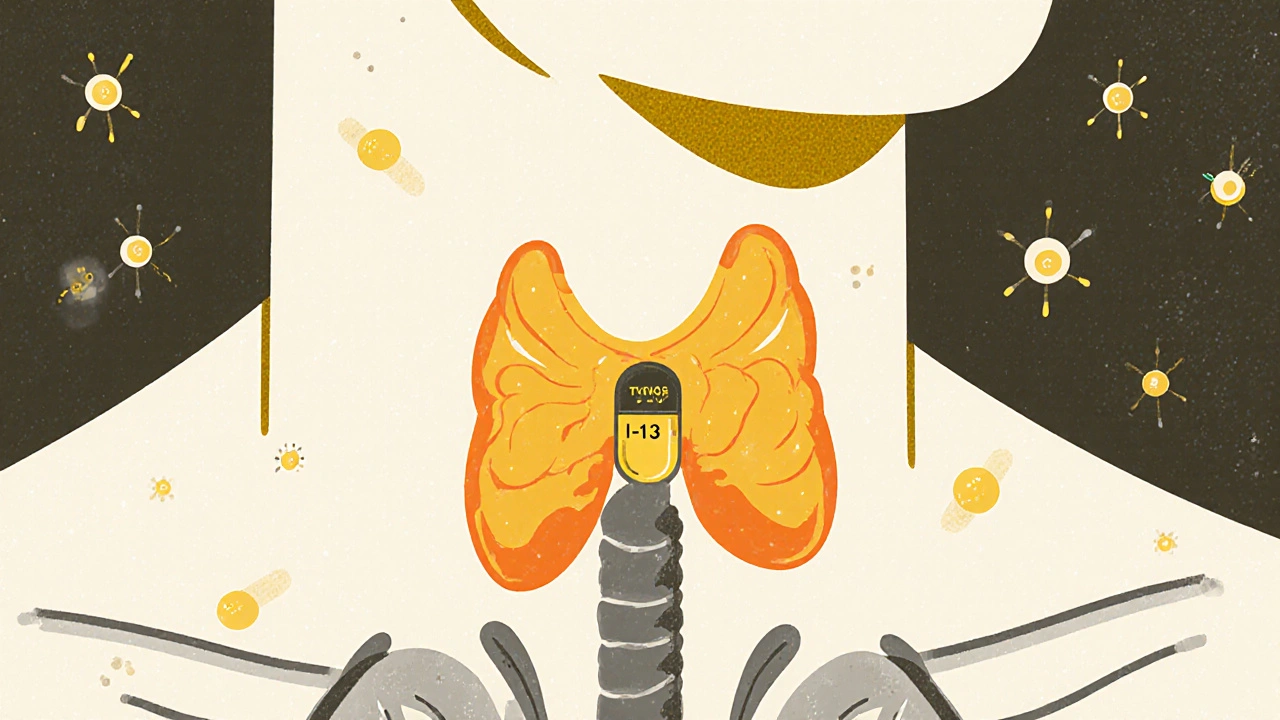
When your thyroid goes haywire—whether it's overactive, cancerous, or just not functioning right—radioactive iodine, a targeted form of radiation used to destroy thyroid tissue without surgery. Also known as iodine-131, it's one of the most precise tools in nuclear medicine. Unlike external radiation, it travels straight to your thyroid because your body can’t tell the difference between regular iodine and the radioactive kind. That’s why it’s so effective: it homes in on the problem and leaves the rest of you mostly untouched.
This treatment isn’t just for cancer. It’s also used for hyperthyroidism, a condition where the thyroid makes too much hormone, especially when meds or surgery aren’t the best fit. For people with Graves’ disease or toxic nodules, radioactive iodine shuts down the overactive cells. And for those with thyroid cancer, a type of cancer that often responds well to targeted radiation, it’s a standard follow-up after surgery to zap any leftover cancer cells. The science is solid—over 80% of thyroid cancer patients get it, and it’s been used safely for more than 70 years.
But it’s not simple. You can’t eat seafood, take iodine supplements, or even use certain cough syrups before treatment—your thyroid needs to be starving for iodine so it hungrily sucks up the radioactive kind. After the dose, you’ll need to avoid close contact with others for a few days, especially kids and pregnant people. You’ll flush radiation out through your pee, sweat, and saliva. It’s not dangerous if you follow the rules, but you can’t just go back to normal the next day. Most people feel fine after a week, but some get a sore throat, dry mouth, or changes in taste. A few end up with an underactive thyroid afterward—which is actually the goal in many cases, because it’s easier to manage with a daily pill than with an overactive gland.
What you won’t find in every doctor’s office is the full picture. Some patients get scared by the word "radiation." Others assume it’s a miracle cure. The truth? It’s a tool. Sometimes it fixes things. Sometimes it creates new problems you have to manage. The posts below show you what really happens—from how pharmacists explain the safety steps, to how people adjust their lives after treatment, to what side effects show up weeks later. You’ll see real stories about preparing for the dose, dealing with isolation, and what to do when your thyroid stops working after the radiation. No fluff. No marketing. Just what you need to know before you say yes—or no—to radioactive iodine.
Thyroid cancer is highly treatable, with most patients surviving long-term. Learn about the four main types, how radioactive iodine therapy works, what thyroidectomy involves, and what life looks like after treatment.