
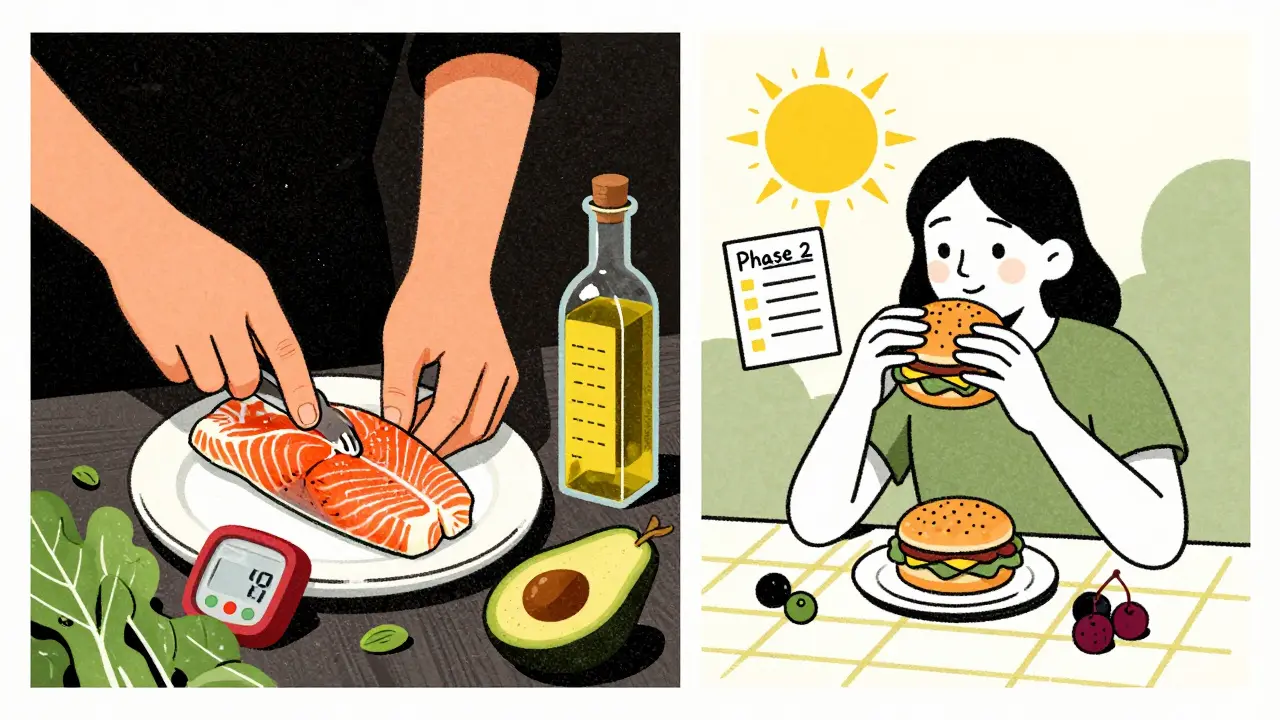
When you’re trying to lose weight and tired of counting calories, low-carb diets like keto and Atkins pop up everywhere. They promise quick results, fewer cravings, and even better blood sugar control. But which one actually works better-and which one can you stick with for more than a few months?
What’s the Real Difference Between Keto and Atkins?
At first glance, both diets look the same: cut carbs, eat more fat, lose weight. But the way they do it is totally different.
The ketogenic diet was invented in the 1920s to treat epilepsy. It’s not just low-carb-it’s ultra-low-carb. To stay in ketosis, you need to keep carbs under 50 grams a day, get 75-90% of your calories from fat, and limit protein to avoid kicking yourself out of fat-burning mode. It’s strict. No guessing. No phases. You’re either in ketosis or you’re not.
Atkins, on the other hand, was built for people who want structure but also flexibility. Dr. Robert Atkins designed it in four phases. Phase 1 (Induction) starts with just 20 grams of net carbs-same as keto. But after two weeks, you slowly add back carbs, 5 grams at a time, until you find your personal sweet spot. Phase 4 lets you eat up to 100 grams of carbs daily and still stay at your goal weight. That’s not a temporary fix. That’s a lifelong eating plan.
Which One Burns Fat Faster?
Short-term? Keto wins. In studies, people on keto lost more weight in the first 3-6 months than those on Atkins. Why? Because keto forces your body to burn fat 24/7. No glucose, no choice. Your liver turns fat into ketones, and suddenly, hunger drops. You don’t snack. You don’t crave sugar. You just feel full.
Atkins works too, but it’s slower at first. In Phase 1, you’re basically on keto. But once you move to Phase 2 and add back carbs-even healthy ones like berries or nuts-your body starts using glucose again. That slows fat burning a bit. But here’s the catch: you’re not crashing. You’re adjusting.
A 2014 study found keto dieters lost an average of 44 pounds in a year. Atkins dieters lost about the same over 12 months-but they were more likely to keep it off. Why? Because they didn’t have to live like they were on a diet forever.
Protein: The Hidden Trap
One big mistake people make on keto is eating too much protein. Chicken breast, lean beef, eggs-these are healthy, right? But too much protein turns into glucose through gluconeogenesis. That’s a fancy way of saying your body converts protein into sugar. And if your blood sugar rises, ketosis stops.
Atkins doesn’t care as much. Protein is your friend. You can eat generous portions of meat, fish, and dairy without worrying about breaking a metabolic rule. That’s why many people find Atkins easier to follow. You don’t need a food scale. You don’t need to track macros down to the gram.

Food Freedom: Processed Snacks vs. Whole Foods
Keto purists eat whole foods: avocado, eggs, salmon, spinach, olive oil. If it comes in a bag with a label you can’t pronounce, it’s off-limits.
Atkins? You can buy Atkins bars, shakes, and frozen meals. The brand sells them. Stores stock them. And millions of people use them to stay on track. One Reddit user said, “I lost 30 pounds on Atkins 40 because I could grab a protein bar at work and not starve.”
But here’s the downside: those bars are often full of sugar alcohols and artificial sweeteners. Some people get bloated. Others crash after eating them. Keto doesn’t have this problem-because you’re not eating them in the first place.
The Keto Flu Is Real
When you cut carbs hard and fast, your body goes through withdrawal. That’s the keto flu: headaches, fatigue, brain fog, muscle cramps. It hits 70-80% of new keto dieters. It lasts 1-2 weeks. You might think you’re sick. You’re not. You’re just adapting.
Atkins doesn’t have a “flu.” It has a transition. You go from 20 grams to 25, then 30, then 40. Your body adjusts slowly. No shock. No crash. Many people don’t even notice the change.
And if you’re not a fan of testing ketones with expensive strips? Atkins doesn’t require it. Keto? You might need to check your blood or breath daily at first. That’s $50 a month just to know if you’re doing it right.
Long-Term Survival: Who Keeps the Weight Off?
Here’s the truth no one tells you: most diets fail after 6 months. Not because they don’t work-but because they’re not sustainable.
A 2023 survey found that only 35% of keto dieters were still following it after a year. For Atkins? It was 48%. Why? Because Atkins lets you eat potatoes again. Or rice. Or fruit. You don’t have to give up your favorite foods forever. You just learn how much you can have without gaining weight.
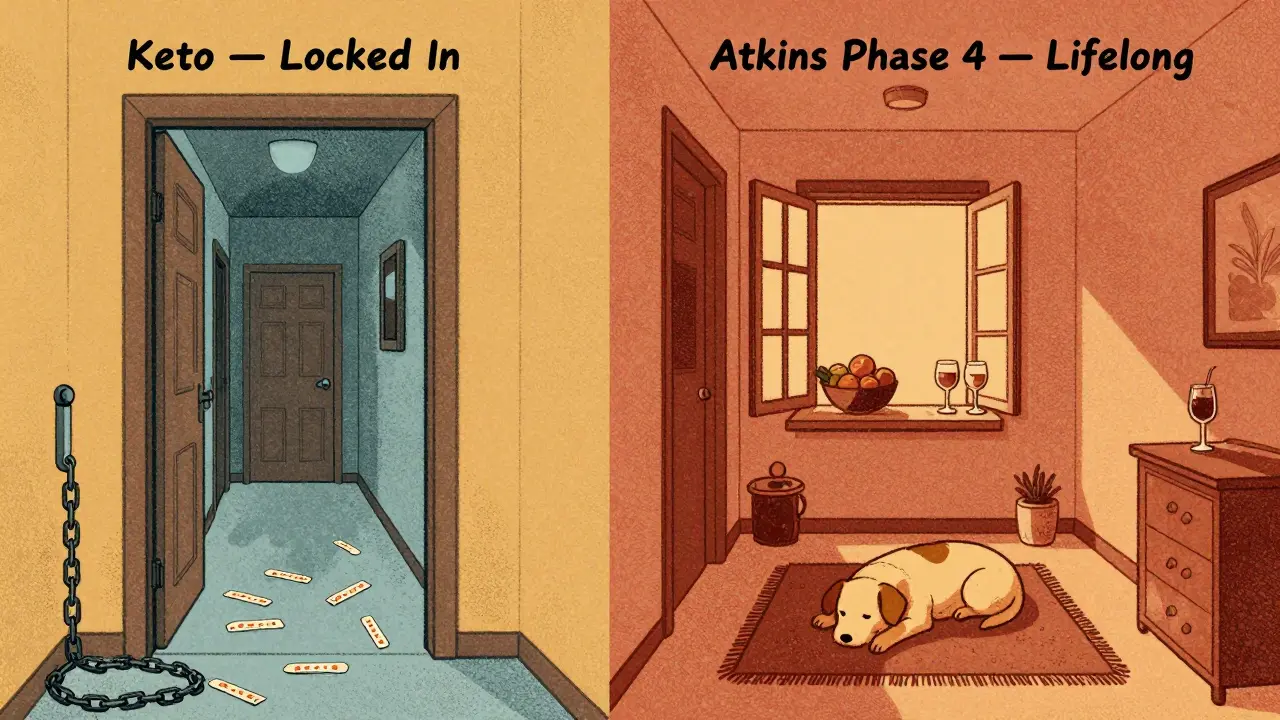
Atkins Phase 4 isn’t a cheat day. It’s a lifestyle. You find your carb tolerance. Maybe it’s 60 grams. Maybe it’s 85. You test it. You adjust. You live.
Keto doesn’t have that. You’re locked in. One slice of pizza, and you’re out of ketosis. Two days of higher carbs, and you’re back to square one. For some, that’s freedom. For most, it’s exhausting.
Who Should Choose Which?
If you’re young, tech-savvy, love data, and want fast results-keto might be your fit. You’ll track macros, buy ketone strips, use apps like Carb Manager, and push through the first two weeks. You’ll lose weight fast. You might even reverse prediabetes.
If you’re older, busy, hate perfection, and want to eat normally eventually-Atkins wins. You don’t need to be a nutrition scientist. You just need to follow the phases. You can eat out. You can travel. You can have a glass of wine in Phase 4. You won’t feel like you’re on a prison diet.
And if you’re diabetic? Both diets help. A 2013 study showed Atkins lowered HbA1c and reduced diabetes meds. Keto does the same. But Atkins gives you room to grow into a balanced plate. Keto? You’re stuck in a narrow lane.
The Bottom Line
Neither diet is magic. Both work for weight loss in the short term. But only one gives you a real path to long-term success.
Keto is like sprinting: intense, fast, and only for a short burst. Atkins is like hiking: steady, flexible, and built to last.
If you’re looking for a quick fix, go keto. If you want to lose weight and keep it off for life, Atkins is the smarter choice. You don’t have to be perfect. You just have to be consistent. And that’s the only thing that really matters.

