Urate-Lowering Meds: What They Are, How They Work, and Which Ones Actually Help
When your body makes too much urate-lowering meds, drugs designed to reduce uric acid in the blood to prevent gout attacks and long-term joint damage. Also known as hypouricemic agents, these medications don’t treat pain during a flare—they stop the root cause: high uric acid levels. If you’ve been told you have hyperuricemia or have had more than one gout attack, this isn’t just about avoiding spicy food. It’s about managing a metabolic process that, if left unchecked, can lead to tophi, kidney stones, and even permanent joint damage.
Two main drugs dominate this space: allopurinol, the oldest and most widely used urate-lowering drug that blocks uric acid production, and febuxostat, a newer option for people who can’t tolerate allopurinol or need stronger control. Both are taken daily, often for years. They’re not quick fixes. You won’t feel better right away—in fact, some people get more flares at first as crystals begin to dissolve. That’s normal. What’s not normal is skipping doses because you feel fine. Uric acid doesn’t care how you feel. It’s still there, slowly rebuilding damage.
These drugs don’t work the same for everyone. Genetics, kidney function, diet, and even your weight affect how well they lower uric acid. Some people need higher doses. Others need combination therapy. And yes, there are alternatives—like probenecid, a drug that helps your kidneys flush out more uric acid instead of blocking its production—but they’re less common because they only work if your kidneys are healthy. If you’ve got kidney issues, probenecid might not be an option.
What you’ll find in the posts below isn’t just a list of names. It’s real-world comparisons: how allopurinol stacks up against febuxostat in cost and side effects, why some people switch meds after years, what lab tests your doctor should check, and how to avoid dangerous interactions with other drugs you’re already taking. You’ll see how these meds connect to things like kidney health, heart risk, and even the antibiotics you take for infections. No fluff. No marketing. Just what matters when you’re trying to stay off the couch during a gout flare.
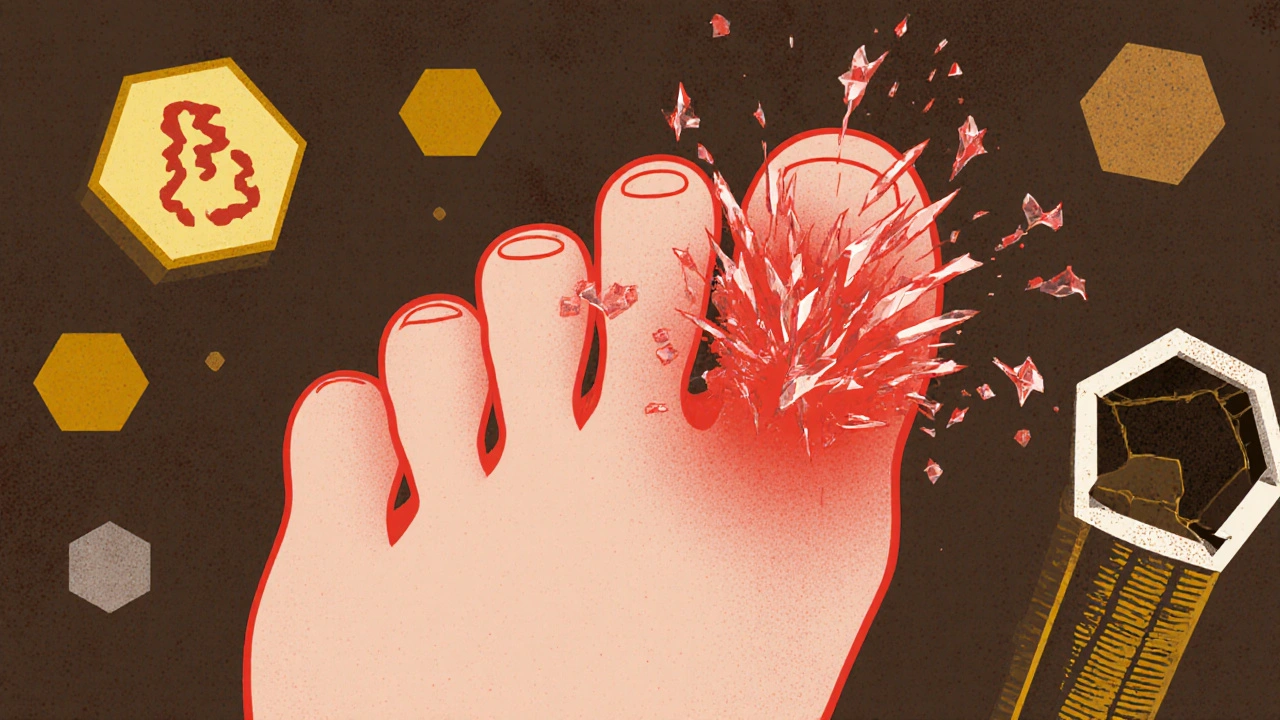
Gout is caused by uric acid crystals from disrupted purine metabolism. Learn how allopurinol, febuxostat, and other urate-lowering drugs work, why most patients fail treatment, and what actually helps control this painful condition.