
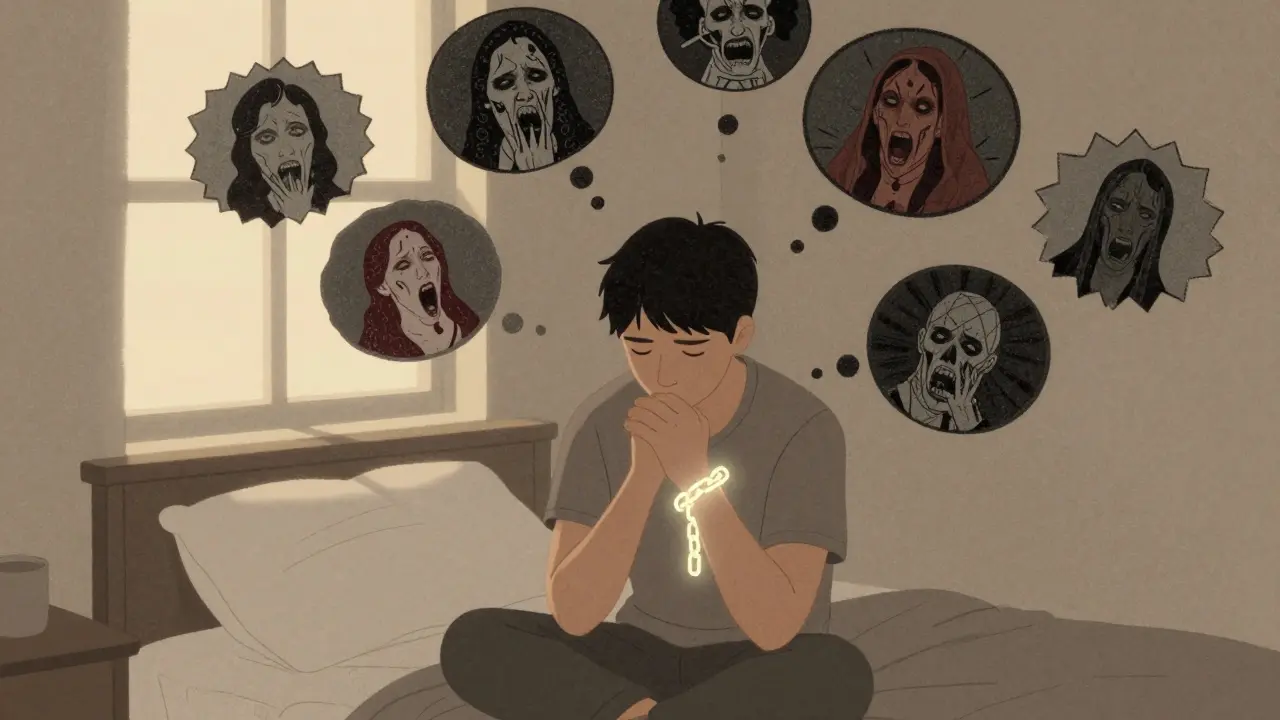
Imagine waking up and immediately fearing you might hurt someone you love - not because you want to, but because the thought won’t leave you alone. You check the stove ten times. You wash your hands until they crack. You silently repeat prayers to neutralize a violent image that flashed in your mind. You know it’s irrational. You know you’re not dangerous. But the anxiety won’t let go. If this sounds familiar, you’re not broken. You’re not alone. And most importantly, you don’t have to live like this forever.
What Are Intrusive Thoughts in OCD?
Intrusive thoughts are sudden, unwanted ideas or images that pop into your head. Everyone gets them. Maybe you briefly imagined pushing someone in front of a bus while standing on a platform. Maybe you had a flash of a swear word during a quiet moment at church. These thoughts are normal. They’re random. They’re harmless. But for someone with OCD, these thoughts don’t just pass. They stick. They feel dangerous. They feel like proof that you’re a bad person. You start to believe that if you think about harming someone, you might actually do it. Or that having a sexual thought about a family member means you’re secretly attracted to them. Or that if you don’t tap the doorframe three times, something terrible will happen to your loved ones. These aren’t just worries. They’re obsessions - persistent, distressing, and completely out of character. According to the International OCD Foundation, about 20-25% of people with OCD experience harm-related obsessions. Another 25% struggle with contamination fears. Around 10-15% battle taboo thoughts involving sex, religion, or identity. And 20% have what’s called ‘Pure O’ - where the compulsions are mental, not physical. You don’t wash your hands. You mentally review your actions. You replay conversations. You silently beg for forgiveness. The key difference between normal intrusive thoughts and OCD? Control. Most people brush off the thought. Someone with OCD tries to fight it. They analyze it. They blame themselves. They perform rituals to make it go away. And that’s what traps them.Why Do These Thoughts Feel So Real?
It’s not your fault. It’s your brain. Neuroscience shows that OCD involves overactivity in the orbitofrontal cortex and caudate nucleus - areas tied to error detection and fear processing. When you have an intrusive thought, your brain screams, “Danger!” even when there’s none. It’s like a smoke alarm that goes off every time you toast bread. The alarm isn’t broken because you burned toast. It’s broken because it can’t tell the difference between smoke and steam. Your brain doesn’t care that you’ve never hurt anyone. It doesn’t care that you’re kind, ethical, and caring. It only cares that the thought caused anxiety. And because you tried to stop it - by checking, washing, praying, or mentally neutralizing - you taught your brain that the thought was dangerous. The more you fight it, the stronger it gets. This is why logic doesn’t work. Telling yourself, “I’m not going to act on it,” doesn’t help. You already know that. The problem isn’t the thought. It’s your reaction to it.What Is ERP Therapy?
Exposure and Response Prevention - or ERP - is the most effective treatment for OCD. It’s not talk therapy. It’s not meditation. It’s not positive affirmations. It’s a structured, science-backed method that rewires how your brain responds to fear. ERP has two parts:- Exposure: You deliberately face the thoughts, images, or situations that trigger your anxiety - without running away.
- Response Prevention: You stop doing the compulsions that usually calm you down.
How ERP Changes Your Brain
Studies using fMRI scans show that after successful ERP, activity in the overactive fear circuits of the brain decreases. Your brain learns: “This thought doesn’t mean danger. I don’t need to do anything about it.” It’s not magic. It’s neuroplasticity - your brain’s ability to rewire itself. Every time you sit with anxiety without performing a compulsion, you’re building a new pathway. You’re telling your brain, “I can handle this.” Research from the International OCD Foundation shows that 60-80% of people who complete ERP see a 60-80% reduction in symptoms. And those gains last. Two-thirds of people still feel better five years later.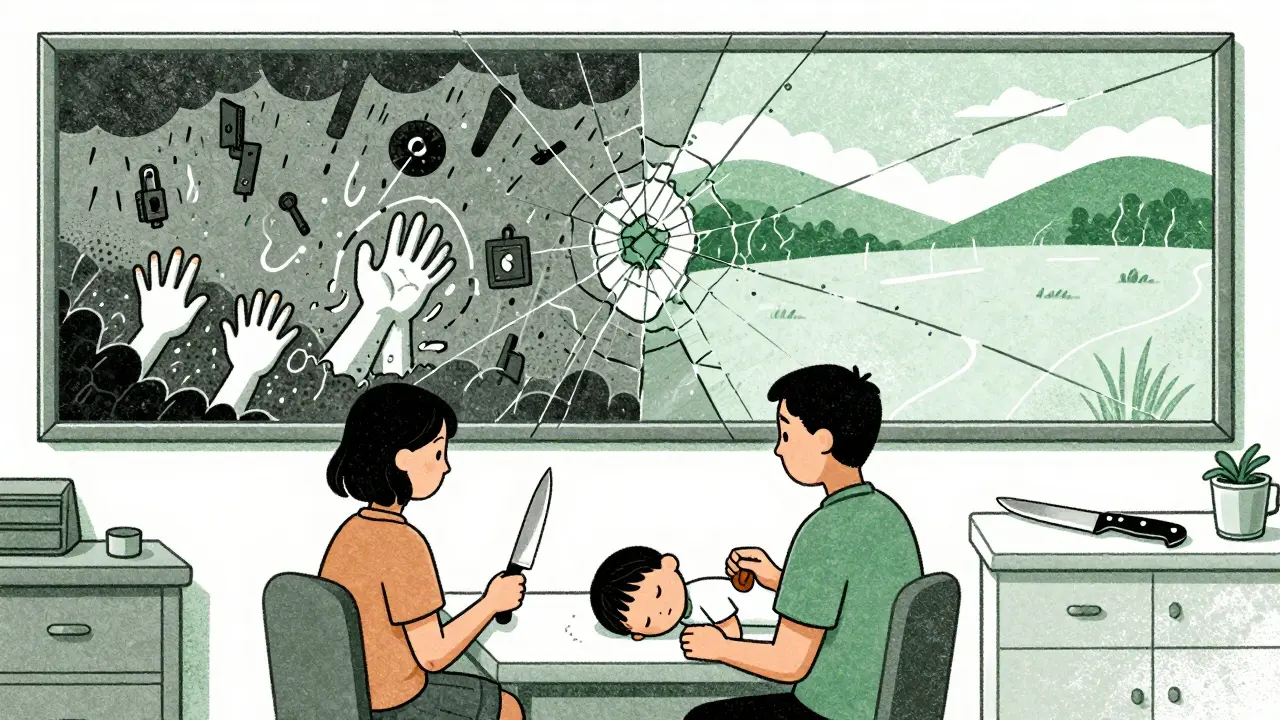
What ERP Isn’t
ERP isn’t about being brave. It’s not about “facing your fears” in a motivational video sense. It’s not about forcing yourself to touch garbage. It’s not about pushing through pain. It’s about doing the smallest thing that scares you - and staying with it. You start low. You build slowly. You don’t jump into the deep end. You walk into the water one step at a time. And it’s not done alone. You need a therapist trained in OCD. General CBT doesn’t work for OCD. Talking about your thoughts - analyzing them, questioning them, trying to understand why they’re there - actually makes it worse. ERP isn’t about understanding. It’s about behaving differently.What to Expect in ERP Therapy
A typical ERP course lasts 12 to 20 weeks. Sessions are weekly. You’ll work with your therapist to build a “fear ladder.” For example, someone with symmetry OCD might have a ladder like this:- Place a pen slightly off-center on a desk (anxiety level: 20/100)
- Leave a book slightly crooked on a shelf (anxiety level: 40/100)
- Let one sock hang out of the laundry basket (anxiety level: 60/100)
- Walk past a crooked picture frame without straightening it (anxiety level: 80/100)
- Let your partner leave the house with mismatched shoes (anxiety level: 90/100)
Why ERP Is Hard - And Why It’s Worth It
About 70% of people feel worse in the first two to three weeks. Anxiety spikes. You feel like giving up. You think, “This isn’t working.” But that’s the point. The spike isn’t failure. It’s progress. You’re breaking the cycle. You’re letting your brain learn something new. About 25% of people drop out. They can’t stand the discomfort. But those who stick with it? They get their lives back. A CDC case study followed a 14-year-old who spent 4-5 hours a day doing compulsions. After six months of ERP, that dropped to under 30 minutes. They returned to school. They started hanging out with friends. They stopped hiding.What About Medication?
SSRIs like fluoxetine (Prozac) or sertraline (Zoloft) are sometimes used alongside ERP. They help reduce baseline anxiety, making exposure easier. But they don’t cure OCD. They just make it a little quieter. Combining ERP with medication gives the best results - up to 85% response rates. But 30% of people quit meds because of side effects: weight gain, low sex drive, nausea, emotional numbness. ERP works without pills. And when it works, the relief lasts. Medication doesn’t teach your brain anything. ERP does.
Accessing ERP Therapy Today
The biggest barrier isn’t cost. It’s availability. Only 10% of therapists in the U.S. are trained in ERP. In rural areas, 75% of counties have no OCD specialist at all. Waitlists can be months long. Telehealth has helped. Nearly half of OCD patients now get treatment remotely. But insurance coverage is patchy. Some plans pay less for online therapy than in-person. New tools are emerging. The FDA approved the nOCD app in 2023 - a digital ERP program with guided exposures and tracking. In a 2022 study, it helped 55% of users with mild OCD reduce symptoms. It’s not a replacement for a therapist, but it’s a lifeline if you can’t find one.Where to Start
If you think you have OCD:- Don’t wait. The sooner you start ERP, the better your outcome. Early treatment within two years of symptoms doubles recovery chances.
- Find a therapist trained in ERP. Use the IOCDF’s therapist directory.
- Don’t Google your symptoms. It makes anxiety worse.
- Join a support group. You’re not alone. Reddit’s r/OCD has over 125,000 members. Many say finding others who understand was the turning point.
- Be patient. ERP is hard. But you’re not broken. You’re healing.
Frequently Asked Questions
Are intrusive thoughts a sign I’m dangerous?
No. Intrusive thoughts in OCD are ego-dystonic - they go against your values. If you’re horrified by them, that’s proof you’re not a threat. People who act on violent impulses don’t feel guilt or fear about them. They don’t lose sleep over them. The fact that you’re asking this question means you’re not dangerous.
Can ERP make my symptoms worse?
In the first few weeks, yes - anxiety often increases. That’s normal. ERP forces your brain to face what it’s been avoiding. But this spike is temporary. It’s not a sign you’re getting worse. It’s a sign you’re breaking the cycle. If you stick with it, anxiety drops - often dramatically.
Is Pure O real? Can you have OCD without compulsions?
Yes. Pure O - or primarily obsessional OCD - is a real and common form. People don’t wash or check. Instead, they do mental rituals: repeating phrases, reviewing memories, seeking reassurance, mentally praying. These are still compulsions. ERP works for Pure O too - you just target the mental rituals instead of physical ones.
How long does ERP take to work?
Most people start seeing changes in 4-8 weeks. Significant improvement usually happens by week 12. Full recovery can take 6-12 months, depending on severity. The key isn’t speed - it’s consistency. Doing your exposures daily matters more than how intense they are.
Can I do ERP on my own?
You can start, but it’s risky. Without a trained therapist, you might do exposures wrong - like avoiding the anxiety instead of sitting with it. You might also miss hidden compulsions. Many people get stuck in reassurance-seeking or mental rituals they don’t realize are compulsions. Working with a specialist increases success rates by over 50%.
Will I ever be completely free of intrusive thoughts?
You won’t stop having intrusive thoughts - no one does. But you’ll stop reacting to them. You’ll learn to say, “That’s just a thought,” and let it pass. That’s recovery. It’s not about eliminating thoughts. It’s about changing your relationship with them.
Next Steps
If you’re ready to take action:- Visit the International OCD Foundation website to find a certified ERP therapist near you.
- Download the nOCD app for guided exposures if you’re waiting for therapy.
- Reach out to a trusted friend - even just to say, “I think I have OCD.” You don’t have to explain everything. Just say you need help.
- Stop Googling. Stop analyzing. Stop trying to figure out why you think these things.
- Start small. Touch a doorknob. Don’t wash. Sit with the discomfort. That’s the first step.


Meghan Hammack
This hit me right in the chest. I’ve been hiding my thoughts for years-thinking I was broken. Turns out, I’m just wired differently. ERP saved my life. Not because I ‘got strong’-but because I finally stopped fighting myself.
Start small. Touch the doorknob. Don’t wash. Sit with the panic. It doesn’t vanish. But it shifts. And that’s enough.
You’re not alone. I’m here. I’ve been there. You got this.