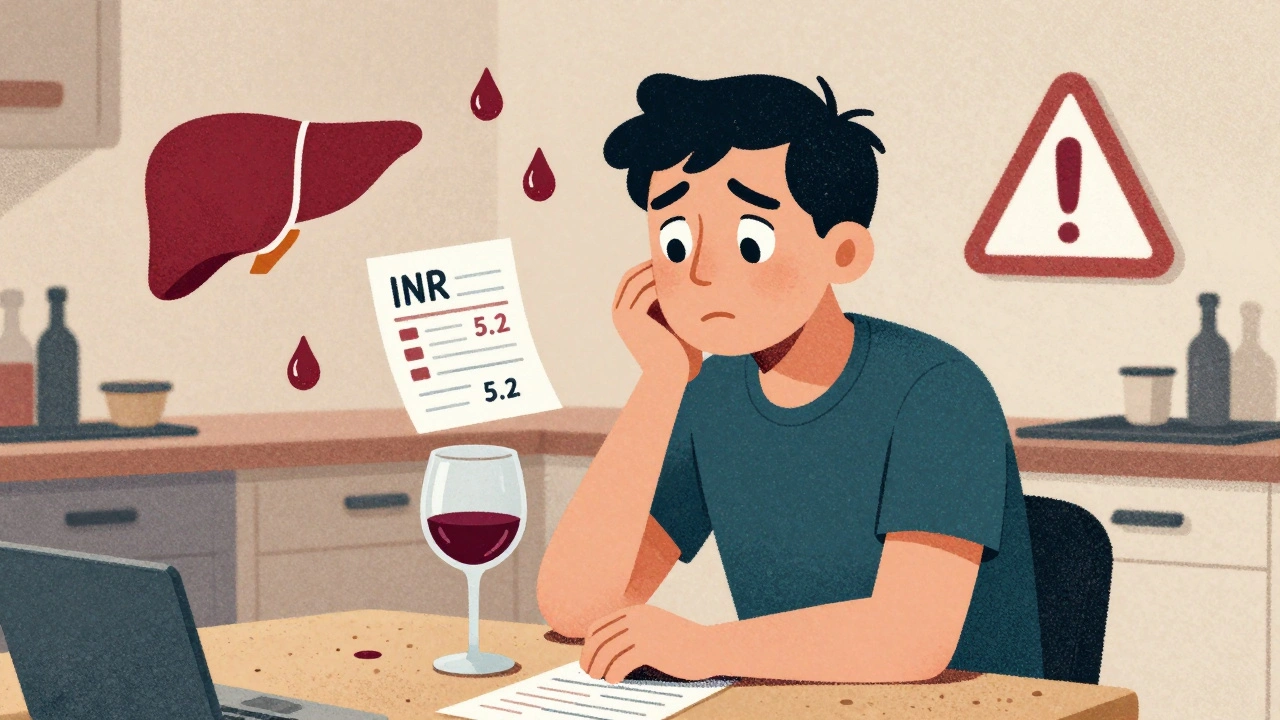
Warfarin and Alcohol: What You Need to Know About the Interaction
When you're taking warfarin, a blood thinner used to prevent dangerous clots in people with atrial fibrillation, artificial heart valves, or a history of deep vein thrombosis, even a single drink can change how your body responds. INR levels, a blood test that measures how long it takes your blood to clot can spike unpredictably if alcohol is involved—raising your risk of bleeding. And on the flip side, heavy drinking can make warfarin less effective, leaving you vulnerable to strokes or clots. This isn’t a "maybe" situation—it’s a clear, documented risk backed by clinical studies.
Alcohol and anticoagulants, a category that includes warfarin and other drugs that prevent blood clots have a tight, dangerous link. Alcohol interferes with liver enzymes that break down warfarin, causing levels to build up in your blood. It also irritates your stomach lining, making bleeding more likely if you get a cut or bruise. People who drink heavily or binge drink are at the highest risk, but even one or two drinks a day can throw off your dosing. Unlike some medications where occasional use is fine, warfarin doesn’t play nice with alcohol—even in small amounts. Your doctor doesn’t just "recommend" avoiding it because they’re being cautious—they’re trying to keep you alive.
What’s more, alcohol can mess with your diet, sleep, and even your ability to remember to take your pill on time—all of which affect how well warfarin works. If you’ve had a few drinks and forgot your dose, or if you’ve been drinking more than usual because of stress, your INR could swing wildly. That’s why consistent habits matter more than you think. You don’t need to quit alcohol cold turkey if you’re on warfarin, but you do need to be honest with your provider about how much you drink. They’ll adjust your dose or monitor you more closely if needed. And if you’re unsure whether a drink is safe today, skip it. Better safe than in the ER.
What you’ll find below are real, practical posts that dig into the details: how warfarin interacts with other substances, what lab tests keep you safe, how to spot signs of bleeding, and how to manage your meds when life gets messy. These aren’t theory pieces—they’re tools built from real patient experiences and clinical guidelines. Whether you’re just starting warfarin or have been on it for years, the answers here are meant to help you stay in control—without guesswork.
Alcohol can dangerously raise your INR levels when you're on warfarin, increasing bleeding risk. Learn how drinking affects your blood thinner, what safe limits are, and what to do if your INR spikes.