
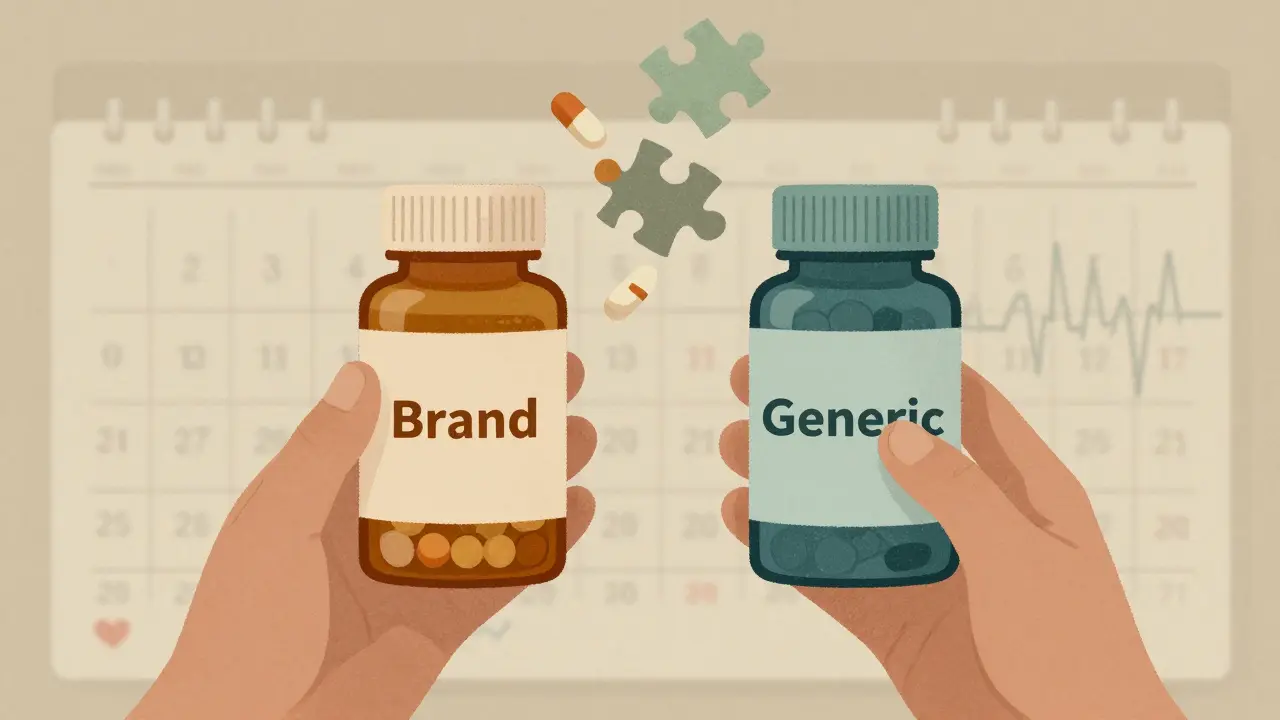
Switching from brand-name drugs to generics is supposed to save money without sacrificing effectiveness. And for many people, it does. But what happens after six months? Or two years? Or five? If you’ve been told your generic pill is "just as good" as the brand, you might be surprised to learn that long-term health outcomes aren’t always the same - even when the labels say they are.
Why the Switch Seems Like a No-Brainer
Generic drugs are cheaper because they don’t need to repeat expensive clinical trials. The FDA requires them to prove they’re bioequivalent to the brand-name version. That means they deliver the same active ingredient at roughly the same rate and amount into your bloodstream. The acceptable range? Between 80% and 125% of the brand’s levels. Sounds tight, right? But here’s the catch: that range allows for real differences in how your body responds over time.For short-term conditions like an infection or a flare-up of pain, that variation rarely matters. But for chronic diseases - high blood pressure, epilepsy, diabetes, heart failure - you’re taking the same pill every day for years. Small differences add up. A 10% drop in absorption one day, a 15% spike the next, and suddenly your body isn’t getting the steady dose it needs. That’s why some patients report worsening symptoms after switching, even though lab tests show their numbers are still "in range."
The Real-World Problems Nobody Talks About
A 2017 study in Circulation: Cardiovascular Quality and Outcomes followed patients who switched from brand-name blood pressure meds to generics. Within the first month, adverse events - like dizziness, fainting, or spikes in blood pressure - went up by 8% to 14%. And those higher rates didn’t fade. They stuck around for the full year. Another study found that patients on generic antiseizure drugs were 35% more likely to stop taking them within a year, not because they felt better, but because the pills looked different. Pill color, shape, size - these things matter more than you think.One patient on PatientsLikeMe, who went by "HeartWarrior42," switched from brand-name metoprolol to a generic version. Over 18 months, her heart rate became erratic. She ended up in the hospital twice with dangerous arrhythmias. When she switched back to the brand, her rhythm stabilized. She wasn’t imagining it. Her doctor couldn’t explain it with lab results, but her body clearly responded differently.
And it’s not just about the drug itself. The fillers, dyes, and coatings in generics vary by manufacturer. A 2021 study from Ohio State University found that generics made in India had 27% more severe adverse events - including hospitalizations and deaths - compared to those made in the U.S. This wasn’t about quality control lapses in one factory. It was a pattern across multiple manufacturers. And because pharmacies often switch suppliers without telling you, you might be on a different version of the same drug every few months.
When Generics Work Brilliantly
It’s not all bad news. For some drugs, generics are a game-changer. Statins, for example, are one of the most successful cases. A 2006 study showed that 77% of patients stayed on generic statins compared to 71% on brand-name ones. Why? Because the cost dropped from $400 a month to $4. That kind of savings means people don’t skip doses. And over five years, those who stayed on the medication had an 8% lower risk of heart attack, stroke, or death.For metformin, the go-to diabetes drug, a 2022 study of over 350,000 patients found no difference in long-term outcomes between brand and generic. That’s huge. It means for many people, switching is safe and smart.
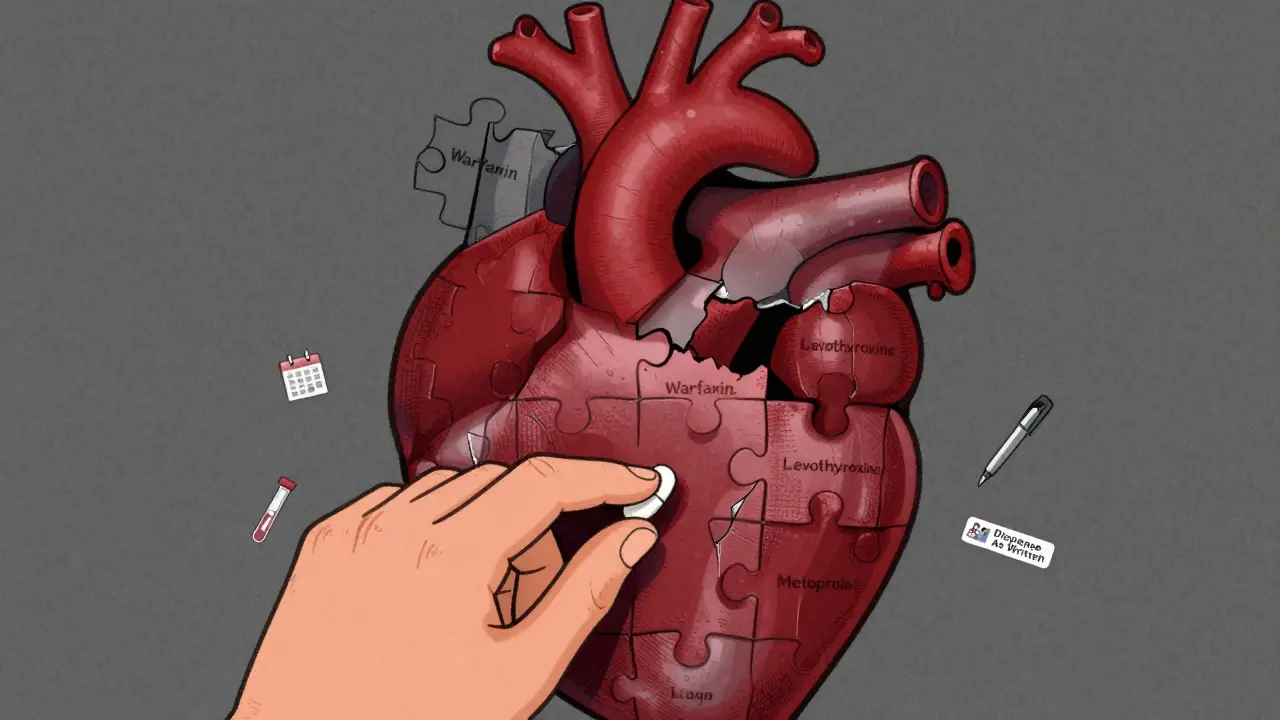
So why the inconsistency? It comes down to two things: the type of drug and the patient. Drugs with a narrow therapeutic index - where the difference between a helpful dose and a harmful one is tiny - are riskier to switch. Think warfarin, lithium, thyroid meds, and epilepsy drugs. For these, even small changes can trigger serious problems. And for older adults, people with multiple chronic conditions, or those on five or more medications, the body doesn’t handle changes well.
What You Can Do to Protect Your Health
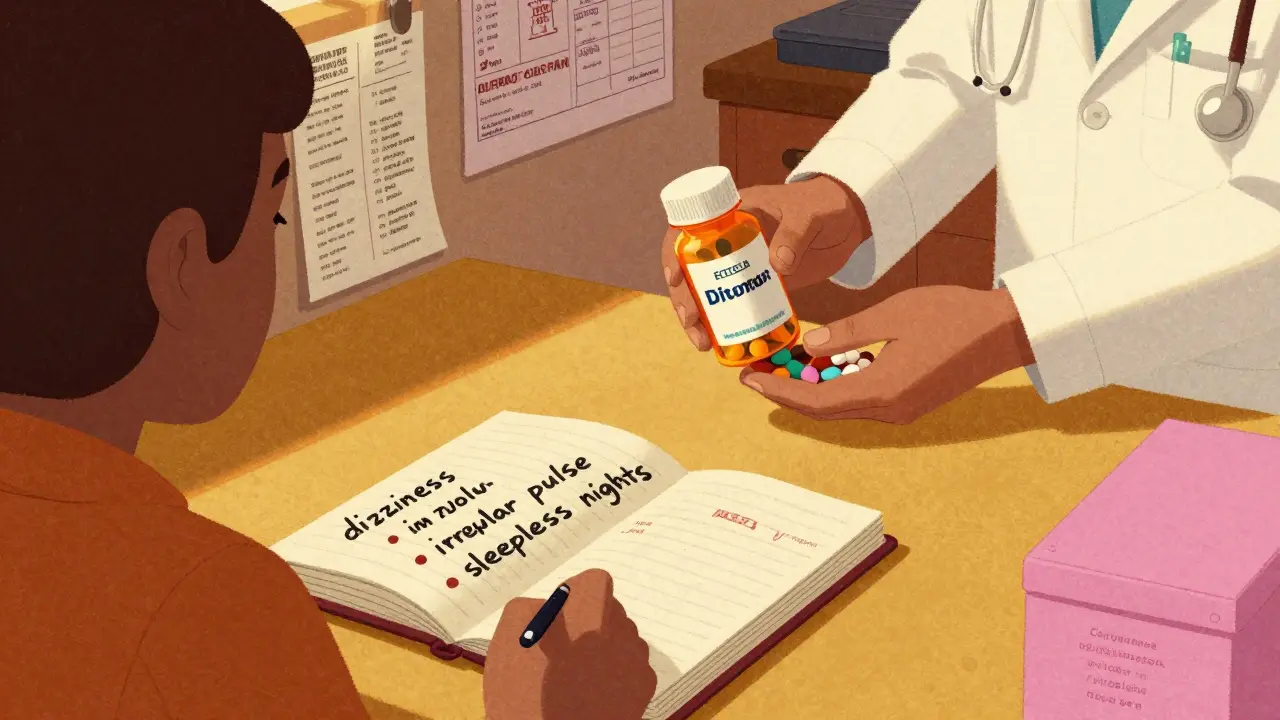
If you’re on a chronic medication and your pharmacy switches your generic, don’t assume it’s harmless. Here’s what to do:- Ask your pharmacist: "Which manufacturer is this?" Write it down. If it changes next refill, ask why.
- Don’t let your pharmacy switch you automatically. Many plans force switches to cut costs. Ask your doctor to write "dispense as written" or "no substitutions" on your prescription.
- Track your symptoms. Keep a simple log: energy levels, heart rate, mood, sleep, any new side effects. Note the date you switched. If things change within 30 days, call your doctor.
- Stick with one manufacturer. If you find a generic that works, ask your doctor to prescribe it by name - not just the generic drug. Some pharmacies can order it.
- Get your blood tested. For drugs like warfarin or thyroid meds, regular blood tests are standard. But even for others, a simple blood test can show if your levels are drifting.
Why Doctors and Pharmacies Struggle to Help
Most doctors don’t know which manufacturer made your generic. That info isn’t in your electronic record - and it’s not usually tracked. Pharmacies get paid to switch you to the cheapest option. Pharmacy benefit managers (PBMs) change preferred generics every year to get better discounts. That means you might be on a different version of your drug every 6 to 12 months.As of 2023, only 35% of U.S. health systems even record which generic manufacturer you’re using. That’s a massive gap. How can you monitor your long-term health if no one’s keeping track of what you’re actually taking?
The Bigger Picture: Policy Is Starting to Catch Up
The FDA is finally listening. In 2023, they started requiring 36 months of stability data for generics used in chronic conditions - up from 24 months. That’s a step forward. The European Union now requires countries to run long-term safety studies for any generic used by over a million people. Germany and France have already restricted automatic switches for high-risk drugs.But until these rules become standard everywhere, the burden falls on you. Generics saved the U.S. healthcare system $1.67 trillion between 2008 and 2017. That’s real money. And they’re still essential. But they’re not all created equal - especially over time.
Bottom Line: It’s Not About Brand vs. Generic - It’s About Consistency
The goal isn’t to avoid generics. It’s to avoid random switches. If you’re stable on a generic, stay on it. If you’re stable on a brand, don’t let them switch you without a good reason. Your health isn’t a cost center. It’s your life.Don’t let a $3 savings today cost you a hospital visit next year. Ask questions. Track your body. Demand consistency. Your long-term health depends on it.
Are generic medications always as safe as brand-name drugs in the long term?
For most people and most drugs, yes. But not always. For medications with a narrow therapeutic index - like epilepsy, thyroid, or blood thinner drugs - even small differences in absorption can build up over time. Studies show some patients experience worsening symptoms or reduced adherence after switching, even when lab results look normal. Long-term safety data is still limited, so consistency matters more than cost savings.
Why do I feel worse after switching to a generic drug?
It could be the manufacturer. Different companies use different inactive ingredients - fillers, dyes, coatings - that affect how your body absorbs the drug. Even if the active ingredient is the same, your body may respond differently to a new version. Changes in pill size, color, or shape can also confuse you, leading to missed doses. If you feel worse, track your symptoms and talk to your doctor. Don’t assume it’s "all in your head."
Can I ask my doctor to keep me on the same generic manufacturer?
Yes. You can ask your doctor to write "dispense as written" or "no substitutions" on your prescription. You can also ask your pharmacist which manufacturer made your current pills and request that version next time. Many pharmacies can order specific brands of generics if you ask.
Which generic drugs are riskiest to switch?
Drugs with a narrow therapeutic index are the riskiest. These include warfarin, levothyroxine, lithium, phenytoin, carbamazepine, and cyclosporine. Even small changes in blood levels can cause serious side effects. For these, avoid switching unless absolutely necessary, and always monitor closely with blood tests.
Should I avoid generics altogether to stay safe?
No. Generics are safe and effective for most people and most conditions. Statins, metformin, and many blood pressure drugs have excellent long-term track records in generic form. The issue isn’t generics - it’s unpredictable switching. The goal is to find a version that works for you and stick with it. Don’t let cost savings come at the price of your health stability.


Andrew Kelly
Let me get this straight - you’re saying the FDA’s bioequivalence standards are a lie? That the same active ingredient, within 20% variance, somehow turns into a death sentence over time? I’ve been on generic lisinopril for seven years. My BP is stable, my kidneys are fine, and I’ve saved $3,000 a year. You want me to believe that a pill made in Ohio is secretly sabotaging my health because it’s not made in New Jersey? Wake up. This isn’t medicine - it’s fear porn dressed up as research.