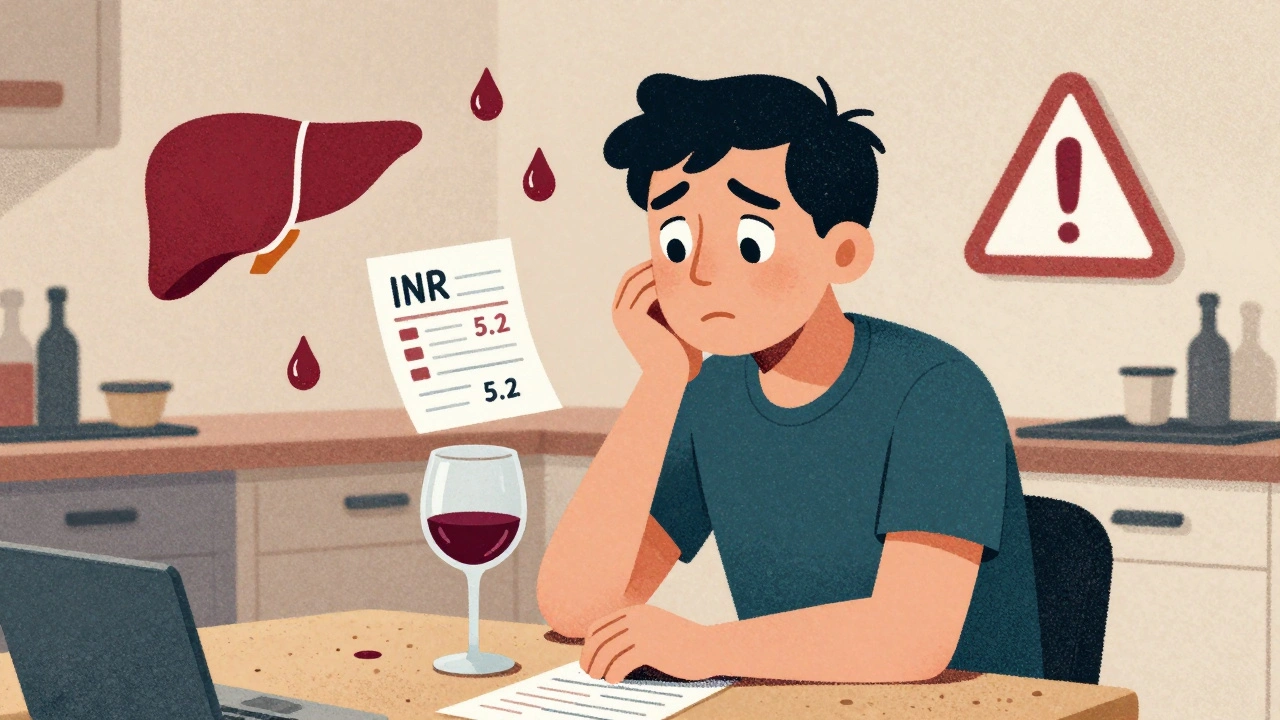
Alcohol and Warfarin: What You Need to Know About the Dangerous Mix
When you take warfarin, a blood thinner used to prevent dangerous clots in people with atrial fibrillation, artificial heart valves, or a history of deep vein thrombosis. It’s also known as Coumadin, and it works by slowing down your body’s ability to form clots. But if you drink alcohol, a central nervous system depressant that affects liver enzymes responsible for breaking down medications, you’re playing with fire. This isn’t just a "be careful" warning—it’s a real, measurable risk that can land you in the ER.
Here’s the simple truth: alcohol and warfarin don’t just coexist—they interfere with each other. When you drink, your liver has to process both substances at once. Alcohol can either boost warfarin’s effect, making your blood too thin and increasing bleeding risk, or it can reduce warfarin’s effectiveness, leaving you vulnerable to clots. The effect changes depending on how much you drink, how often, and even what you eat that day. Heavy drinking over time can damage your liver, which is the same organ that makes the proteins warfarin needs to work. A damaged liver means warfarin sticks around longer, and your INR levels—what your doctor checks to monitor your blood thinning—can spike without warning.
Some people think, "I only have one glass of wine with dinner," or "I don’t drink every day, so it’s fine." But even moderate alcohol use can throw off your INR. Studies show that people who drink regularly—even just 1–2 drinks a day—are more likely to have unstable INR levels than those who avoid alcohol completely. And if you binge drink? That’s a recipe for internal bleeding, especially if you’re older, have high blood pressure, or take other meds like NSAIDs. Your body doesn’t handle the combo well, and there’s no safe threshold that works for everyone.
You’ll also find that pharmacy auxiliary labels, those small color-coded stickers on your pill bottle often warn about alcohol with a red or yellow sticker. That’s not random—it’s a direct safety alert. These labels exist because thousands of medication errors happen every year from people ignoring simple warnings. And when it comes to warfarin, a single mistake can be life-changing.
So what do you do? Talk to your doctor. Don’t assume they’ll bring it up. Bring your alcohol habits to the table—whether it’s a nightly beer, weekend cocktails, or occasional wine. Your doctor can adjust your dose, check your INR more often, or suggest alternatives if needed. And if you’re trying to cut back? You’re not alone. Many people on warfarin find that avoiding alcohol helps them feel more stable, sleep better, and avoid scary hospital visits.
The posts below cover exactly this kind of real-world medication safety. You’ll find clear advice on how to spot dangerous interactions, what pharmacy labels really mean, how to track your meds, and how to talk to your doctor about what you’re really taking—alcohol included. No fluff. No guesswork. Just what you need to stay out of harm’s way.
Alcohol can dangerously raise your INR levels when you're on warfarin, increasing bleeding risk. Learn how drinking affects your blood thinner, what safe limits are, and what to do if your INR spikes.