

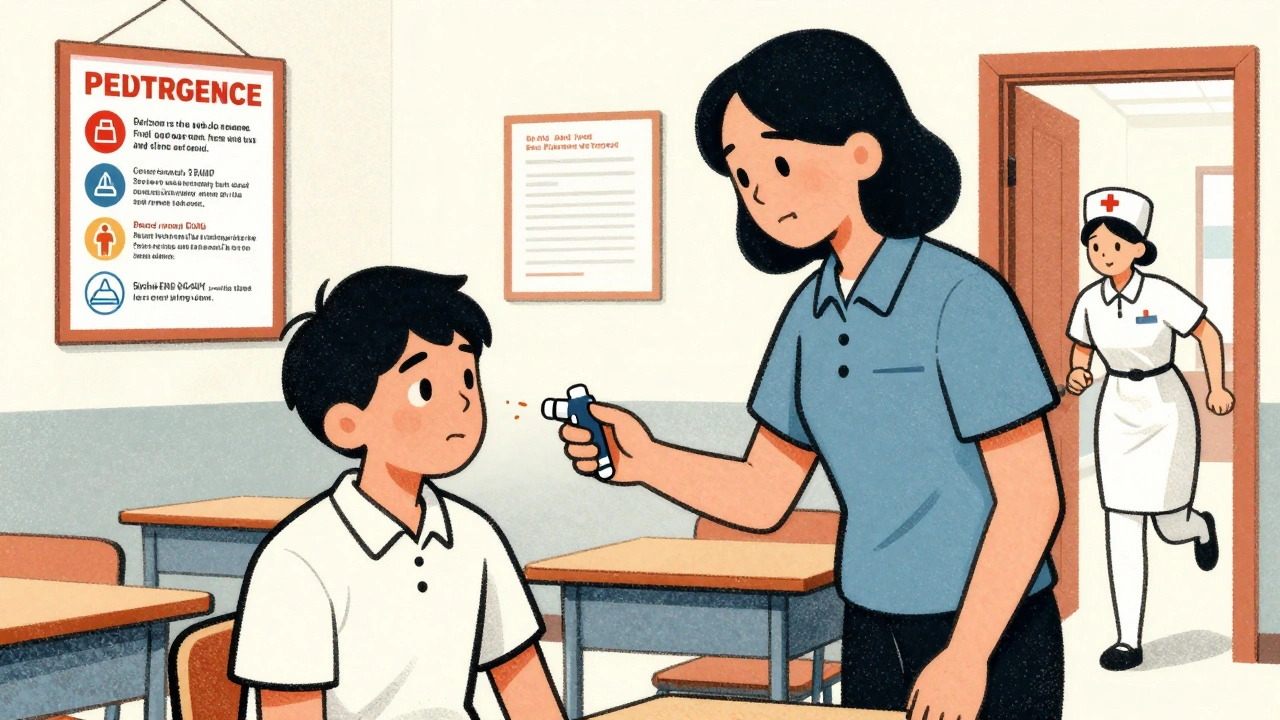
Every morning, hundreds of thousands of children across the U.S. swallow their asthma inhalers, take their ADHD meds, or get insulin shots before lunch - not at home, but in school. And it’s not just a quick hand-off. It’s a carefully managed system that depends on one person: the school nurse. But coordinating daily pediatric medications in schools isn’t just about handing out pills. It’s about legal safety, clear communication, and avoiding mistakes that could put a child’s life at risk.
Why School Nurses Are the Key to Safe Medication Administration
School nurses don’t just treat scraped knees. They’re the central hub for managing complex medical routines during school hours. For a child with type 1 diabetes, missing an insulin dose can lead to a diabetic emergency. For a child with severe allergies, a delayed epinephrine shot can be fatal. The American Academy of Pediatrics (AAP) made it clear in their 2024 policy statement: school nurses must assess each child’s unique needs before delegating medication tasks. That means no shortcuts. No assumptions. No letting a teacher or aide give medication without proper training and supervision.The National Association of School Nurses (NASN) established the gold standard with their 2022 Clinical Practice Guideline. At its core is the Five Rights: right student, right medication, right dose, right route, right time. Sounds simple? In practice, it’s not. A 2023 NASN study found medication errors happen in about 1.2% of school administrations - that’s 1 in every 83 doses. Most of those errors occur because the nurse didn’t have time to double-check, or staff weren’t properly trained.
The Legal Framework: What Schools Must Follow
This isn’t optional. Federal laws like Section 504 of the Rehabilitation Act and the Individuals with Disabilities Education Act (IDEA) require schools to provide safe medication access for students with chronic conditions. Failure to comply can cost districts millions - like the $2.3 million fine Houston ISD faced in 2022 after multiple medication errors.Each state has its own Nurse Practice Act, which determines what nurses can and can’t delegate. In 37 states, unlicensed staff can give medications - but only after specific training and under direct nurse supervision. In Texas, some districts treat medication administration as an “administrative task,” which creates legal gray zones. A 2022 legal analysis found districts using this model had 14% higher liability risk. Why? Because if something goes wrong, there’s no clear chain of accountability.
Here’s what’s non-negotiable: all medications must be in original, pharmacy-labeled containers. No Ziploc bags. No bulk bottles. The FDA’s 21 CFR § 1306.22 requires this for all controlled substances, and many states treat it as a criminal offense to violate it. One Texas nurse reported a parent bringing in a bottle labeled “Sally’s pills” - no name, no dosage, no pharmacy stamp. The nurse refused to administer it. That’s not being difficult. That’s following the law.
Step-by-Step: How to Set Up a Medication Coordination System
Getting this right takes planning. Here’s how successful districts do it:- Develop a district-wide policy using NASN’s sample templates. This takes 8-12 weeks to get approved by legal and school boards.
- Train every school nurse on delegation protocols. A 16-hour certification course is standard - and required in states like Virginia.
- Screen students using a three-tier system: Nurse Dependent (needs full help), Supervised (needs oversight), or Self-Administered (can do it alone with approval).
- Create Individualized Healthcare Plans (IHPs) for every student with complex needs. These aren’t forms - they’re living documents updated each semester. Each one takes 2-4 hours to build.
- Train unlicensed personnel (aides, teachers, coaches). Training varies from 4 to 16 hours depending on the medication. Epinephrine auto-injectors? 16 hours. Oral ADHD meds? 4 hours.
- Choose a documentation system. 98% of districts use electronic records now. Paper logs are still allowed in 42 states, but they’re outdated. Fairfax County, Virginia, cut documentation time by 45% and improved accuracy by 31% after switching to an electronic system.
- Hold monthly error reviews. Use a “Just Culture” approach - no blame, just learning. One nurse on Reddit said her district’s error review meetings reduced staff anxiety by 70%.
Common Pitfalls and How to Avoid Them
Even with good systems, things go wrong. Here’s what usually breaks down:- Parents don’t use original containers. In 38% of districts, parents bring meds in unlabeled bottles. Solution? Host mandatory parent education sessions. Montgomery County, Maryland, boosted compliance by 52% after requiring parents to attend a 30-minute workshop.
- Nurses are overwhelmed. The national average is 1 nurse for every 1,102 students. The recommended ratio is 1:750 - and even higher for schools with many students on chronic meds. That means nurses are spending 2+ hours a day just on paperwork. Solution? Use electronic systems. They’re faster, more accurate, and free up time for actual care.
- Delegation without assessment. The AAP says 63% of errors happen when nurses skip the student-staff match. You can’t just assign a med to the first available aide. You have to ask: Is this person calm under pressure? Do they understand the timing? Are they reliable? This takes time - and it’s worth it.
- Emergency meds are forgotten. Epinephrine must be given within 5 minutes of anaphylaxis symptoms. 87% of U.S. schools keep stock epinephrine on hand, but only if it’s accessible. One school kept it locked in the nurse’s office - and a child died during a field trip. Always keep emergency meds with staff who are trained and always present.
What Works: Real Examples from the Field
Not all districts struggle. Some have cracked the code:Virginia requires nurses to personally observe the first dose of every new medication. Result? 22% fewer adverse events than states without that rule.
Fairfax County’s electronic system auto-flags missed doses, reminds staff when meds are due, and generates reports for parents and doctors. Nurses say it cut their admin time in half.
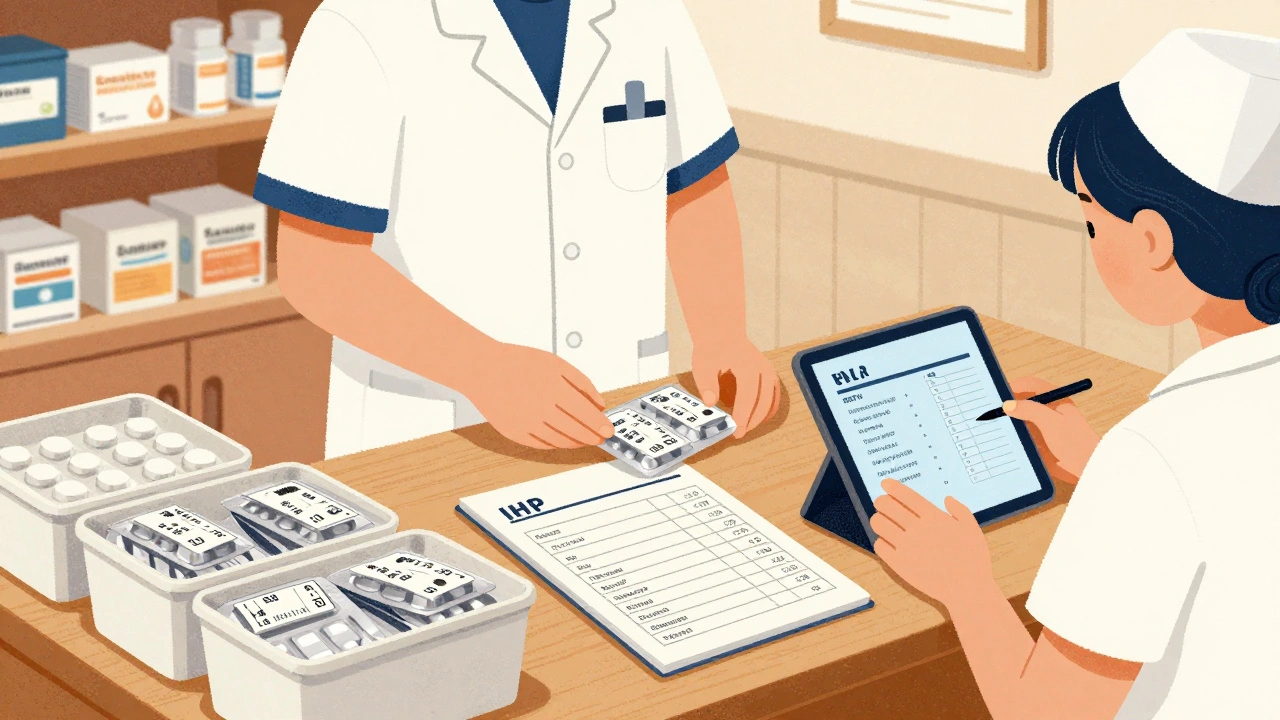
One rural district in Maine partnered with a local pharmacy to pre-package daily meds in blister packs labeled with student names and times. The nurse only had to verify - no counting, no labeling. Compliance jumped from 78% to 96%.
The Bigger Picture: Why This Matters Beyond the School Day
When medication coordination works, kids don’t just stay safe - they stay in class. Asthma is the leading cause of school absences. Diabetes complications can lead to long-term health issues. ADHD meds help with focus, behavior, and academic performance.But it’s not just about health. It’s about equity. A child with a chronic condition shouldn’t miss out on field trips, sports, or after-school programs because the school can’t manage their meds. That’s why NASN and the AAP launched the School Medication Administration Standardization Initiative in January 2024. Their goal? Harmonize state laws so no child falls through the cracks because of where they live.
By 2030, the number of children needing daily medications will grow by 22%. Nurses will be in even higher demand. The solution isn’t just hiring more nurses - though we need them. It’s building systems that are smart, scalable, and safe.
What You Can Do Right Now
If you’re a school administrator, nurse, or parent:- Ask: Does our school have a written medication policy? If not, request one using NASN’s templates.
- Check: Are all meds in original containers? If not, start a parent education campaign.
- Verify: Are staff trained? Are emergency meds accessible? Is documentation electronic?
- Advocate: Push for a 1:750 nurse-to-student ratio. It’s not a luxury - it’s a safety standard.
Medication coordination in schools isn’t about paperwork. It’s about trust. Trust that a child will get their medicine on time. Trust that someone knows what to do if something goes wrong. Trust that the system won’t fail them when it matters most.
Can a teacher give a child their medication at school?
Yes - but only if the school nurse has assessed the child’s needs, trained the teacher, and documented the delegation. In 37 states, unlicensed staff can give medications under nurse supervision. But the nurse must personally verify the staff member’s competence and the student’s condition before any administration. Never assume a teacher can give meds just because they’re willing.
What if a parent brings medication in a Ziploc bag?
Refuse to administer it. Federal law (21 CFR § 1306.22) requires all medications to be in original, pharmacy-labeled containers. This isn’t just a rule - it’s a legal requirement. Unlabeled containers risk violating drug laws and could lead to liability if an error occurs. Ask the parent to get a replacement from the pharmacy. Many pharmacies offer free labeling for school meds.
How often should medication logs be reviewed?
Daily documentation is required. But formal reviews should happen monthly. Use these reviews to spot trends - missed doses, late administrations, or recurring errors. The best districts use a “Just Culture” approach: no punishment for honest mistakes, just learning. This reduces fear and encourages reporting, which leads to safer systems.
Do all students need an Individualized Healthcare Plan (IHP)?
Only students with chronic conditions requiring daily medication or special care. That includes asthma, diabetes, epilepsy, severe allergies, and ADHD if the child needs supervision to take meds. Students who self-administer simple meds (like occasional ibuprofen) may only need a Medication Authorization Form. But if a child needs help, monitoring, or has a life-threatening condition, an IHP is mandatory under IDEA and Section 504.
What should I do if the school nurse is out sick?
No one should give medication without nurse oversight. If the nurse is absent, medications should be held until they return - unless there’s a written emergency plan. Some districts train a backup nurse or designate a trained staff member with a clear protocol for emergencies only. Never let an untrained person give meds just because “someone has to.” Safety comes first.
Are electronic medication systems worth the cost?
Yes. While upfront costs can be $5,000-$20,000, they pay for themselves in time saved and risk reduction. Fairfax County cut documentation time by 45% and reduced errors by 31%. Electronic systems auto-remind staff, flag missed doses, and generate reports for parents and doctors. For districts serving over 10,000 students, the return on investment is clear.




Shubham Pandey
This whole thing feels like overkill. Kids take meds all day at home-why is school suddenly a courtroom?