Allopurinol: What It Is, How It Works, and What You Need to Know
When your body makes too much allopurinol, a xanthine oxidase inhibitor used to lower uric acid levels in the blood. Also known as Zyloprim, it doesn’t just treat gout flare-ups—it stops them before they start by targeting the root cause: excess uric acid.
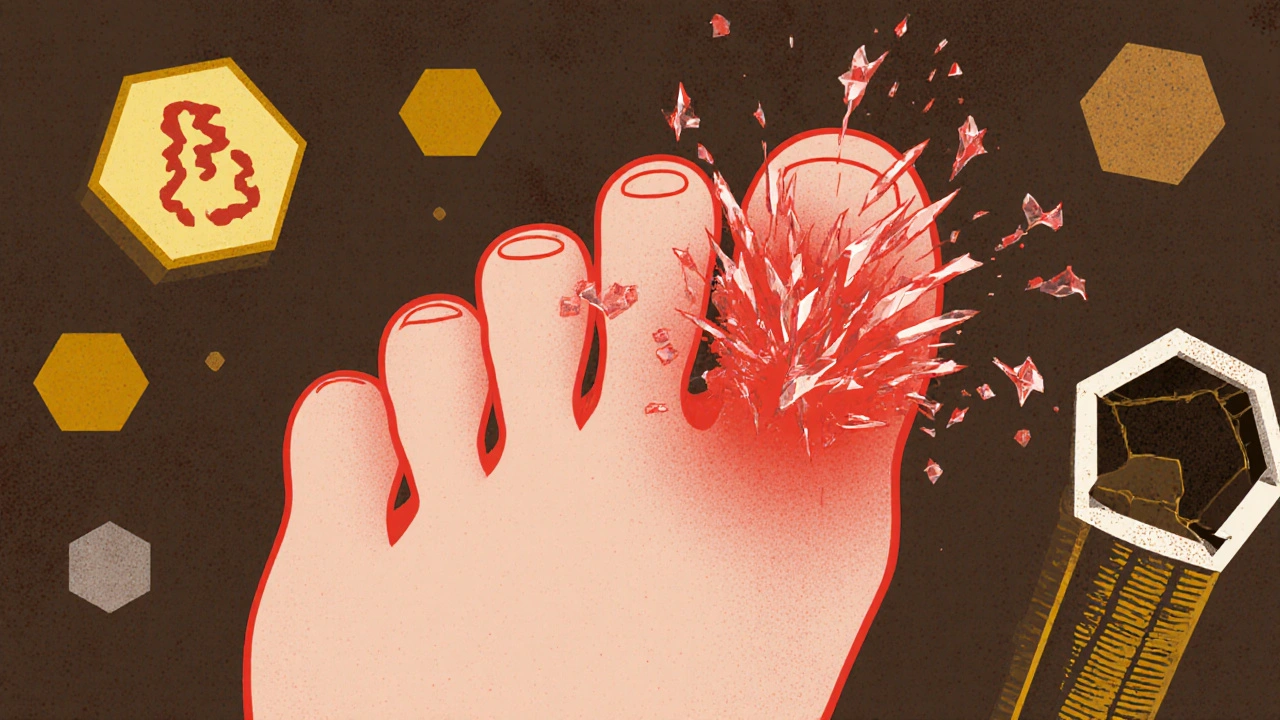
Allopurinol works by blocking an enzyme called xanthine oxidase, which turns purines into uric acid. Purines are natural parts of many foods and your own cells. When they break down, uric acid builds up. If it crystallizes in your joints, you get the sharp pain of gout. That’s why allopurinol is often prescribed for people with frequent gout attacks, kidney stones from uric acid, or high levels from cancer treatments. It’s not a painkiller—it’s a prevention tool. People on chemotherapy or with certain types of leukemia often take it to avoid sudden spikes in uric acid after treatment.
Related to this are hyperuricemia, the medical term for high uric acid in the blood, and purine metabolism, how your body breaks down purines from food and cells. These aren’t just lab terms—they’re the reason you’re on allopurinol. If your body can’t clear uric acid fast enough, or if you eat too many purine-rich foods like red meat, shellfish, or beer, you’re at risk. Allopurinol helps balance that system. It’s also linked to gout treatment, a long-term strategy focused on lowering uric acid, not just masking pain. Unlike NSAIDs or colchicine, which calm flare-ups, allopurinol changes the game over months.
You’ll find posts here that talk about how allopurinol fits into broader medication safety—like reading prescription labels, avoiding drug interactions, and tracking what’s in your cabinet. Some people on allopurinol also take other meds for high blood pressure, kidney issues, or autoimmune conditions, so knowing what to watch for matters. You’ll also see how it compares to other drugs like febuxostat, and why some doctors switch patients when allopurinol doesn’t work well enough. There’s even info on how genetics can affect how your body handles the drug, and why some people get rashes or liver issues.
This isn’t a one-size-fits-all drug. Dosing starts low, especially if you have kidney problems. Side effects like skin rashes, nausea, or dizziness are common at first but often fade. But a severe rash? That’s a red flag—stop taking it and call your doctor. It’s not something to ignore. The posts below give you real-world advice: how to take it right, what foods to avoid, how to spot trouble early, and when to ask for alternatives. You’ll learn how others manage it long-term, what tests your doctor should order, and how to talk to your pharmacist about cost and generics. No fluff. Just what you need to stay safe and in control.
Gout is caused by uric acid crystals from disrupted purine metabolism. Learn how allopurinol, febuxostat, and other urate-lowering drugs work, why most patients fail treatment, and what actually helps control this painful condition.