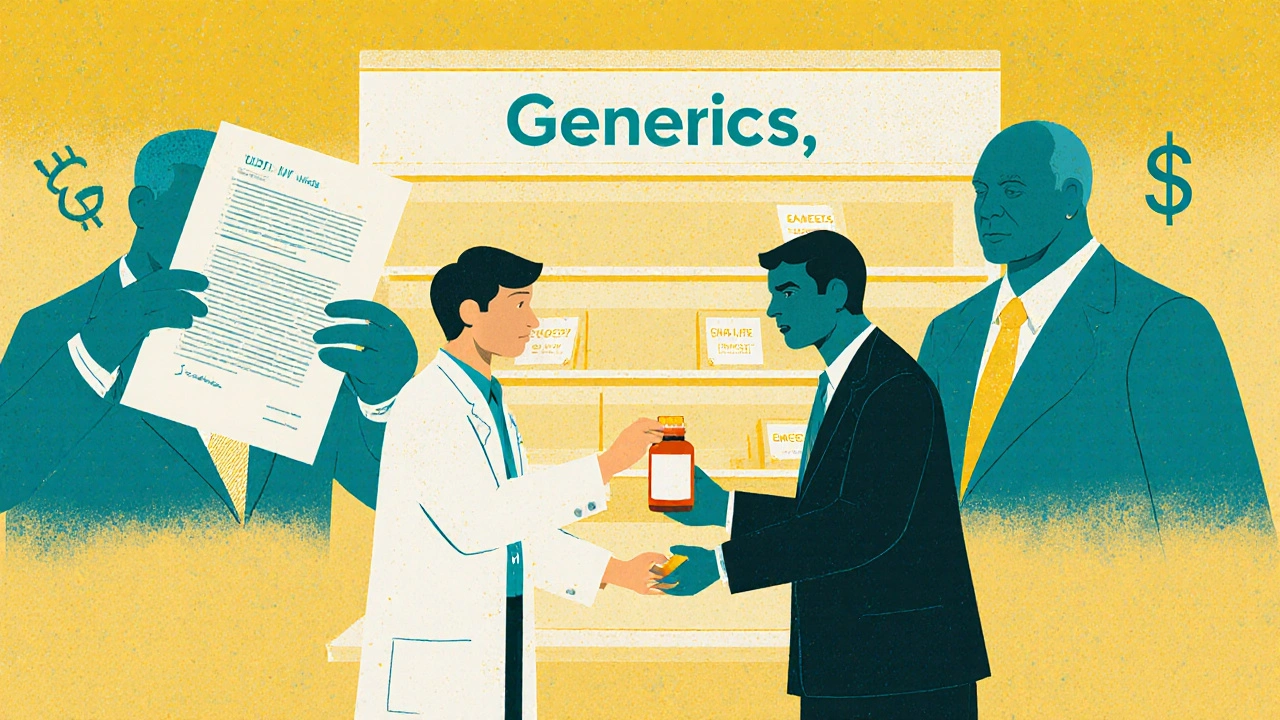
Antitrust Laws: How They Protect Your Access to Affordable Medications
When you buy medicine, you expect to get a fair price—but that’s not always the case. Antitrust laws, rules designed to prevent companies from controlling markets and crushing competition. Also known as competition laws, they exist to stop big pharmaceutical firms from locking out cheaper options and keeping prices high. These aren’t just legal technicalities—they directly affect whether you can afford your prescriptions.
Big drug companies sometimes use shady tactics to delay generics. They pay smaller makers to hold off releasing cheaper versions. They tweak formulas just enough to get new patents and extend exclusivity. They bundle drugs together so pharmacies can’t switch to lower-cost alternatives. These aren’t rumors—they’re documented practices that pharmaceutical competition fights against. When market monopolies form, prices climb. When competition is allowed to thrive, prices drop. That’s why the generic drugs you rely on often owe their existence to antitrust enforcement.
It’s not just about one drug. It’s about how the whole system works. When one company controls 90% of a treatment’s market, they decide the price. When multiple companies can enter, they compete. That’s how you get $5 generic versions of drugs that once cost hundreds. Antitrust investigations have forced companies to stop paying competitors to stay off the market. They’ve broken up illegal deals between manufacturers and pharmacies. They’ve forced disclosure of hidden pricing schemes. These actions don’t make headlines—but they save lives.
What you’ll find here isn’t legal jargon. It’s real stories about how these rules impact your medicine cabinet. You’ll see how patent games affect your insulin costs, how pay-for-delay deals hide behind paperwork, and how generic drug approvals can be stalled for years—not because of safety, but because of strategy. These aren’t abstract concepts. They’re the reason your prescription might be affordable—or unaffordable.
Antitrust laws shape the generic drug market by preventing pay-for-delay deals, patent abuse, and other tactics that block competition. These rules save consumers billions and keep medications affordable.