Deprescribing: How to Safely Reduce Unnecessary Medications
When you take too many drugs at once, it’s not always helping—it might be hurting. Deprescribing, the planned and supervised process of reducing or stopping medications that are no longer beneficial or are causing harm. Also known as medication reduction, it’s not about quitting drugs cold turkey. It’s about making smart, patient-centered choices to improve quality of life, especially when you’re on five, six, or more pills a day. This isn’t just for older adults, though they’re most at risk. It’s for anyone stuck in a cycle of prescriptions that stack up over time, often without ever being reviewed together.
Polypharmacy, the use of multiple medications at the same time, often five or more. Also known as multiple drug therapy, it’s common in people with chronic conditions like diabetes, heart disease, or arthritis. But the more pills you take, the higher your chance of side effects, falls, confusion, or dangerous interactions. The Beers Criteria, a list of potentially inappropriate drugs for adults over 65, is one tool doctors use to spot these risks. Another is checking if any meds were prescribed for symptoms that have since gone away—or if they’re just being carried forward out of habit. Deprescribing asks: Is this drug still doing more good than harm?
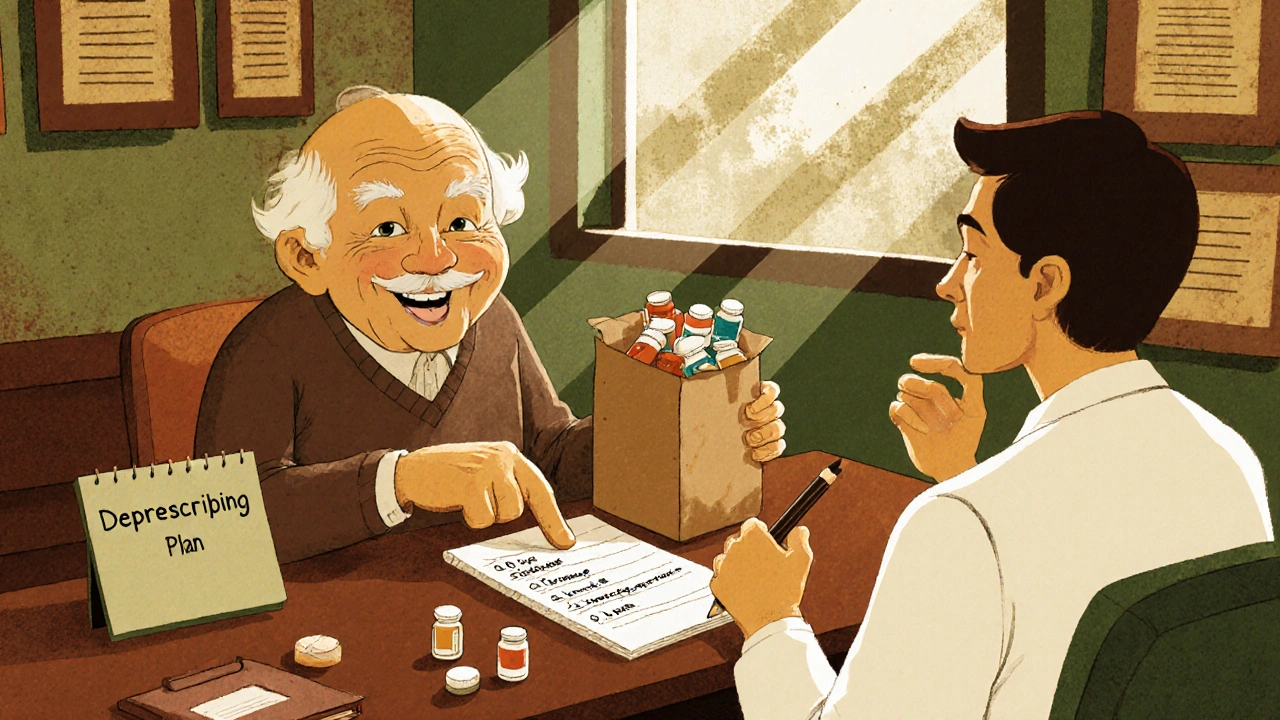
It’s not always easy. Patients worry stopping a pill will make things worse. Doctors fear being blamed if something changes. But studies show that when deprescribing is done right—with clear goals, patient input, and slow tapering—it leads to fewer hospital visits, better sleep, less dizziness, and even improved memory. You don’t need to stop everything at once. Start with one drug that’s outdated, redundant, or causing side effects. Maybe it’s a sleeping pill you’ve taken for years, or an antacid you no longer need. Maybe it’s a blood pressure med that was prescribed during a hospital stay and never re-evaluated. The medication reduction, the step-by-step process of safely lowering or eliminating unnecessary prescriptions works best when you’re in charge of the conversation. Bring your pill bottle to your next appointment. Ask: "Which of these can I stop?" "Which ones are still necessary?" "What happens if I don’t take this anymore?"
Deprescribing isn’t about cutting corners. It’s about cutting clutter. It’s what happens when medicine gets back to its purpose: helping you feel better, not just filling prescriptions. Below, you’ll find real stories and practical guides on how to talk to your doctor, spot red flags in your meds, and make smart choices about what to keep—and what to let go.
Learn how to work with your doctor to safely stop unnecessary medications, reduce side effects, and save hundreds or thousands of dollars a year on prescriptions through deprescribing.