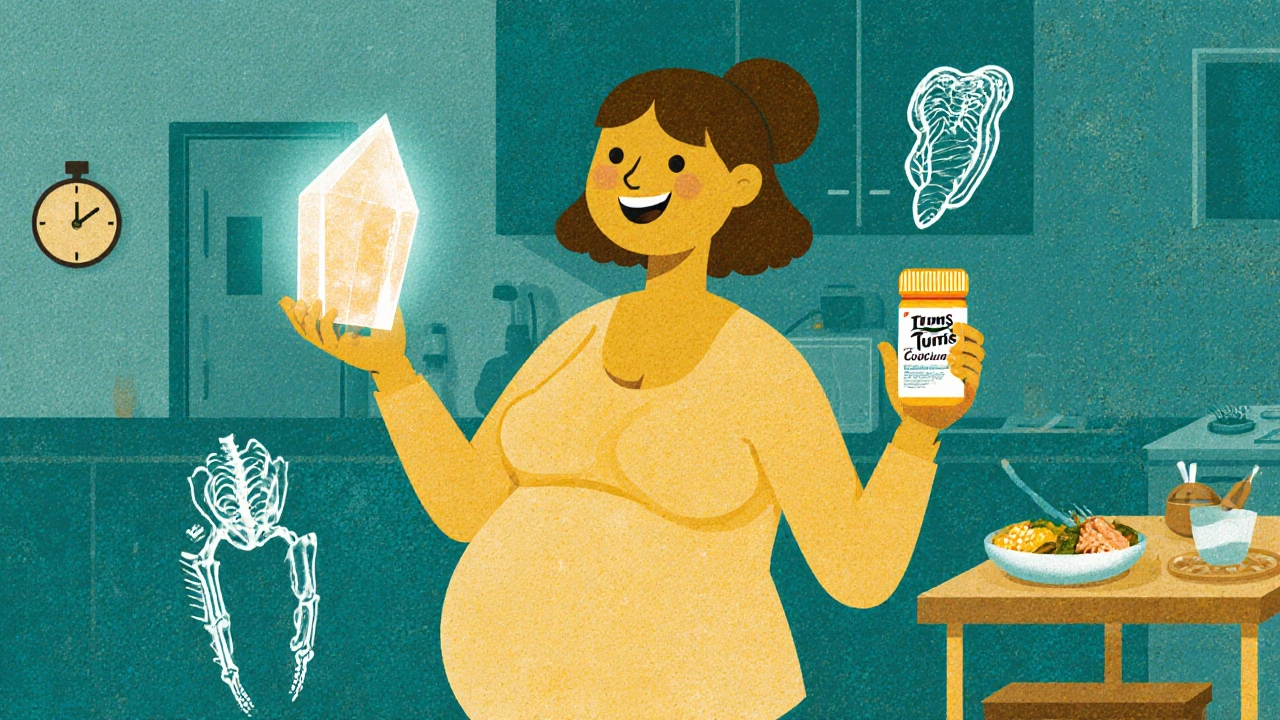
Heartburn During Pregnancy: What Works and What to Avoid
When you're pregnant, heartburn during pregnancy, a burning sensation in the chest caused by stomach acid backing up into the esophagus. Also known as acid reflux, it’s not just a side effect—it’s a physiological shift that affects up to 80% of pregnant women, especially in the second and third trimesters. Your growing uterus pushes upward, relaxing the valve that normally keeps acid where it belongs. Hormones like progesterone slow digestion and loosen that same valve. This isn’t just "being queasy"—it’s a real, measurable change in how your body handles food and acid.
Many people reach for over-the-counter antacids, but not all are safe. antacids during pregnancy, medications that neutralize stomach acid to relieve discomfort like calcium carbonate (Tums) are generally fine in moderation. But avoid those with sodium bicarbonate or magnesium trisilicate—they can cause fluid retention or affect fetal development. GERD in pregnancy, the chronic form of acid reflux that lasts beyond occasional episodes may need H2 blockers like famotidine or proton pump inhibitors like omeprazole—but only under a doctor’s guidance. Don’t assume natural means safe: peppermint tea relaxes the esophageal sphincter and makes it worse. Chocolate, citrus, spicy food, and large meals? They’re triggers for a reason.
What actually helps? Eat smaller meals. Stay upright for at least an hour after eating. Sleep with your head elevated—pillows under your mattress work better than just propping yourself up. Avoid lying down right after eating. Drink water between meals, not with them. These aren’t just tips—they’re evidence-backed strategies that reduce pressure and acid exposure. And while heartburn feels constant, it usually fades after delivery. Until then, knowing what’s safe and what’s not gives you control.
You’ll find posts here that cut through the noise: what medications are truly safe, which foods make it worse, how to sleep without burning, and what to do when OTC drugs don’t help. No fluff. No myths. Just clear, practical info from real cases and clinical guidelines. Whether you’re in your first trimester and just starting to feel it, or your third and it’s keeping you up at night, this collection has what you need to manage it—safely and effectively.
Learn which heartburn medications are safe during pregnancy, including antacids like Tums, H2 blockers like famotidine, and PPIs like omeprazole. Discover what to avoid and simple lifestyle changes that help.