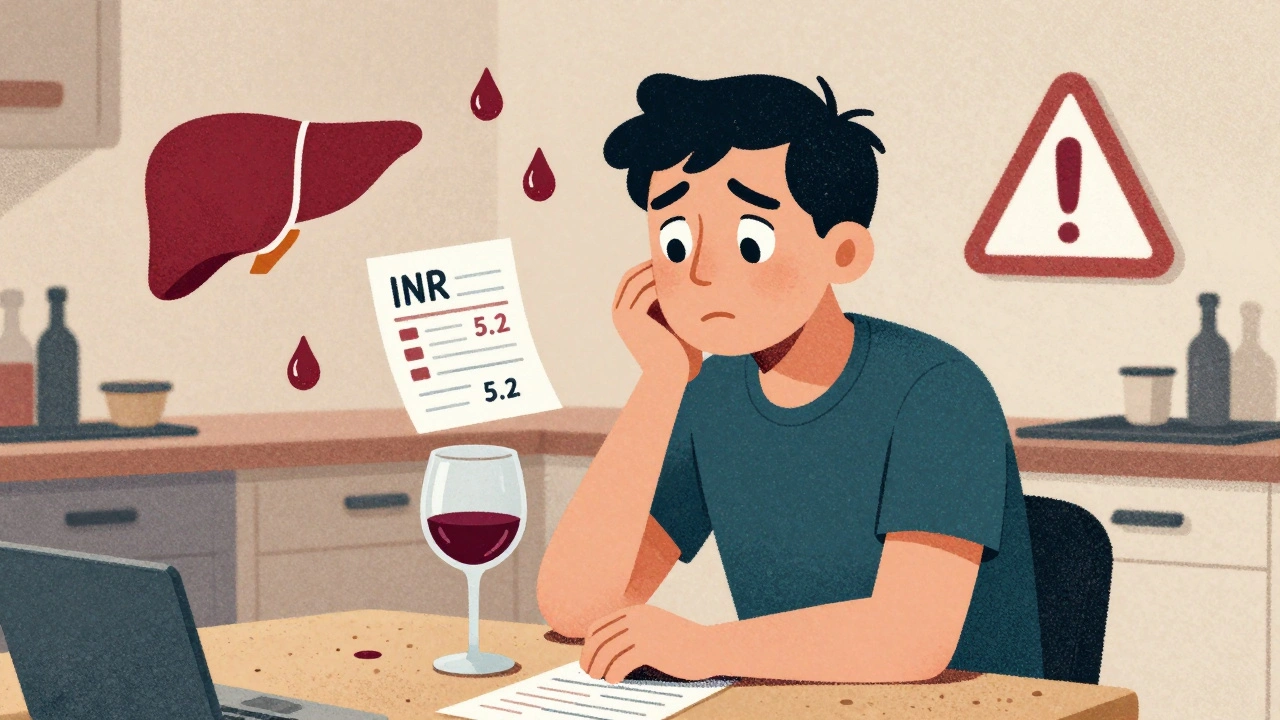
INR Changes: What Affects Blood Thinners and How to Stay Safe
When you're on a blood thinner like warfarin, a common anticoagulant used to prevent dangerous blood clots. Also known as Coumadin, it works by slowing down your body's ability to form clots—but it only works if your INR, a standardized measure of how long it takes your blood to clot. Also known as International Normalized Ratio, it stays in the right range. Too low, and you risk clots. Too high, and you risk bleeding. PT/INR test, the lab test that tracks your blood's clotting time. Also known as Prothrombin Time, it is your lifeline when taking these meds.
INR changes don’t happen for no reason. They’re usually tied to something you’re doing—or not doing. Eating more leafy greens? That’s vitamin K, and it directly fights warfarin’s effect. Starting a new antibiotic? Some can make your INR spike dangerously high. Skipping a dose? That’s a quick way to drop it. Even alcohol, herbal supplements like St. John’s wort, or a bad case of the flu can throw your numbers off. This isn’t guesswork. It’s science. And it’s why people on warfarin need regular blood tests. The goal isn’t to hit one magic number every time—it’s to keep your INR steady within your doctor’s target range, usually between 2 and 3 for most conditions.
When your INR changes, it’s not just a number on a page. It’s a signal. A high INR might mean you’re at risk for a bleed in your brain, gut, or joints. A low INR might mean a clot is forming in your leg or heart. That’s why you can’t ignore a lab result that’s out of range. You need to call your doctor, not wait. Sometimes, it’s as simple as adjusting your dose. Other times, you need to change what you eat, stop a supplement, or switch meds. And if you’re on newer blood thinners like apixaban or rivaroxaban? Those don’t need INR checks at all—but if you’ve ever been on warfarin, you know how much those numbers matter.
What you’ll find below are real stories and clear explanations about how INR changes happen, what to watch for, and how to avoid the mistakes that put people in the hospital. From interactions with common foods to how illness and other drugs mess with your numbers, these posts give you the practical tools to stay in control. You’re not just tracking a lab value—you’re protecting your life.
Alcohol can dangerously raise your INR levels when you're on warfarin, increasing bleeding risk. Learn how drinking affects your blood thinner, what safe limits are, and what to do if your INR spikes.