Medication Storage: How to Keep Your Pills Safe, Effective, and Ready to Use
When it comes to medication storage, the way you keep your pills, liquids, and patches directly affects how well they work and whether they’re safe to use. Also known as drug storage, it’s not just about putting bottles in a drawer—it’s about controlling heat, light, moisture, and access to prevent waste, poisoning, or failure. A pill stored in a steamy bathroom might break down before its expiration date. A child who finds a bottle left on the nightstand could end up in the ER. These aren’t hypotheticals—they happen every day.
Medicine cabinet, the most common storage spot in U.S. homes. Also known as bathroom cabinet, it’s often the worst place for meds because of humidity and temperature swings. The FDA says most medications are designed to stay stable at room temperature (68–77°F), but bathrooms regularly hit 90°F and 70% humidity after a shower. That’s why your insulin, thyroid pills, or nitroglycerin might lose potency faster than you think. The same goes for antibiotics like amoxicillin—some liquid forms expire in days once mixed, even if the bottle says otherwise.
Temperature sensitivity, a hidden risk for many common drugs. Also known as cold chain requirements, it’s why some vaccines and biologics need refrigeration—but even everyday pills like allopurinol or levothyroxine can degrade in heat. If you’ve ever left a prescription in a hot car, on a windowsill, or in a gym bag during summer, you’ve put your treatment at risk. Studies show some tablets lose up to 30% of potency after just a few weeks in 100°F conditions. That’s not a small drop—it could mean your blood pressure med doesn’t work, or your seizure drug triggers a breakthrough.
Then there’s pharmacy labels, the small stickers and warnings that tell you how to store and use your meds safely. Also known as auxiliary labels, they’re not decoration—they’re instructions. A red sticker saying "Keep refrigerated"? That’s not a suggestion. A yellow one saying "Do not crush"? Crushing a time-release pill can send a dangerous dose into your system all at once. And that little blue sticker with a clock? It might mean your med needs to be taken on an empty stomach, or that it breaks down in sunlight.
What you’ll find here are real, tested ways to handle your meds—not theory, not marketing, not guesswork. We’ll show you how to track expiration dates before they become a hazard, why the kitchen counter beats the bathroom for most drugs, how to childproof without locking everything away, and what to do when your pharmacy gives you a new bottle with different-looking pills. You’ll learn how to spot when a drug has gone bad—by smell, color, or texture—not just by the date on the label. And you’ll see how simple changes, like moving your meds to a cool, dry drawer, can save you money, prevent accidents, and keep your treatment working exactly as it should.
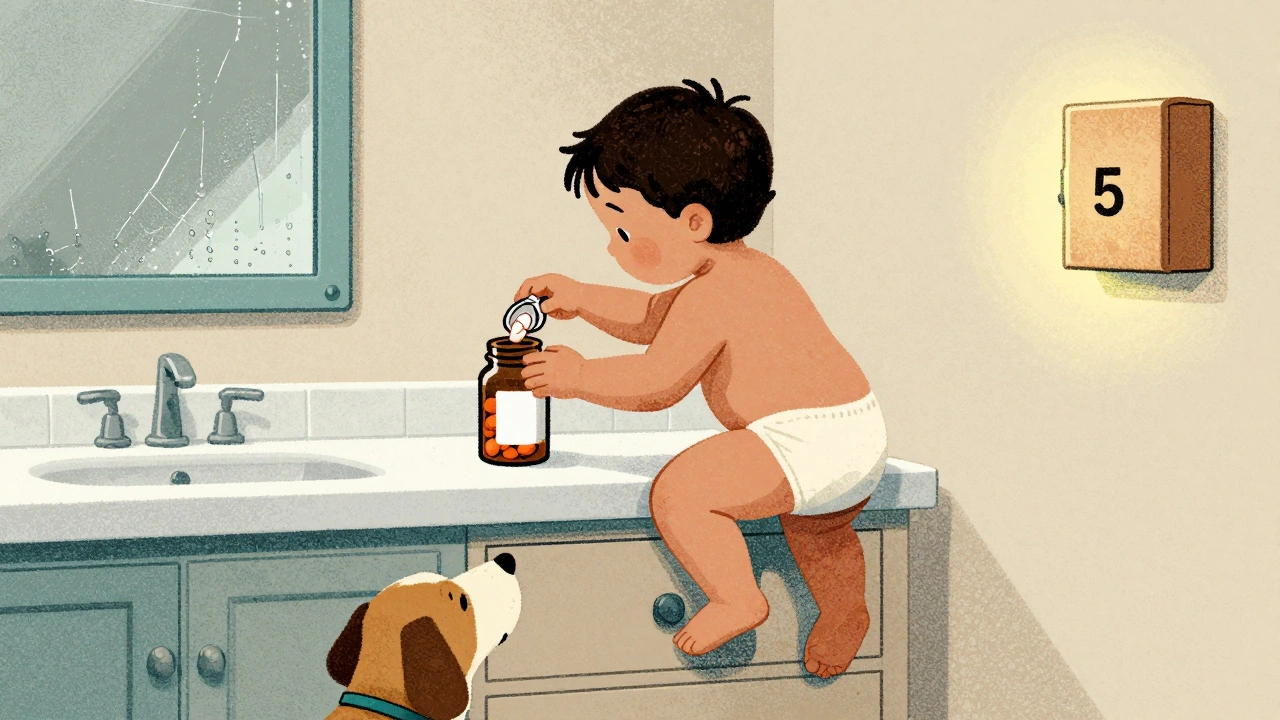
Learn how to safely store medications to protect children and pets from accidental poisoning. Discover where to lock meds, why original packaging matters, and how to prevent deadly mix-ups between human and pet drugs.