Pediatric Medications: Safe Uses, Common Drugs, and What Parents Need to Know
When it comes to pediatric medications, drugs specifically formulated or dosed for children from newborns to teens. Also known as children's medicines, these aren't just smaller pills for grown-ups—they're carefully designed to match a child's changing metabolism, weight, and developing organs. Giving a child an adult dose of ibuprofen or using a cough syrup meant for adults can lead to serious harm. That’s why pediatric medications have their own rules, labels, and safety checks.
One of the biggest risks isn’t the drug itself—it’s how it’s used. pediatric dosing, the precise amount of medicine based on a child’s weight and age is critical. A teaspoon error can turn a safe dose into an overdose. That’s why many hospitals now use weight-based calculators and avoid adult-sized measuring spoons. child-safe medicine, medications stored, labeled, and packaged to prevent accidental ingestion by young children is just as important. Many parents keep meds in easily accessible drawers or purses, not realizing that even a few pills can be deadly to a toddler. The same goes for mixing up human and pet meds—something that happens more often than you’d think.
Not all drugs are safe for kids. Some antibiotics, pain relievers, and even allergy meds can cause unexpected side effects like seizures, liver damage, or extreme drowsiness. pediatric drug safety, the system of guidelines, warnings, and monitoring used to protect children from harmful medication effects includes things like avoiding aspirin in kids (due to Reye’s syndrome), steering clear of certain cough syrups under age 6, and never using adult-strength topical creams on infants. Even over-the-counter drugs need a second look—many contain the same active ingredients as prescription meds, and stacking them can be dangerous.
And it’s not just about the pills. The way you give the medicine matters. Some kids can’t swallow pills, so liquid forms are needed—but not all liquids are equal. Some need refrigeration, others must be shaken, and many expire quickly after opening. Labels with color-coded stickers, like those from pharmacies, aren’t just decoration—they’re warnings. A red sticker might say "shake well," a yellow one might warn "can cause drowsiness," and a black one might say "do not use if child has asthma." These aren’t optional. They’re lifesavers.
What you’ll find here isn’t a list of every drug ever made for kids. It’s a real-world guide to the most common situations parents face: treating infections, managing fevers, handling allergies, and avoiding mistakes that lead to ER visits. You’ll see how antibiotics like doxycycline are sometimes used in older children, why some meds are off-limits for toddlers, and how to store medicines so your child can’t find them. You’ll also learn how to talk to your doctor about deprescribing—when a child no longer needs a drug they’ve been on too long. This isn’t theory. It’s what happens in homes, clinics, and pharmacies every day.
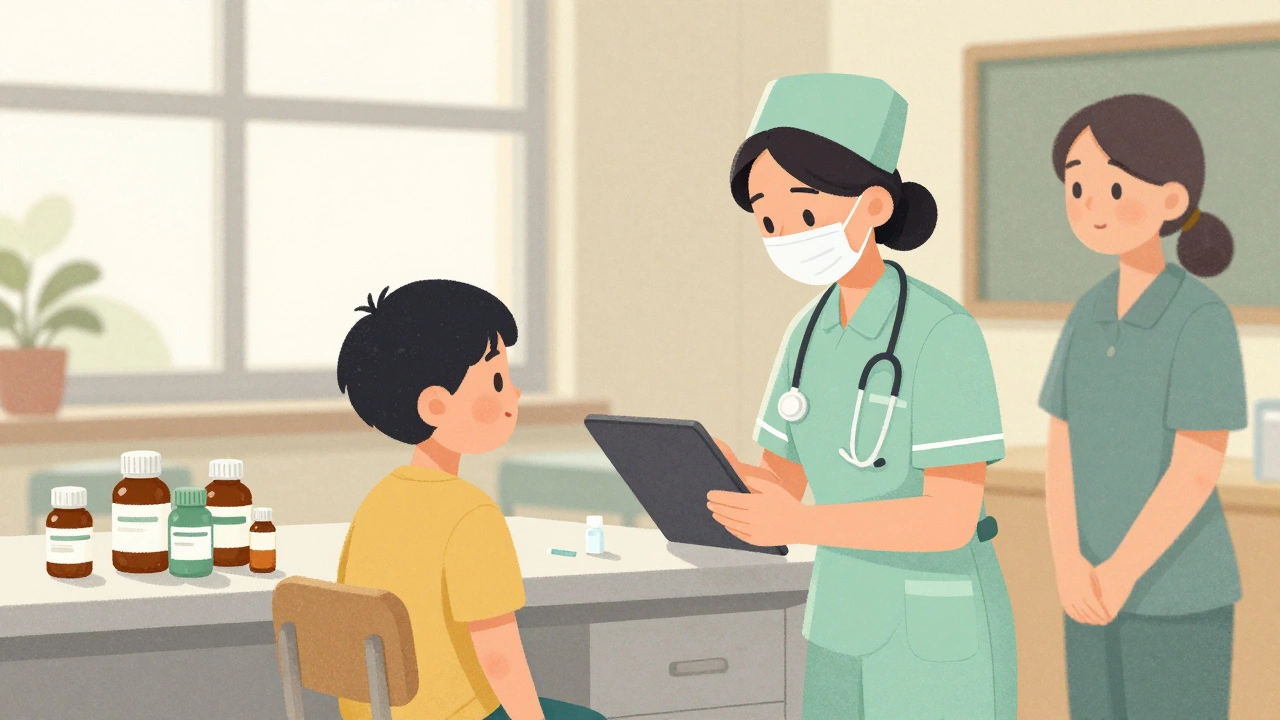
Learn how school nurses safely coordinate daily pediatric medications using the Five Rights, legal protocols, and proven systems to prevent errors and ensure student safety.