

If you're taking a medication that comes with serious risks-like clozapine for schizophrenia, natalizumab for multiple sclerosis, or a rare orphan drug-you might be asked to join a patient registry. It sounds bureaucratic, maybe even intimidating. But here’s the truth: patient registries are one of the most important tools keeping you safe after a drug hits the market. Clinical trials can’t catch every side effect, especially rare ones that show up years later or in people with other health conditions. Registries fill that gap. They’re not optional extras. For many drugs, they’re the only way doctors and regulators know if a medication is truly safe in the real world.
What Exactly Is a Patient Registry for Drug Safety?
A patient registry is a structured system that collects health data from people taking specific medications. It’s not a clinical trial. You don’t get a placebo. You’re not being tested on whether the drug works-you’re already using it. Instead, the registry tracks what happens to you over time: any side effects, changes in your health, how you’re feeling, and whether you’re sticking with the treatment. This data helps drug makers, doctors, and agencies like the FDA and EMA spot problems early.
Think of it like a long-term safety checkup. Clinical trials usually involve a few thousand people over months or a couple of years. But once a drug is approved, hundreds of thousands of people start using it. Some are older. Some have other diseases. Some take other meds. That’s where real risks show up. A registry tracks those real-world patterns. For example, the clozapine registry in the UK and Ireland has been running for decades. It caught a rare but deadly blood disorder called agranulocytosis-so now, anyone on clozapine must be enrolled and get regular blood tests. That’s life-saving.
Why Should You Join One?
You might think, “I’m not a researcher. Why should I bother?” But your participation isn’t just helping science-it’s helping you and others like you.
- You get better care. Many registries send you personalized updates about your medication, new safety alerts, or tips for managing side effects. One study found that 68% of participants felt they understood their condition better just from being in a registry.
- You help protect others. If you report a side effect, and others report the same thing, regulators can act fast-maybe even change the drug’s warning label or restrict its use. That could prevent someone else from getting seriously hurt.
- You’re part of a community. Many registries connect you with other patients. The Hunter Syndrome Family Registry, for example, lets parents track their child’s progress and share tips with others. That kind of support matters.
And here’s the kicker: for some medications, you can’t even get the drug without joining. That’s not a loophole-it’s a safety rule. If your doctor prescribes Tysabri (natalizumab) for MS, you’re legally required to be in the registry. It’s not about control. It’s about making sure you’re monitored for a rare but dangerous brain infection called PML.
How Do You Find Out If You Need to Join?
Most of the time, your doctor or pharmacist will tell you. But if you’re not sure, here’s how to check:
- Look up your medication on the FDA’s Drugs@FDA database. Type in the drug name, click on the “Approval History” tab, and look for “Risk Evaluation and Mitigation Strategy” (REMS). If it’s listed, there’s a registry.
- Check the European Medicines Agency’s product information page if you’re in the EU. Look for “Post-Authorization Safety Studies.”
- Search ClinicalTrials.gov and filter for “Registry” and “Safety Monitoring.”
- Reach out to disease advocacy groups. The National Organization for Rare Disorders (NORD) connects patients with over 140 disease-specific registries.
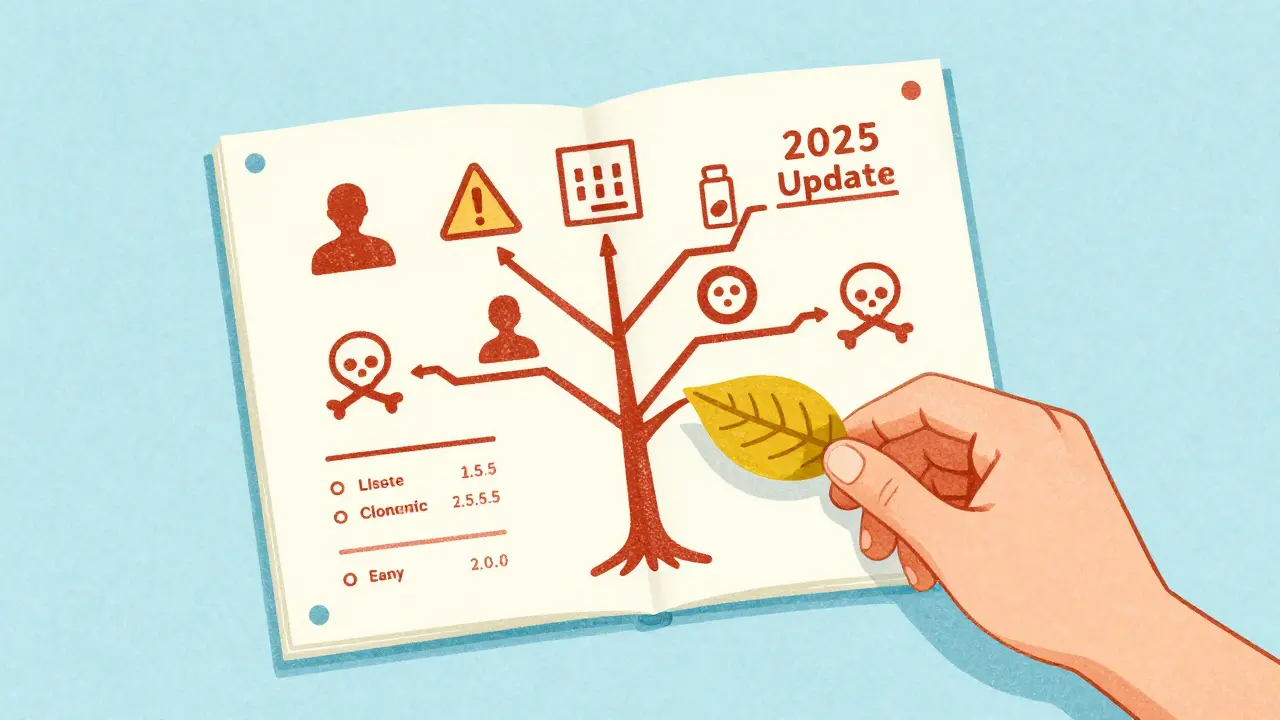
As of 2023, the FDA lists 47 medications with mandatory registries. That includes drugs for multiple sclerosis, epilepsy, certain cancers, and rare genetic disorders. If you’re on one of these, you’re already in the system-or soon will be.
What Does Joining Actually Involve?
It’s not as complicated as it sounds. Most registries ask for the same basic info:
- Your age, gender, and location
- Your diagnosis and when you were diagnosed
- Details about your medication-dose, how long you’ve been taking it, whether you miss doses
- Any side effects you’ve had
- Results from lab tests (like blood counts or liver function)
- How you’re feeling day to day-some registries use short surveys
Initial sign-up usually takes 15 to 20 minutes. After that, you might get a yearly email asking for updates, or your doctor might pull your data directly from your electronic health record if the registry is linked. Some registries even have smartphone apps now, like the FDA’s MyStudies app, which lets you report side effects with a few taps.
Don’t be fooled by long consent forms. Yes, they’re dense-often 2,000 words or more. But you don’t need to read every line. Focus on these three things:
- Who will see your data? (Usually only researchers, regulators, and your doctors)
- Will your data be shared with drug companies? (Sometimes, but only in aggregated form-no names attached)
- Can you leave anytime? (Yes. Always.)
What If You’re Worried About Privacy?
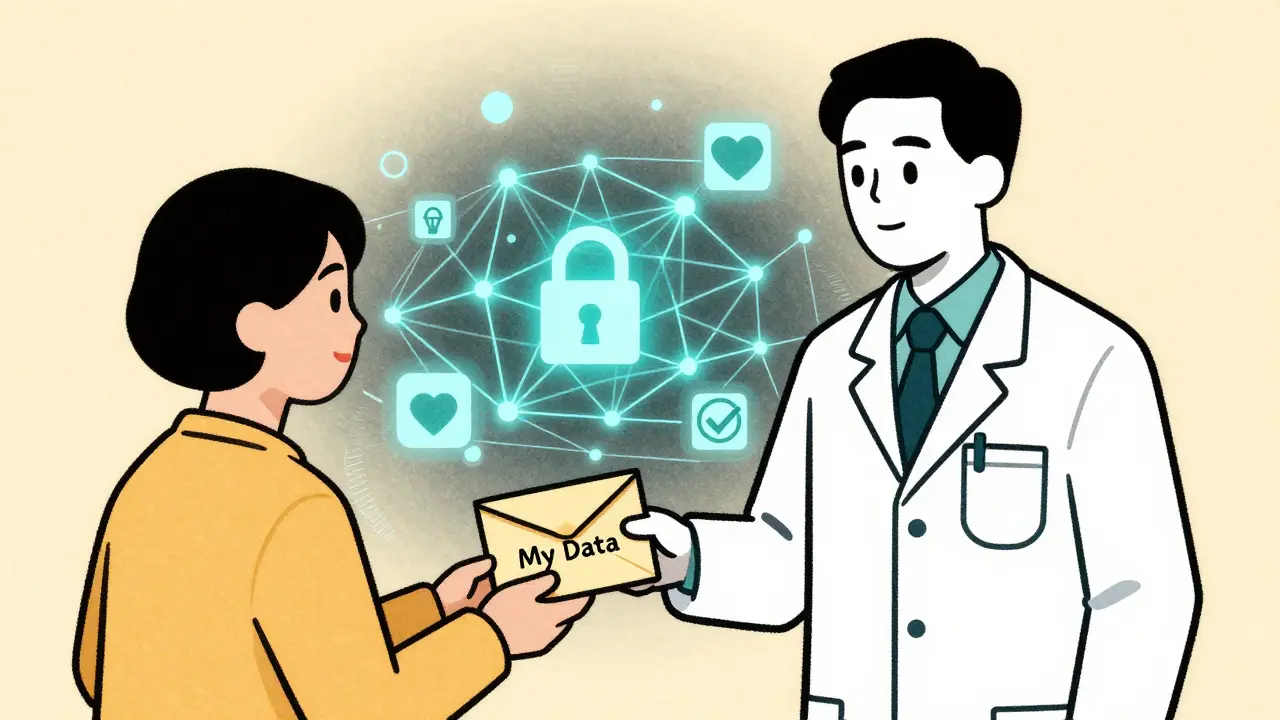
This is the number one reason people say no. And it’s valid. But modern registries are built with strong privacy rules.
In the U.S., registries must follow HIPAA. In Europe, they follow GDPR. Your name, address, and insurance details are stripped out. Your data gets a code, not your identity. Registries are audited regularly. The FDA requires that 85% of critical safety data be complete and accurate-and that includes protecting your information.
Still, if you’re nervous, ask: “Can I opt out of sharing my data with the drug company?” The answer is usually yes. Or: “Can I see what data you have on me?” Many registries now let you request your own records.
And here’s something new: platforms like MyDataCan let you control exactly who sees your data and for what purpose. You can say, “Allow this registry to use my data for safety research, but not for marketing.” That kind of control is becoming standard.
What Are the Downsides?
No system is perfect. Registries have limits.
- They’re not 100% accurate. A 2022 study found that only 68% of patient-reported side effects matched medical records. Sometimes people forget symptoms. Sometimes doctors don’t document them. That’s why registries use multiple data sources-lab results, EHRs, and patient reports-to cross-check.
- They need you to stick with it. About 19% of patients drop out each year. If you stop reporting, your data becomes useless. That’s why good registries send reminders, newsletters, and even offer small incentives like gift cards.
- They don’t catch everything. Registries are great for common or predictable side effects. But if a side effect is extremely rare-like one in a million-you might still need more tools. That’s why registries work alongside other systems like spontaneous reporting (where you call the FDA directly).
Still, they’re the best tool we have for long-term safety. Without them, we wouldn’t know about the risks of certain diabetes drugs causing pancreatitis, or how some blood pressure meds affect kidney function over time.
What’s Changing in 2025?
The rules are getting tighter-and that’s good for you.
- By 2025, every new drug with serious safety risks will be required to have a registry plan approved before it’s even sold.
- The FDA’s Sentinel Initiative will soon cover 350 million patient records. That means if you’re on a high-risk drug, you might be enrolled automatically-unless you opt out.
- Blockchain tech is being tested in 17 registries to make data more secure and give you full control over who accesses it.
- Registries will start asking more about how you feel, not just what’s happening physically. Your quality of life matters too.
This isn’t just bureaucracy. It’s progress. The goal is to make sure the drugs you take are safe-not just in the first year, but for the rest of your life.
What If You Don’t Want to Join?
You have rights. If a registry is voluntary, you can say no. But if it’s mandatory, you can’t get the drug without joining. That’s not a punishment-it’s a safety net. Think of it like wearing a seatbelt. You don’t get to choose whether you wear it if the car’s design requires it.
If you’re unsure, talk to your doctor. Ask: “What happens if I don’t join?” and “What’s the risk if I don’t?” Most doctors will explain why it’s important-and they’ve seen the consequences of skipping it.
And remember: you can leave anytime. No one is holding your data hostage. Your participation is your choice. But if you stay in, you’re helping make the next drug safer-for you, your family, and millions of others.
Are patient registries only for rare diseases?
No. While many registries focus on rare conditions, they’re also used for common drugs with serious risks-like blood thinners, certain antidepressants, or medications for multiple sclerosis. The FDA requires registries for any drug where long-term safety data is needed, regardless of how common the condition is.
Can I join a registry even if I’m not currently taking a medication?
Generally, no. Most registries require you to be actively taking the medication. But some disease registries-like those for cystic fibrosis or lupus-allow people to join even if they’re not on a specific drug, to track their overall health. Check with the registry directly.
Do I have to pay to join a registry?
No. Patient registries for drug safety are always free. They’re funded by drug companies, government agencies, or nonprofit organizations. If someone asks you for money to join, it’s not legitimate.
How often will I be asked to update my information?
It varies. Simple registries ask for updates once a year. More detailed ones might ask every 3 or 6 months. If your registry is linked to your electronic health record, updates may happen automatically. You’ll always be notified before any new request.
Can my insurance company see my registry data?
No. Registry data is kept separate from your insurance records. It’s protected under HIPAA (in the U.S.) or GDPR (in Europe). Your insurance company cannot access your registry information unless you give written permission-and that’s rarely needed.
What if I move to another country? Will my registry data transfer?
It depends. Most registries are country-specific. But if you’re on a global drug like Tysabri or Gilenya, your new doctor can contact the registry administrator to continue your participation. Some registries now allow you to download your data and share it with a new provider.
If you’re on a medication with known risks, joining a registry isn’t just a formality-it’s a smart move. You’re not giving up your privacy. You’re gaining better care, better information, and a voice in how drugs are monitored. And in the long run, that’s how medicine gets safer for everyone.




Mark Alan
I don't trust these registries one bit. 😡 They're just a backdoor for Big Pharma to spy on us! I'm not some lab rat. If they want my data, they can kiss my a**. 🤬