
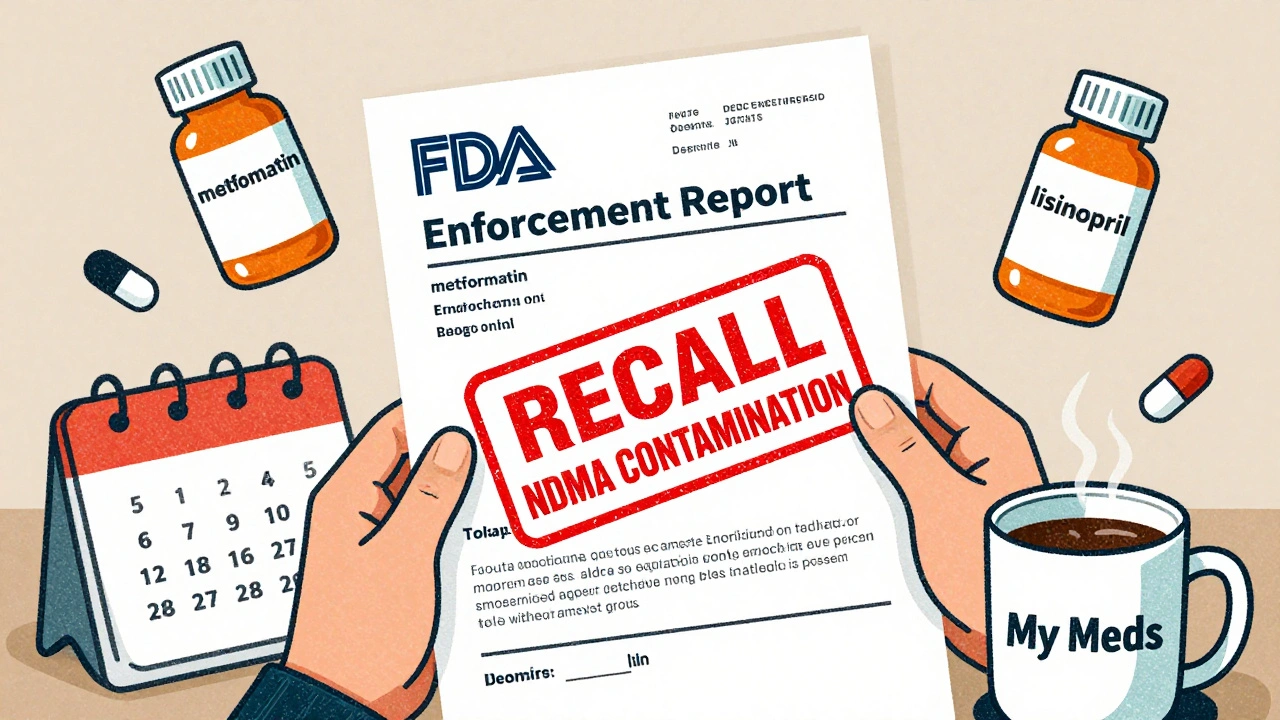
Every year, the FDA issues over 1,200 safety alerts about prescription drugs, over-the-counter medicines, and medical devices. Some of these alerts warn about deadly contaminants. Others reveal hidden side effects or sudden shortages. If you’re a patient taking medication regularly, a caregiver managing multiple prescriptions, or a healthcare professional, subscribing to FDA drug safety alerts isn’t just smart-it’s essential.
Why You Need FDA Drug Safety Alerts
In 2018, a contamination in valsartan, a common blood pressure medication, led to recalls across multiple brands. Thousands of patients were unknowingly taking pills with a cancer-causing impurity. If they’d been signed up for FDA alerts, they would’ve known within hours-not weeks. The FDA doesn’t wait for news outlets to pick up the story. When a drug is recalled, a safety issue is confirmed, or a label changes, they push out alerts directly. These aren’t generic warnings. They’re specific, timely, and backed by regulatory authority. A 2022 survey by the American Medical Association found that 72% of doctors who received FDA Drug Safety Communications changed how they prescribed medications based on the alerts. Patients who subscribed to keyword-based alerts for allergens like "peanut" or drug names like "insulin" reported avoiding dangerous products before they even reached pharmacy shelves. The problem? Only 38% of healthcare workers know about all three FDA alert systems. Most people think they’re covered by their pharmacy’s email list or a commercial app. But those services are slower, limited, and often paid. The FDA’s system is free, fast, and comprehensive.Three Ways to Get FDA Drug Safety Alerts
The FDA runs three separate alert systems, each with a different focus. You don’t need to sign up for all three-but you should understand what each one does.1. Enforcement Report Subscription Service
This is the go-to for recalls. If a batch of metformin is found to have unsafe levels of NDMA, or a heart medication is mislabeled, this system sends the alert first. You can subscribe at fda.gov/enforcement-report-subscription. All you need is an email. Once you’re in, you can:- Select product categories: Drugs, Medical Devices, Food, Cosmetics
- Choose daily or weekly delivery
- Add up to five custom keywords (like "lisinopril", "epinephrine", or "child-safe")
2. Drug Safety Communications
This system covers safety issues that don’t always involve recalls. Think: new black box warnings, unexpected side effects, or drug interactions that weren’t known before. It’s designed for both patients and providers. You’ll get emails about things like:- Increased risk of tendon rupture with certain antibiotics
- Birth control pills losing effectiveness when taken with specific antibiotics
- New data showing a diabetes drug may raise heart failure risk
3. MedWatch Safety Alerts
MedWatch is the FDA’s oldest system, dating back to 1993. It’s the official channel for reporting adverse events-but it also sends out safety updates. You can get MedWatch alerts three ways:- Email: Sign up at fda.gov/medwatch-email-list
- Twitter: Follow @FDAMedWatch (over 285,000 followers)
- RSS feed: Use the feed at fda.gov/about-fda/contact-fda/stay-informed/rss-feeds/medwatch/rss.xml
What the FDA Alerts Don’t Tell You
Here’s the catch: FDA alerts are short. They’re meant to get your attention, not give you the full story. An alert might say: "FDA warns of increased risk of liver injury with Drug X." But it won’t tell you:- How many cases have been reported?
- What symptoms to watch for?
- Are there safer alternatives?
How FDA Alerts Compare to Other Services
You might be using a commercial drug safety app like MedWatcher or First Databank. They’re useful-but they’re not the same.| Feature | FDA Alerts | Commercial Services (e.g., MedWatcher) |
|---|---|---|
| Cost | Free | $9.99/month or more |
| Scope | All FDA-regulated drugs, devices, biologics | Primarily prescription drugs only |
| Speed | Average 4.2 hours after decision | Average 8.7 hours |
| Keyword Filtering | Up to 5 keywords (soon 10) | Yes, but limited to their database |
| Mobile Push Notifications | No (coming Q2 2025) | Yes |
| Personalized Risk Assessment | No | Yes (for institutions, $1,200/year) |
Common Mistakes People Make
Even if you sign up, you might not be using the system right.- Signing up for just one system. Enforcement Reports catch recalls. Drug Safety Communications catch side effects. MedWatch catches everything. Use all three if you’re serious.
- Using vague keywords. "Painkiller" won’t work. Use specific names: "ibuprofen", "oxycodone", "acetaminophen".
- Ignoring the link. The email says "learn more"-click it. The full details are there.
- Assuming your pharmacy alerts you. Most pharmacies don’t get FDA alerts until hours after they’re issued. Some don’t get them at all.
What’s Coming in 2025
The FDA is fixing the biggest complaints.- One unified system: Right now, three separate systems cause confusion. By Q3 2025, they’ll merge into a single alert portal.
- More keywords: You’ll soon be able to set up to 10 custom keywords instead of five.
- Mobile app: Push notifications are coming in Q2 2025. No more checking email.
- Spanish alerts: Currently, only 12% of alerts reach non-English speakers. Spanish-language alerts launch in Q3 2025.
- AI prioritization: Machine learning will rank alerts by urgency. High-risk issues will rise to the top. Alert fatigue is being tackled head-on.
How to Get Started Today
Here’s your simple action plan:- Go to fda.gov/enforcement-report-subscription and sign up for Enforcement Reports. Pick "Drugs" and add keywords for your medications.
- Visit fda.gov/drugs/drug-safety-and-availability/drug-safety-communications and sign up for Drug Safety Communications. Choose categories relevant to your health.
- Sign up for the MedWatch E-list at fda.gov/medwatch-email-list as a backup.
- Bookmark the FDA Drug Safety page: fda.gov/drugs/drug-safety-and-availability
- Check your email every few days. Don’t wait for a crisis.
Frequently Asked Questions
Are FDA drug safety alerts free?
Yes. All FDA alert systems-Enforcement Reports, Drug Safety Communications, and MedWatch-are completely free. You only need an email address. No credit card, no subscription fees, no hidden costs.
How often do I get alerts?
It depends on the system and your settings. Enforcement Reports lets you choose daily or weekly. Drug Safety Communications sends alerts only when new safety issues are confirmed-usually a few times a month. MedWatch sends updates more frequently, sometimes multiple times a week. You’ll get more alerts if you use specific keywords or follow multiple categories.
Can I get alerts in Spanish?
Not yet, but it’s coming. The FDA plans to launch Spanish-language versions of all three alert systems in Q3 2025. Until then, you can use browser translation tools on the FDA website, but email alerts will still be in English.
Do I need to sign up if I’m on medication?
If you take any prescription or over-the-counter drug, yes. Even if you think your doctor or pharmacist will tell you, they often don’t get the alert until hours after it’s issued. The FDA is the original source. Subscribing gives you direct access to the most accurate, fastest information.
What if I get too many alerts?
You can adjust your settings. Reduce frequency from daily to weekly. Limit keywords to only your most critical medications. The FDA is also rolling out AI-powered prioritization in 2025, which will automatically surface the most urgent alerts and reduce noise. For now, if you’re overwhelmed, unsubscribe from MedWatch-it’s the broadest feed-and stick with Enforcement Reports and Drug Safety Communications.
Can I report a bad reaction to the FDA?
Yes. That’s what MedWatch is for. If you or someone you know has a serious side effect, allergic reaction, or medication error, you can file a report at fda.gov/medwatch. This helps the FDA identify new safety issues. You don’t need to be a doctor-patients can report too.



Shubham Mathur
Just signed up for all three FDA systems today- Enforcement Reports with my meds as keywords, Drug Safety Comms for heart stuff, and MedWatch as backup. No more guessing. If my blood pressure med gets recalled, I’ll know before my pharmacy does. Free? Yes. Essential? Absolutely. Stop waiting for a crisis to act.