Cancer Cells: What They Are, How They Spread, and What You Need to Know
When we talk about cancer cells, abnormal cells that grow without control and can invade nearby tissues. Also known as malignant cells, they’re not just broken cells—they’re rogue agents that ignore the body’s signals to stop dividing. Every person’s body makes a few faulty cells every day, but your immune system usually catches and kills them. Cancer happens when that system fails, and those cells start multiplying like wildfire.
These cancer cells don’t just sit still. They develop their own blood supply, trick the immune system, and spread to other parts of the body through the bloodstream or lymph nodes. That’s called metastasis. It’s not one disease—it’s hundreds. Tumor growth can be slow, like in some thyroid cancers, or fast, like in pancreatic cancer. What they all share is a mutation in DNA that makes cells act like they’re stuck in permanent growth mode. And while chemotherapy is one way to fight them, it’s not the only tool. Radiation, immunotherapy, targeted drugs, and even surgery are all part of the fight.
What you won’t find in most headlines is how messy this battle really is. One person’s chemotherapy works wonders. Another’s doesn’t touch the cancer at all. Some tumors shrink with pills you swallow once a day. Others need weeks of IV drugs and hospital stays. The science behind oncology has advanced fast, but the human side hasn’t changed: people still lose sleep, worry about side effects, and wonder if the next scan will show good news. And while cell mutation is the root cause, it’s not the whole story—lifestyle, environment, and even luck play roles too.
What you’ll find in the articles below isn’t theory. It’s real-world info from people who’ve lived through it. You’ll read about how thyroid cancer is treated with radioactive iodine, why some meds cause nausea that feels worse than the disease, and how medication shortages can delay life-saving treatments. There’s no fluff here—just facts, strategies, and hard truths about what happens when cancer cells take hold. Whether you’re a patient, caregiver, or just trying to understand, this collection gives you the practical knowledge you need to ask better questions and make smarter choices.
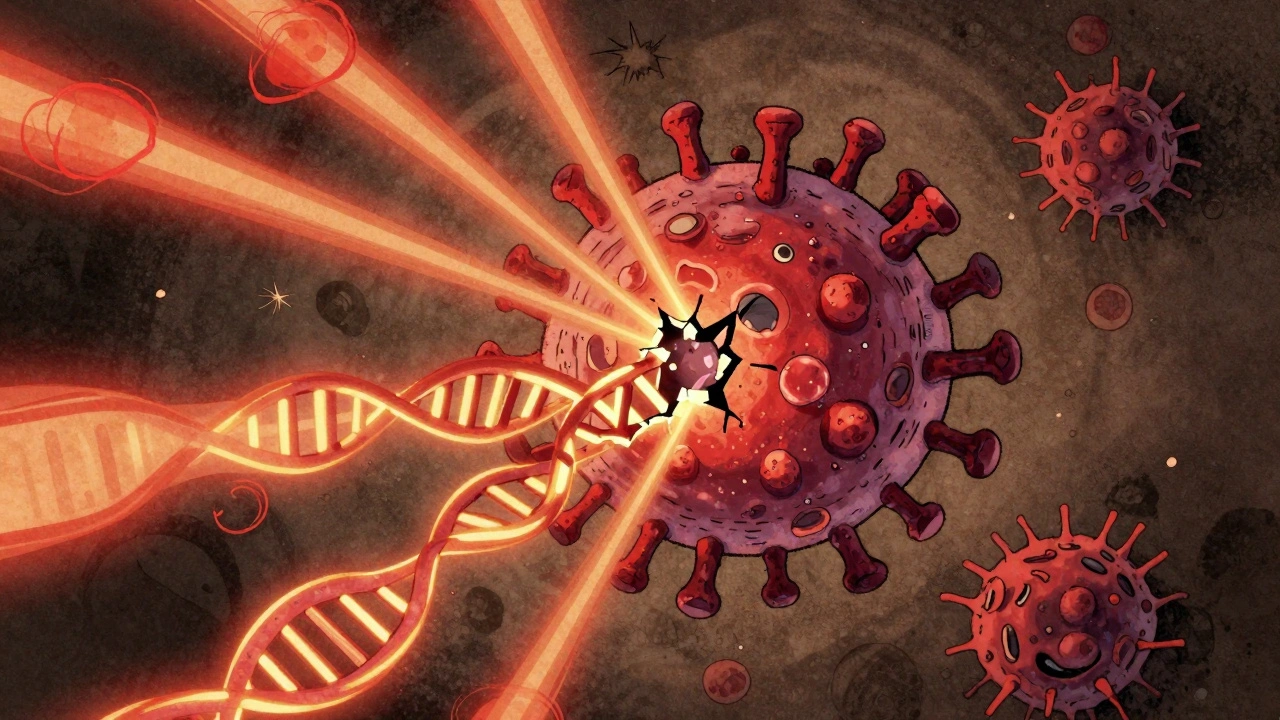
Radiation therapy kills cancer cells by damaging their DNA, especially through double-strand breaks. Modern techniques make it precise, and new research shows it can also activate the immune system to fight cancer long-term.