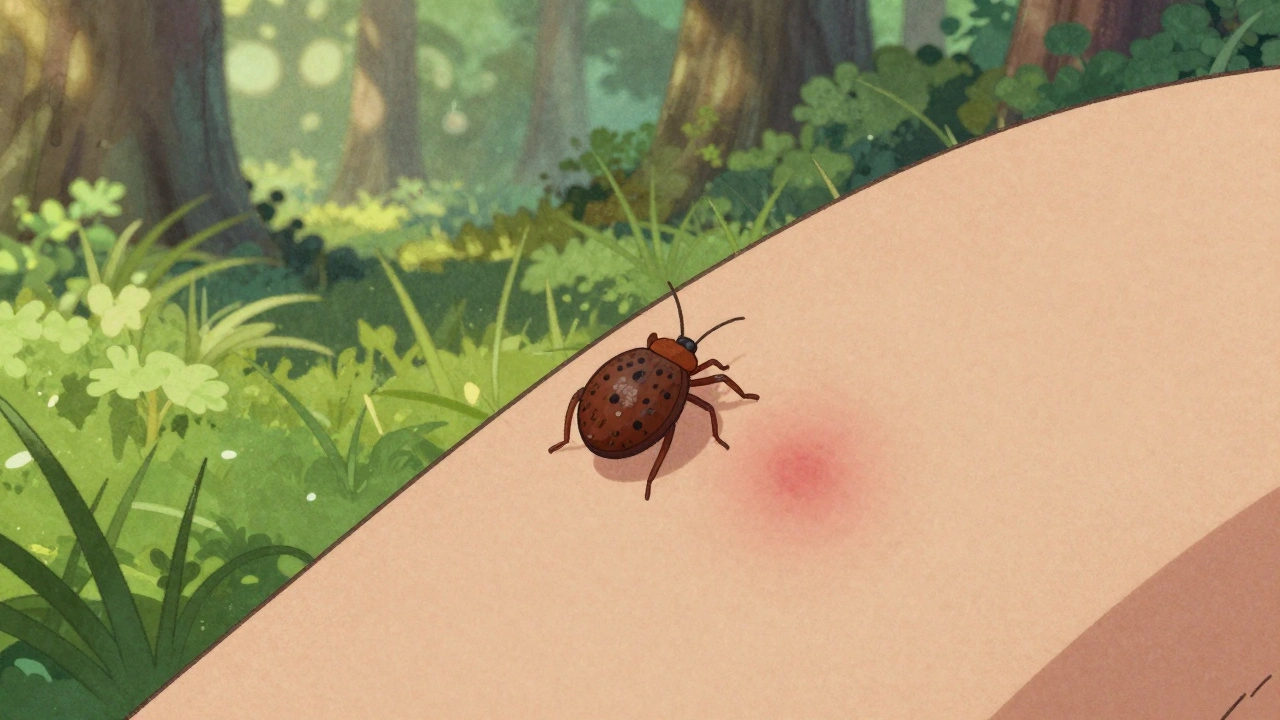
Erythema Migrans: The Telltale Sign of Lyme Disease
When you get bitten by an infected tick, your body might respond with a spreading red rash called erythema migrans, a distinctive circular rash that expands over days and is the most common early sign of Lyme disease. Also known as bull's-eye rash, it’s not just a skin issue—it’s your body’s first alarm that a bacterial infection is spreading. This rash doesn’t always look perfect, but if it’s expanding, round, and redder at the edges, it’s worth paying attention to.
Erythema migrans is caused by Borrelia burgdorferi, a spiral-shaped bacterium transmitted by black-legged ticks, especially in the northeastern and upper midwestern U.S.. Not everyone gets the rash—about 70 to 80% of infected people do—but if you do, it usually shows up 3 to 30 days after the bite. It can appear anywhere: on your leg after hiking, on your back from gardening, even under your hairline. And it often doesn’t itch or hurt, which is why people miss it. But ignoring it can let the infection spread to your joints, heart, or nervous system.
What makes erythema migrans different from other rashes? It grows. Slowly, steadily, over days. It might start as a small red spot, then expand outward, clearing in the center to form that classic bullseye pattern. But not all cases look like that—some are just uniformly red, oval, or even bluish. The key is change: if a red patch keeps getting bigger, treat it as a warning. And if you’ve been in wooded or grassy areas where ticks live, even without remembering a bite, that rash needs a doctor’s look.
Once diagnosed, treatment is straightforward: a short course of antibiotics like doxycycline, amoxicillin, or cefuroxime. The sooner you start, the better. Delayed treatment increases the risk of long-term problems like joint pain, nerve damage, or brain fog. You don’t need a lab test to confirm erythema migrans—if a doctor sees it, they can start treatment right away. Testing is often unreliable early on, so don’t wait for a blood test to act.
What you’ll find in the posts below isn’t a deep dive into microbiology or tick biology. Instead, you’ll get practical, real-world guidance on what to do when you spot this rash, how to avoid confusion with other skin conditions, and what steps to take after treatment. You’ll learn how to spot hidden tick bites, understand why some people still feel sick after antibiotics, and how to protect your kids from Lyme disease without turning your backyard into a fortress. These aren’t theoretical tips—they’re what people actually use when they’re worried, confused, or trying to get help fast.
Lyme disease is the most common tick-borne illness in the U.S., affecting nearly 500,000 people yearly. Early detection and antibiotic treatment can prevent serious complications - but delays lead to long-term health issues. Know the signs, act fast.