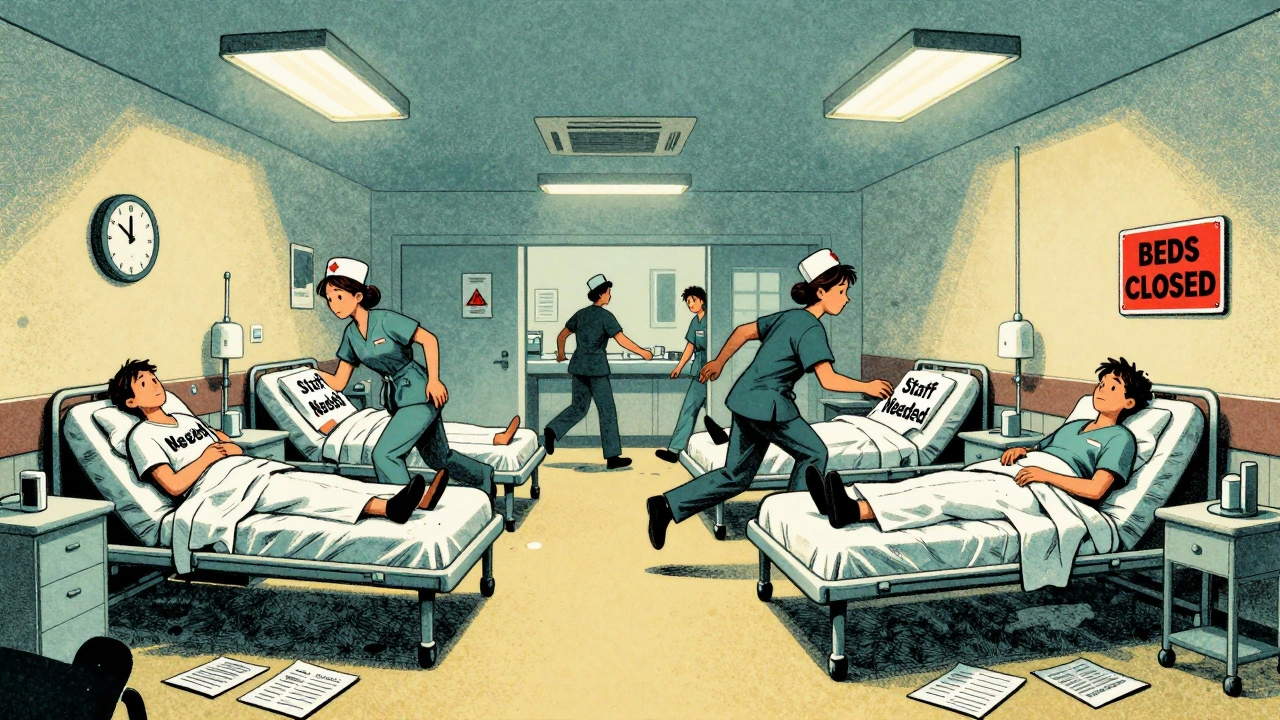
Hospital Staffing: How Teams Keep Care Running Smoothly
When you walk into a hospital, you see doctors, nurses, and techs—but you don’t see the hospital staffing, the organized system of hiring, scheduling, and retaining healthcare workers to ensure safe, continuous care. It’s the invisible engine behind every IV, every test result, every bedside conversation. Without enough people, even the best equipment and drugs won’t help. And right now, nurse staffing, the number of registered nurses available per patient is falling below safe levels in most U.S. hospitals, leading to longer wait times, missed care, and burnout.
medical staff, including physicians, pharmacists, respiratory therapists, and unit clerks all depend on each other. A pharmacist can’t verify a dose if the nurse is covering two units. A doctor can’t follow up on a lab result if the tech is overwhelmed. This isn’t just about numbers—it’s about how roles connect. When one part breaks, the whole system strains. That’s why patient safety, the outcome of well-coordinated staffing and clear protocols drops when staffing gaps grow. Studies show hospitals with lower nurse-to-patient ratios have higher rates of infections, falls, and even deaths.
What you’ll find below isn’t just a list of articles—it’s a look at the real-world consequences of staffing issues. From how school nurses manage kids’ meds during the day, to why medication shortages hit hardest when staff are already stretched thin, to how pharmacies use color-coded labels to prevent errors when everyone’s rushing—these stories are all tied to the same problem: not enough people doing too much. You’ll see how deprescribing helps reduce workload, how medication errors spike during shifts with low coverage, and why even something as simple as tracking expiration dates becomes harder when staff are overwhelmed. This isn’t theory. It’s what happens in hospitals every day. And if you’ve ever waited too long for pain relief, or worried your loved one wasn’t being checked on, you’ve felt the impact.
Hospitals and clinics across the U.S. are struggling to stay open due to severe staffing shortages. Nurses are burned out, patients wait days for care, and rural areas are hit hardest. This isn't a temporary issue-it's a systemic crisis with no easy fix.