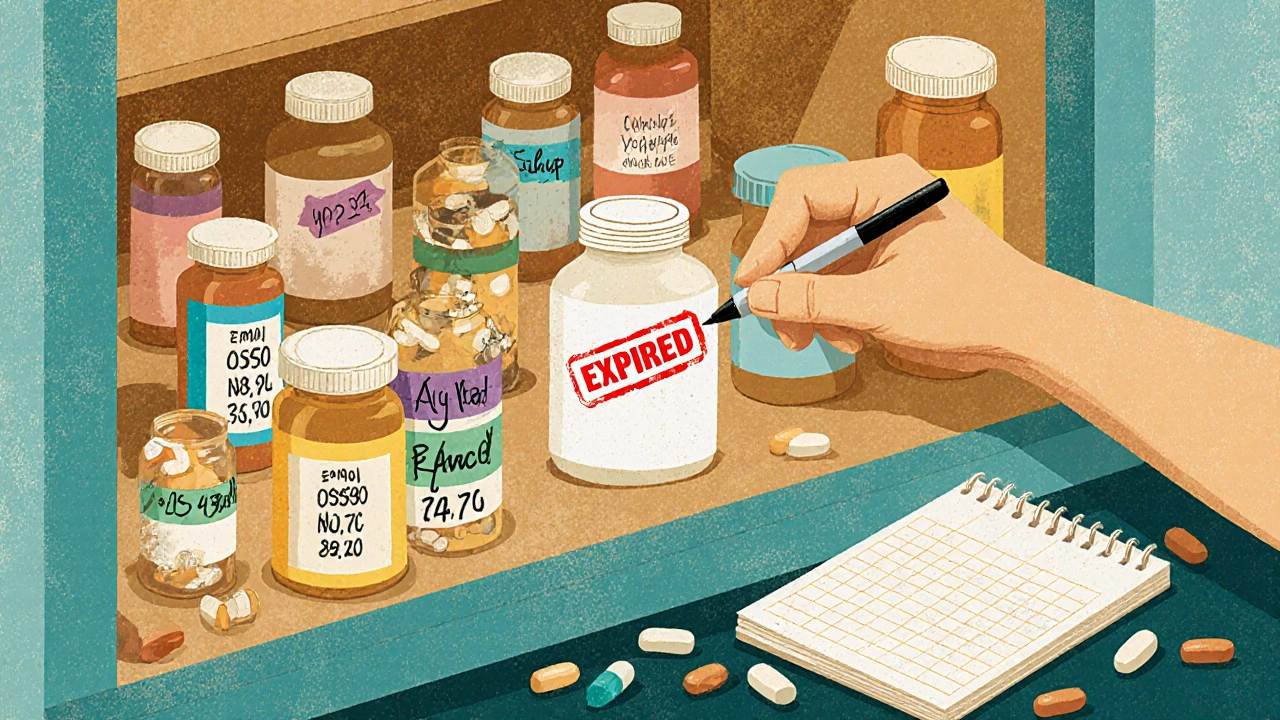
Medicine Cabinet Organization: Keep Your Pills Safe, Sorted, and Easy to Find
When you're juggling multiple prescriptions, over-the-counter meds, and supplements, a cluttered medicine cabinet isn't just annoying—it's dangerous. A well-organized medicine cabinet organization, the systematic arrangement of medications for safety, accessibility, and accuracy. Also known as medication storage, it's not about fancy bins or matching labels—it's about preventing mistakes that can land you in the ER. Think about it: how many times have you grabbed the wrong bottle because everything was piled together? Or opened a pill bottle only to find it expired last year? These aren't rare accidents. They happen every day.
Good medicine cabinet organization, the systematic arrangement of medications for safety, accessibility, and accuracy. Also known as medication storage, it's not about fancy bins or matching labels—it's about preventing mistakes that can land you in the ER. isn't just about tidiness. It directly affects medication safety, the practice of using drugs correctly to avoid harm, overdose, or dangerous interactions. A study from the FDA found that nearly 40% of medication errors in homes happen because of poor storage—like keeping insulin in a hot bathroom or mixing blood pressure pills with vitamins. Your cabinet should be cool, dry, and out of reach of kids and pets. That means no more hiding pills under the sink or leaving them on the counter next to your toothpaste.
Then there's the pill organizer, a device used to sort daily or weekly doses by time of day to improve adherence and reduce confusion. It’s not just for seniors. If you take more than three pills a day, you’re already at risk of mixing up doses. A simple seven-day tray with morning, noon, night, and bedtime slots cuts down errors by over 60%. Pair it with a printed list of what’s in each compartment—include the reason you take it, the dose, and the prescribing doctor. That list is your backup when memory fails.
Don’t forget prescription management, the ongoing process of tracking, refilling, and reviewing medications to ensure they’re still needed and safe. Many people keep old prescriptions for "just in case," but expired or unused drugs are a hazard. Check your cabinet every three months. Toss anything past its expiration date, especially antibiotics and nitroglycerin. If you’re unsure, bring it to your pharmacy—they’ll dispose of it safely. And if you’re taking meds for a chronic condition, like high blood pressure or diabetes, keep a separate log of when you last refilled each one. No more last-minute dashes to the pharmacy because you forgot.
There’s no perfect system—just the one that works for your routine. Maybe you use labeled drawers. Maybe you stick to a single locked box. Maybe you use a digital app to track doses. The goal isn’t perfection. It’s consistency. When your medicine cabinet is organized, you spend less time searching and more time feeling in control. And in the long run, that’s what keeps you healthy.
Below, you’ll find real-world guides on how to read prescription labels, avoid dangerous drug interactions, manage chronic conditions with fewer mistakes, and store meds safely—whether you’re juggling five pills a day or just one. No fluff. Just what actually helps.
Learn how to track medication expiration dates in your cabinet with simple, proven methods. Avoid risks from expired pills and keep your medicines safe and effective.