Pay-for-Delay: How Big Pharma Delays Generic Drugs and What It Costs You
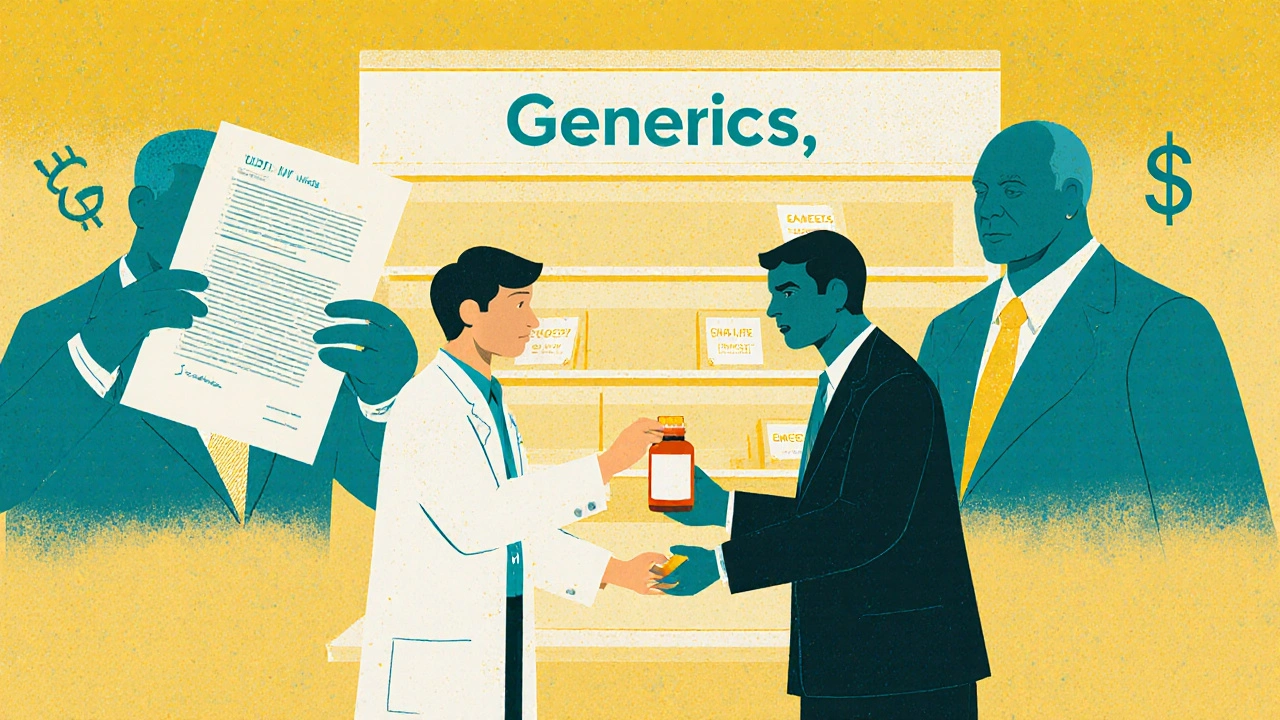
When a pay-for-delay, a practice where brand-name drug companies pay generic manufacturers to delay launching cheaper versions of their drugs. Also known as reverse payment settlements, it’s a legal loophole that keeps medicine prices high while pretending to respect patents. This isn’t just a Wall Street trick—it hits your wallet every time you fill a prescription. Imagine your doctor prescribes a drug that costs $300 a month. There’s a generic version that works just as well and costs $30. But that cheaper version never shows up—not because it’s unsafe, not because it’s unapproved, but because the brand company paid the generic maker millions to stay out of the market. That’s pay-for-delay in action.
These deals usually happen right before a patent expires. The brand company knows its monopoly is ending, so instead of competing on price, it buys silence. The generic company walks away with cash, and you’re left paying more. The Federal Trade Commission has called this anti-competitive behavior, and courts have ruled against it in cases like FTC v. Actavis. But these agreements still happen—often hidden in complex legal language. And while the FTC tries to stop them, hundreds of these deals have been signed since 2002, delaying access to hundreds of generic drugs. Related to this are brand-name pharmaceuticals, medications sold under proprietary names with high profit margins, which rely on patents to maintain pricing power. Without competition, they can keep prices inflated for years—even after the science behind the drug is decades old.
It’s not just about money. It’s about access. People with chronic conditions—like diabetes, high blood pressure, or autoimmune diseases—often need to take these drugs for life. When pay-for-delay blocks generics, they’re forced to choose between their health and their budget. That’s why you’ll see posts here about generic drugs, lower-cost versions of brand medications approved as bioequivalent by the FDA, how to spot them, and how to ask your pharmacist for them. You’ll also find guides on prescription label warnings, medication expiration tracking, and Beers Criteria for older adults—all tied to the same issue: knowing what you’re really paying for, and why.
These aren’t theoretical concerns. They’re daily realities for millions. The next time you see a drug ad that says "no generic available," ask why. Is it really because no one can make it? Or because someone paid to make sure no one could?
Antitrust laws shape the generic drug market by preventing pay-for-delay deals, patent abuse, and other tactics that block competition. These rules save consumers billions and keep medications affordable.