Radiation Oncology: How Targeted Cancer Therapy Works and What to Expect
When you hear radiation oncology, a medical specialty that uses controlled radiation to treat cancer. It's not the scary, broad-spectrum radiation from old movies—it's precise, computer-guided, and often the difference between recovery and recurrence. This field doesn’t just blast tumors. It’s about timing, targeting, and teamwork. Radiation oncology works alongside surgery, chemotherapy, and immunotherapy to give patients the best shot at survival—especially for cancers like thyroid, prostate, and lung.
One of the most common uses is radioactive iodine, a targeted treatment for thyroid cancer that absorbs directly into thyroid tissue. After a thyroidectomy, the surgical removal of the thyroid gland, radioactive iodine cleans up any leftover cancer cells. It’s not chemotherapy. It’s not surgery. It’s a pill you swallow, and it goes exactly where it’s needed. That’s the power of radiation oncology: precision. No random damage. No guesswork. Just science designed to protect your body while killing the disease.
But it’s not just for thyroid cancer. Radiation oncology treats tumors in the brain, spine, breast, and even skin. It can shrink a tumor before surgery, kill remaining cells after, or ease pain when cure isn’t possible. The machines—linear accelerators, proton beams—are smart. They adjust for breathing, track movement, and stop the beam if you shift. You don’t feel anything during treatment. No pain. No burning. Just a machine humming quietly around you.
What you do feel is the side effects—fatigue, skin redness, dry mouth, nausea. But these aren’t random. They’re tied to where the radiation hits. A head and neck treatment might dry your mouth. A pelvic treatment might upset your stomach. Your team plans for this. They map your body in 3D. They protect your salivary glands, your bowels, your lungs. It’s not magic. It’s math. And it’s working.
Many people think radiation is a last resort. It’s not. For some cancers, it’s the first line. For others, it’s the only thing that works. And when combined with drugs like those used in immunosuppressive therapy or targeted antiviral treatments, it becomes even more powerful. The key? Timing. Dose. Location. All decided by a team that watches your progress week after week.
You’ll see this in the posts below: how radioactive iodine clears thyroid cancer after surgery, how patients manage nausea from opioid pain meds during treatment, how pharmacy labels warn about interactions with other drugs, and how medication shortages can delay critical radiation schedules. These aren’t random stories. They’re the real-life threads of radiation oncology—what happens before, during, and after the beam is turned on.
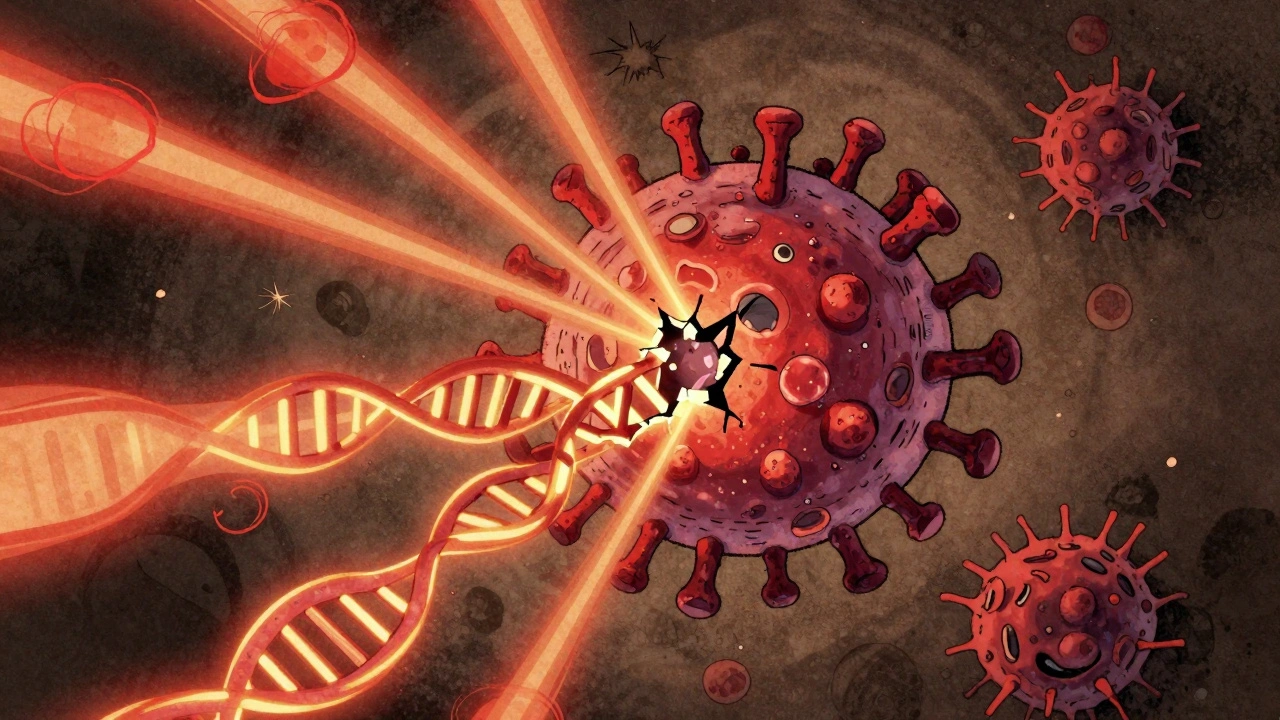
Radiation therapy kills cancer cells by damaging their DNA, especially through double-strand breaks. Modern techniques make it precise, and new research shows it can also activate the immune system to fight cancer long-term.