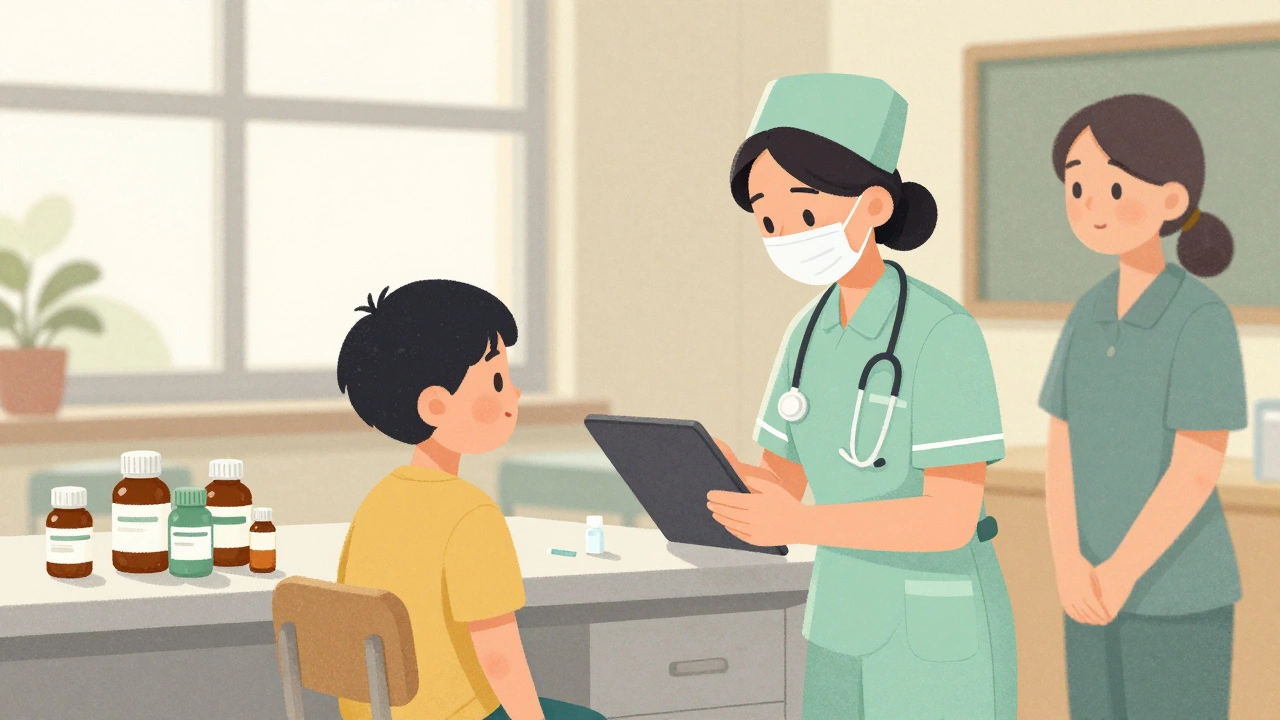
School Nurses: What They Do, Why They Matter, and How They Keep Kids Safe
When you think of a school nurse, a licensed healthcare professional who provides medical care and health education in K-12 schools. Also known as school health nurse, they’re often the only medical professional on-site during the school day. These aren’t just band-aid dispensers—they’re the first responders for asthma attacks, seizures, diabetic emergencies, and allergic reactions. In many districts, a single school nurse might be responsible for 500 or more students across multiple buildings. That’s not just heavy—it’s dangerous.
Behind every child with asthma, diabetes, or epilepsy who stays in class instead of going home is a school nurse, a licensed healthcare professional who provides medical care and health education in K-12 schools. Also known as school health nurse, they’re often the only medical professional on-site during the school day. These aren’t just band-aid dispensers—they’re the first responders for asthma attacks, seizures, diabetic emergencies, and allergic reactions. In many districts, a single school nurse might be responsible for 500 or more students across multiple buildings. That’s not just heavy—it’s dangerous.
They’re also the ones managing pediatric medication safety, the system of protocols, storage, and training to ensure children receive the right drugs at the right doses in school settings. Think about it: a child with epilepsy needs their rescue med on time. A kid with severe allergies needs an EpiPen ready. A student on ADHD meds needs doses timed around lunch and class. One mistake—wrong pill, wrong time, wrong kid—and it can turn deadly. That’s why school health services, the coordinated network of medical, mental, and preventive care delivered within educational institutions. rely on color-coded labels, locked cabinets, and strict checklists. You’ve seen those stickers on medicine bottles? They’re not just for adults. School nurses use the same system to avoid mix-ups between insulin, seizure meds, and allergy pills.
And it’s not just about acute care. chronic disease management in schools, the ongoing, structured support for students with conditions like asthma, diabetes, epilepsy, or severe allergies during school hours. is a full-time job. Nurses track blood sugars, adjust inhaler use, coordinate with parents and doctors, and teach kids how to manage their own conditions as they grow. They’re the ones who notice a child’s weight loss isn’t just "growing pains"—it could be undiagnosed diabetes. They spot the kid who’s always tired—not lazy, but anemic or hypothyroid. They’re the bridge between the classroom and the clinic.
But here’s the problem: there aren’t enough of them. The national average is one nurse for every 750 students. In some states, it’s over 1,000. That’s why nurse staffing shortages, the critical lack of qualified nursing personnel in schools, leading to delayed care, unmanaged conditions, and increased emergency visits. are making headlines. When a nurse is covering three schools, she can’t be everywhere. Kids with chronic pain miss class because no one’s there to help them sit through lunch. A student with a seizure gets sent to the office instead of being monitored properly. And when a child has a reaction to a new medication? There’s no one trained to recognize the warning signs.
What you’ll find below are real stories and practical guides on how school nurses handle the toughest cases—from managing opioid side effects in teens with chronic pain, to preventing accidental poisonings from meds left in backpacks, to working with families who can’t afford prescriptions. These aren’t theoretical discussions. They’re the daily realities of the people keeping your kids alive while they’re in school.
Learn how school nurses safely coordinate daily pediatric medications using the Five Rights, legal protocols, and proven systems to prevent errors and ensure student safety.