
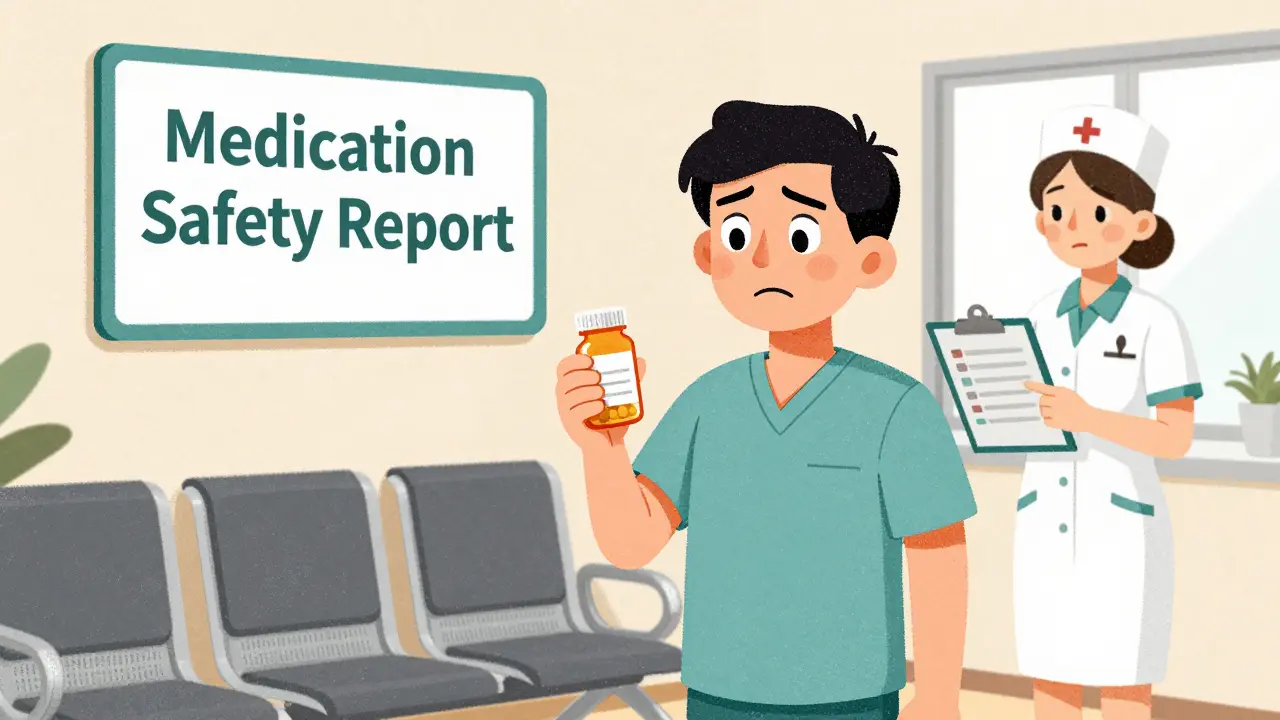
Something doesn’t feel right with your medication. Maybe the pill looks different. Maybe the dose feels off. Or maybe the pharmacist gave you a new label that contradicts what your doctor told you. You’re not imagining it. And you’re not overreacting. Reporting a medication safety concern isn’t just your right-it’s one of the most important things you can do to protect yourself and others.
Most people assume medication errors only happen in hospitals. But the truth is, they’re more common in clinics and doctor’s offices than you think. A 2023 CDC report found that nearly 1 in 5 medication errors in outpatient settings go unreported. That’s because many patients don’t know how-or don’t think it matters. It does. Clinic-level reporting is the first and fastest way to stop a mistake before it hurts someone.
Why Reporting Matters More Than You Think
When you report a medication concern, you’re not just complaining. You’re helping fix a broken process. According to the Institute for Safe Medication Practices, 87% of preventable medication errors are caught through internal clinic reports before they reach patients. That means your call, email, or note could stop a dangerous mix-up before it happens to someone else.
Clincs aren’t just collecting complaints-they’re required by law to investigate them. The Joint Commission, which accredits U.S. healthcare facilities, mandates that every clinic have a system to track, analyze, and act on safety concerns. And under the Patient Safety and Quality Improvement Act of 2005, your report is protected. You won’t be punished. You won’t be ignored. You’ll be heard.
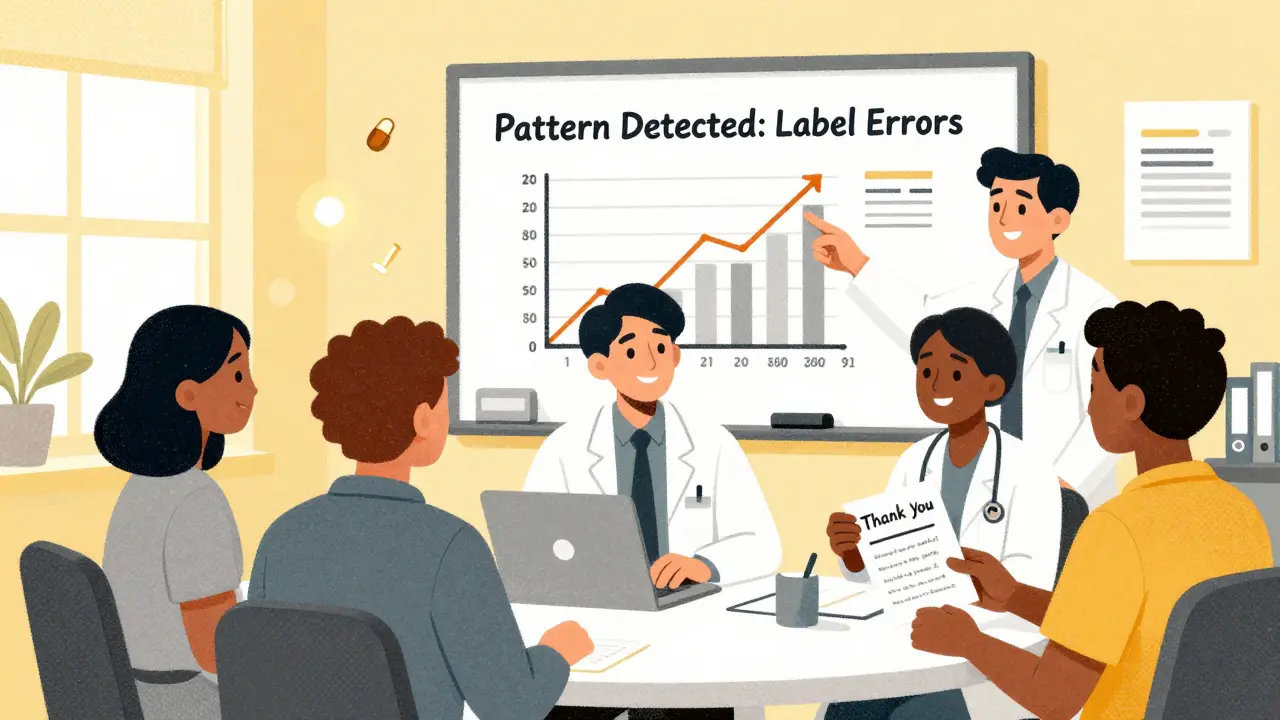
Real change happens when clinics see patterns. One patient reports a confusing label. Another reports the same thing. Suddenly, the clinic notices: all prescriptions for “Metformin 500mg” are being printed with a similar-looking “Metformin 1000mg” label. They fix the printer settings. No one else gets the wrong dose. That’s the power of reporting.
What Counts as a Medication Safety Concern?
You don’t need to be a doctor to know something’s wrong. Here’s what to look for:
- The medication looks, smells, or tastes different from your last refill
- The dosage or instructions on the label don’t match what your doctor told you
- You were given a new medication you didn’t ask for
- A medication you’ve taken for years suddenly stopped working-or made you feel worse
- You received the wrong medication entirely
- You were told to take a drug that interacts with something else you’re on
- The pharmacy or clinic staff seemed unsure or rushed when explaining your meds
Even if you’re not sure it’s serious, report it. The National Coordinating Council for Medication Error Reporting and Prevention (NCC MERP) classifies errors on a 9-point scale-from Category A (a mistake that didn’t reach the patient) to Category I (an error that caused death). Most reports start as Category B or C: near-misses. Those are the ones that matter most.
How to Report: Step by Step
Reporting is simpler than you think. Here’s how to do it right:
- Act fast. The sooner you report, the better. Clinics that respond within 24 hours fix problems 3 times faster. Don’t wait until your next appointment.
- Collect details. Write down: the medication name (brand and generic), dose, how often you’re supposed to take it, when you took it last, and what happened. If you have the pill bottle or label, take a photo.
- Find the right person. Ask for the clinic’s Patient Safety Officer. Every accredited clinic has one. If you don’t know who that is, ask the front desk or your nurse. They’ll point you in the right direction.
- Use the right channel. Most clinics accept reports through:
- Front desk staff (83% of clinics)
- Nursing station (76%)
- Online patient portal (68%)
- Dedicated safety hotline (42%)
Don’t just leave a voicemail. Get it in writing. If you’re using the portal, copy and paste your report into a message. If you speak to someone, ask them to document it in your file.
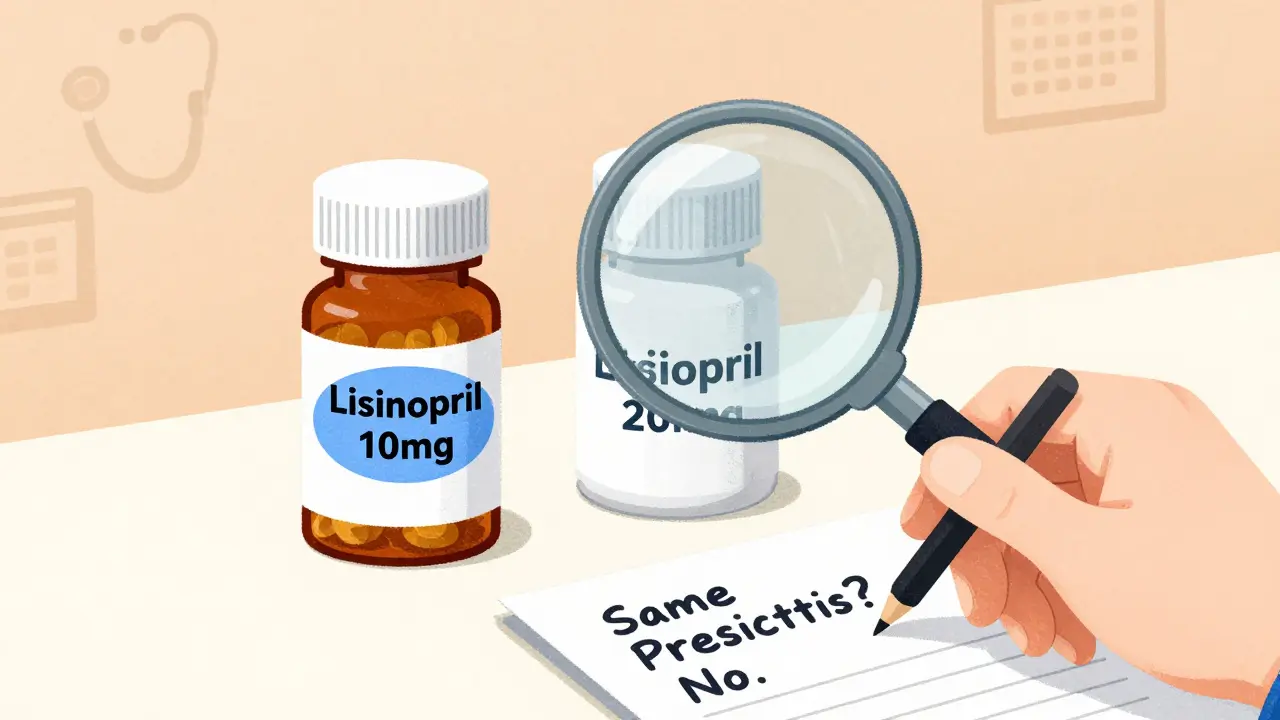
- Be specific. Don’t say, “I think I got the wrong pill.” Say: “I was prescribed Lisinopril 10mg once daily. I received a white, round pill with ‘10’ on one side. My last bottle had a blue, oval pill with ‘L10’. The label says Lisinopril 20mg. I’m concerned this is the wrong dose.”
- Ask for confirmation. After reporting, ask: “Will someone review this? Can I get a follow-up?” Clinics are required to acknowledge your report within 24 hours and give you an update within 72 hours.
What Happens After You Report?
Once your report is filed, here’s what you can expect:
- Immediate review. A safety officer or pharmacist will look at your report within hours. They’ll check your chart, compare it to other similar reports, and see if it’s part of a pattern.
- Root cause analysis. They won’t blame you or the pharmacist. They’ll ask: Why did this happen? Was it a labeling error? A software glitch? A miscommunication between doctor and pharmacy?
- System fix. If it’s a one-off, they’ll correct your record. If it’s part of a trend, they’ll change the process-like updating software alerts, retraining staff, or redesigning labels.
- Follow-up. You should get a call or message within 3 days explaining what they found and what they did. If you don’t, call back. You have a right to know.
Some clinics even send you a short thank-you note. Mayo Clinic’s “Speak Up” program, for example, sends patients a summary of changes made because of their report. That kind of transparency builds trust-and saves lives.
What If They Ignore You?
Most clinics take reports seriously. But not all. If you’re brushed off, told it’s “not a big deal,” or directed to call the FDA instead, here’s what to do:
- Ask to speak with the clinic manager or medical director. Say: “I’ve reported a potential medication error. I’d like to know what steps your clinic takes to ensure patient safety.”
- Document everything: dates, names, what was said. Keep copies of any paperwork or portal messages.
- If you still get no response, file a report with your state’s medical board. In California, you can report to the Board of Pharmacy under Business and Professions Code §4317. In Texas, serious errors must be reported to the Medical Board under Title 22 §193.2.
- As a last resort, file with FDA MedWatch. But remember: that’s for national tracking, not local fixes. Your clinic won’t know you filed it, so they won’t fix their system.
Don’t give up. A 2023 survey of 1,245 patients found that 74% of those who received a follow-up felt their clinic truly cared. Those who didn’t? Only 26% trusted the clinic again.
What Clinics Should Be Doing (And Why They’re Not)
Not every clinic is set up the same. Large hospitals have digital systems that auto-flag errors. But small clinics? Many still use paper forms. A 2023 OIG report found 37% of clinics still rely on paper-based reporting, with delays averaging 14.7 days before analysis.
Why? Budgets. Training. Lack of leadership. But the data is clear: clinics with strong safety cultures see 4.7 times more reports-and 41% fewer serious errors. It’s not about blame. It’s about building systems that catch mistakes before they hurt people.
Patients like you are the most important part of that system. You’re the one holding the pill bottle. You’re the one who notices the difference. You’re the one who speaks up.
What You Can Do Today
You don’t need to wait for the next mistake. Here’s what to do now:
- Find your clinic’s safety reporting contact. Call them. Ask: “Who handles medication safety reports?”
- Save their number in your phone. Add it to your contacts as “Clinic Safety.”
- Take a photo of every new prescription label when you pick it up. Compare it to your last one.
- If you’re unsure about a medication, ask your pharmacist: “Is this the same as what my doctor prescribed?”
- Report even small concerns. Near-misses are the best warning signs.
Medication safety isn’t just about pills and prescriptions. It’s about people speaking up-and being listened to. Your voice matters. Your report matters. And if enough people report, clinics will stop making the same mistakes over and over again.




Samantha Hobbs
I once got a blue pill instead of white for my blood pressure med and just took it because I was tired. Turned out it was double the dose. I almost ended up in the ER. Don't be like me. Report everything. Even if you think it's nothing.