
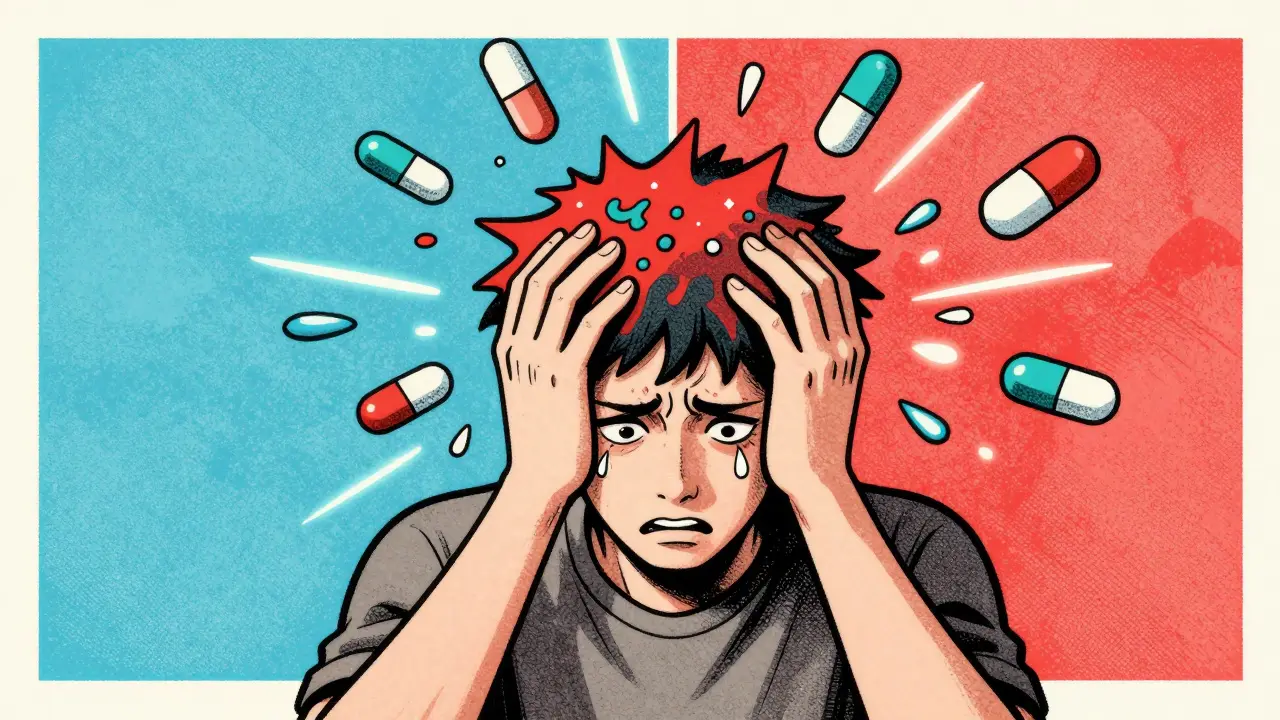
Serotonin Syndrome Symptom Checker
Quick Check Tool
This tool uses the Hunter Serotonin Toxicity Criteria to help you determine if you might be experiencing serotonin syndrome. If you answer yes to certain symptoms, you should seek immediate medical attention.
Mental Changes
Muscle Problems
Autonomic Chaos
Important Information
This tool is for educational purposes only. If you or someone you know is experiencing symptoms of serotonin syndrome, call emergency services immediately. Do not wait for results to take action.
What Exactly Is Serotonin Syndrome?
When you take an SSRI-like sertraline, fluoxetine, or escitalopram-you’re helping your brain regulate mood by increasing serotonin. But sometimes, too much serotonin builds up. That’s when serotonin syndrome kicks in. It’s not an allergy. It’s not anxiety. It’s a dangerous overstimulation of your nervous system caused by too much serotonin activity. And it can turn deadly in hours.
This isn’t rare. With over 30 million people in the U.S. taking SSRIs alone, and many combining them with other medications like tramadol, triptans, or even certain painkillers and supplements, cases are rising. The risk jumps sharply when you add another serotonergic drug. A 2022 study found people on SSRIs plus tramadol had nearly nine times the risk of serotonin syndrome compared to those on SSRIs alone.
The key is knowing the signs before it escalates. Most people don’t realize their shaking, sweating, and racing heart aren’t just "bad anxiety." They’re warning signs.
The Three Signs You Can’t Ignore
Serotonin syndrome doesn’t show up randomly. It follows a pattern. Experts call it the triad: mental changes, muscle problems, and autonomic chaos. You need to see at least two of these to suspect it.
- Mental changes: Agitation, confusion, hallucinations, or feeling like you’re losing touch with reality. In 92% of cases, people report being unusually restless or panicked without reason.
- Muscle problems: Clonus (involuntary muscle spasms), tremors, or rigid muscles. Ocular clonus-where your eyes dart back and forth uncontrollably-is a red flag. So is when your leg jerks on its own when you tap your knee.
- Autonomic chaos: Sweating so hard your clothes soak through, heart rate over 100 bpm, blood pressure spikes or crashes, fever above 38.5°C (101.3°F), and diarrhea. This isn’t a normal fever. It’s your muscles generating heat from constant contractions.
These symptoms don’t appear slowly. They hit fast. In 67% of cases, they start within six hours of a new drug, a dose increase, or mixing medications. That’s why waiting it out is dangerous.
How Doctors Diagnose It
Emergency rooms get this wrong up to 40% of the time. Patients are told they’re having a panic attack, the flu, or a drug reaction. But there’s a tool that cuts through the noise: the Hunter Serotonin Toxicity Criteria.
This isn’t a guess. It’s a validated checklist. If you have one of these, you have serotonin syndrome:
- Spontaneous clonus
- Inducible clonus + agitation or diaphoresis
- Ocular clonus + agitation or diaphoresis
- Tremor + hyperreflexia
- Hyperreflexia + clonus
That’s it. No blood tests. No scans. Just observation. And it’s 84% sensitive and 97% specific. If you meet one of these, you’re in serotonin syndrome until proven otherwise.
Doctors used to rely on older, vague criteria. Now, hospitals in the U.S. and U.K. are training staff to use Hunter Criteria as standard. If your ER doesn’t ask about clonus or muscle rigidity, push for it.
What Happens If You Wait Too Long
Time is the biggest factor in survival. Mild cases-fever under 38.5°C, mild agitation, some tremors-usually resolve in 24 to 72 hours if you stop the offending drug.
But moderate cases-fever between 38.5°C and 41.1°C, severe muscle rigidity, confusion-can crash fast. And severe cases? That’s when your temperature hits 41.1°C or higher, your muscles lock up like a statue, and your organs start to fail.
A 2021 study in Critical Care Medicine showed this: if you get treated within two hours, your chance of dying is 2.1%. If you wait six hours or more, it jumps to 11.3%. That’s more than five times higher.
And here’s what makes it worse: people try to cool themselves with ibuprofen or acetaminophen. That doesn’t work. The fever isn’t from an infection. It’s from your muscles firing nonstop. Only physical cooling-ice packs on your neck, armpits, groin-and stopping the muscle spasms helps.
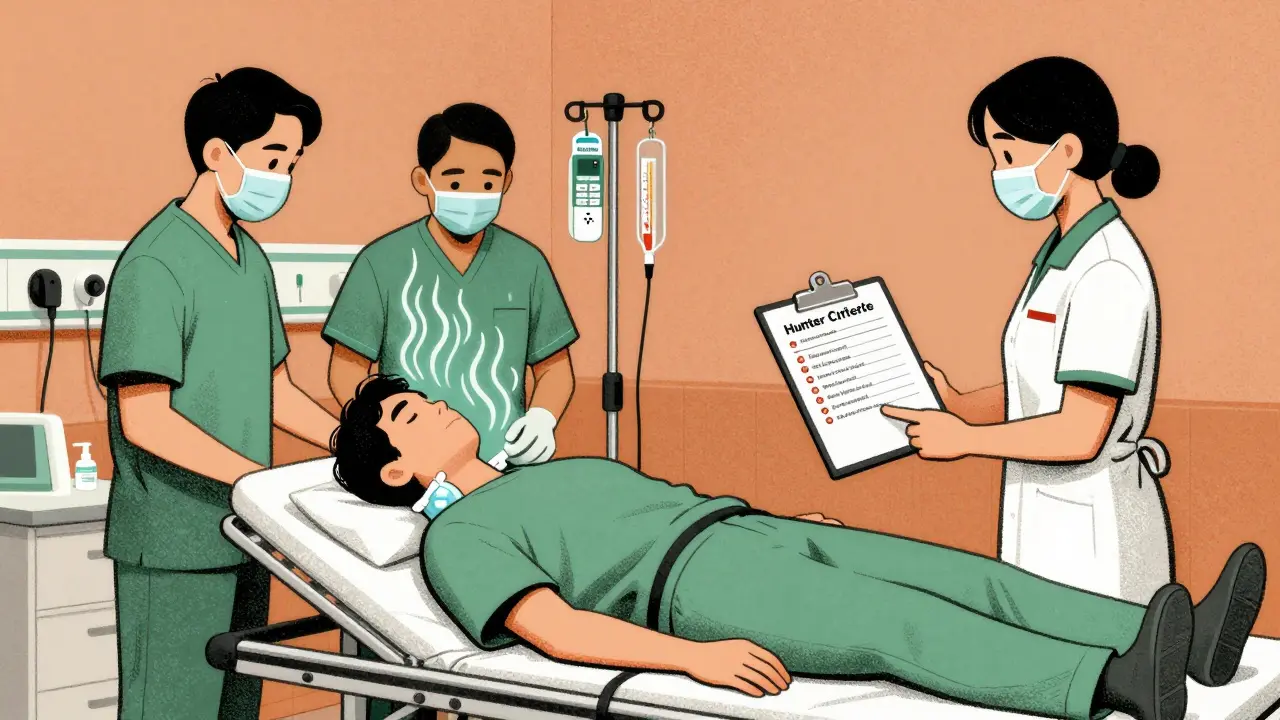
Emergency Response: What Actually Works
If you suspect serotonin syndrome, here’s what needs to happen:
- Stop all serotonergic drugs immediately. That includes SSRIs, SNRIs, tramadol, dextromethorphan, St. John’s wort, MDMA, even certain migraine meds like triptans.
- Call emergency services. Don’t drive yourself. Don’t wait for a doctor’s appointment. This is an emergency.
- Get benzodiazepines. Diazepam or lorazepam IV is the first-line treatment. It calms your nervous system, stops seizures, and reduces muscle rigidity. It’s not sedation-it’s lifesaving.
- Start cooling. Remove clothing. Use fans, ice packs on major arteries, cool IV fluids. No fever reducers.
- Don’t use restraints. This is critical. Physical restraints make muscle spasms worse, raise body temperature, and can turn a moderate case into a fatal one.
In severe cases, doctors may need to intubate you to protect your airway and give paralytic drugs like rocuronium to stop muscle contractions. It sounds scary, but it’s often the only way to prevent brain damage from overheating.
Cyproheptadine, an antihistamine that blocks serotonin receptors, is sometimes used. But there’s no strong proof it saves lives-it’s more of a backup. The real hero is benzodiazepines and cooling.
What to Avoid at All Costs
Many well-meaning actions make serotonin syndrome worse.
- Don’t give acetaminophen or ibuprofen. They don’t lower core temperature from muscle activity. They’re useless here.
- Don’t use antipsychotics. Drugs like haloperidol can worsen rigidity and trigger other dangerous reactions.
- Don’t assume it’s "just anxiety." If you’re on an SSRI and suddenly feel like you’re going to shake apart, it’s not in your head.
- Don’t wait to see if it gets better. It won’t. It gets worse.
One patient on Reddit described adding tramadol to her sertraline and being hospitalized four hours later with a temperature of 40.1°C and full-body spasms. She was initially told she was having a panic attack. By the time she got the right care, she’d nearly lost her kidneys to rhabdomyolysis.
Who’s at Highest Risk?
Not everyone on SSRIs gets serotonin syndrome. But certain combinations are deadly:
- SSRI + MAOI (like phenelzine or selegiline) - 12 times higher risk
- SSRI + tramadol - nearly 9 times higher risk
- SSRI + triptans (like sumatriptan) - 3 times higher risk
- SSRI + dextromethorphan (in cough syrups)
- SSRI + St. John’s wort or tryptophan supplements
Fluoxetine (Prozac) is especially tricky. It sticks around in your body for weeks. Even after you stop it, its metabolite norfluoxetine can still cause problems for up to four weeks. So if you switch medications, wait at least five weeks before starting another serotonergic drug.
Older adults, people with kidney or liver issues, and those on multiple psychiatric meds are at higher risk. But it can happen to anyone-even if they’ve been on SSRIs for years.
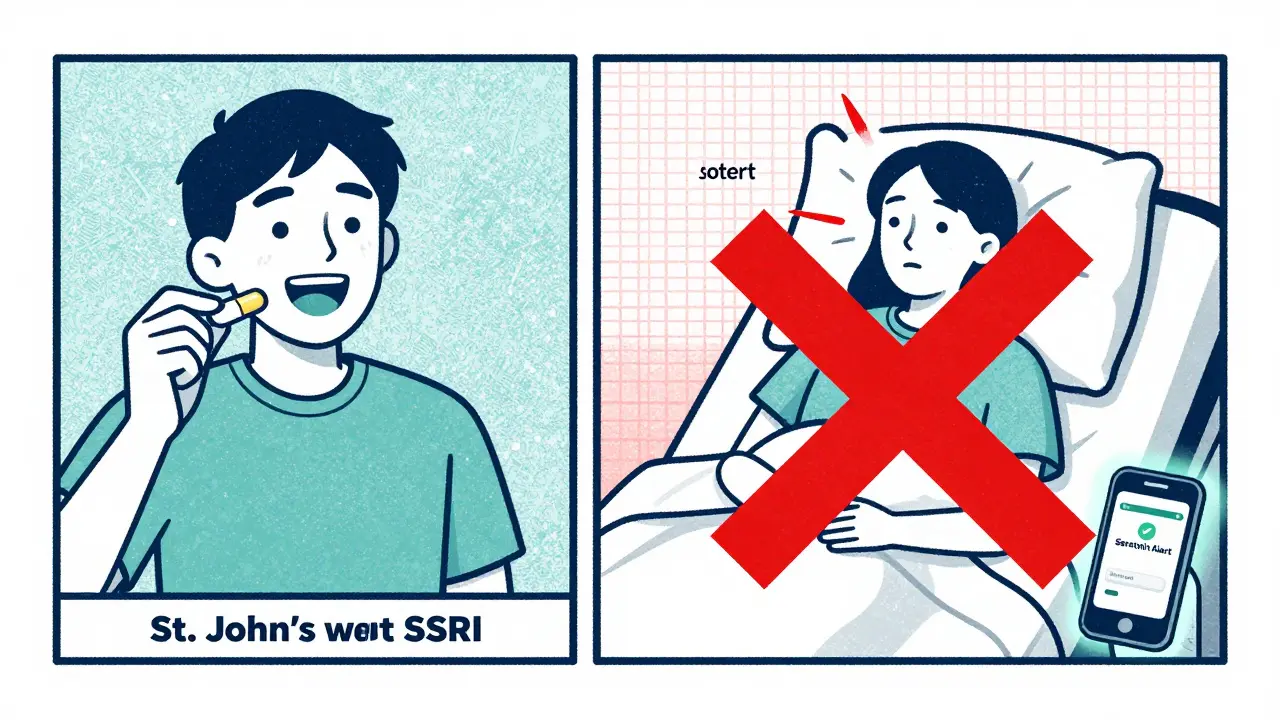
How to Prevent It
Prevention is simple: know your meds.
- Always tell your doctor and pharmacist every medication you take-including over-the-counter drugs, supplements, and herbal remedies.
- Use apps like "Serotonin Alert" (validated in 2023 studies) to check for dangerous interactions before taking anything new.
- If you’re switching antidepressants, follow the washout period exactly. Don’t rush it.
- Ask your prescriber: "Could this interact with my current SSRI?" If they hesitate, get a second opinion.
Also, read your medication guide. The FDA requires black box warnings about serotonin syndrome on all SSRIs. But a 2023 review found only 43% of patient leaflets actually include them. Don’t assume you’ve been warned.
Recovery and Long-Term Outlook
If caught early, most people recover fully. Mild cases often resolve in a day. Moderate cases take 2-3 days. Severe cases may require ICU care for days or weeks.
After recovery, you’ll need to avoid the drugs that caused it. Most doctors won’t prescribe SSRIs again if you’ve had serotonin syndrome. But if you still need treatment for depression, alternatives like bupropion (Wellbutrin) or mirtazapine (Remeron) are non-serotonergic options.
And if you’ve had it once, you’re at higher risk again. So keep a list of all medications you’ve reacted to. Show it to every new doctor. Write it on your phone. Put it in your wallet. This isn’t just medical history-it’s a survival plan.
Final Thought: Don’t Be the One Who Waited
Serotonin syndrome doesn’t care how long you’ve been on your SSRI. It doesn’t care if you’ve "always been fine." One wrong combination, one extra pill, one missed warning-and it can happen.
That’s why knowing the signs isn’t just helpful. It’s essential. If you feel your body shaking uncontrollably, your heart racing without cause, and your mind going fuzzy-don’t wait. Don’t call your GP tomorrow. Call 999 now.
Early action saves lives. Delay kills.
Can serotonin syndrome happen from one SSRI alone?
Yes, but it’s rare. Most cases occur when SSRIs are combined with other serotonergic drugs like tramadol, triptans, or MAOIs. However, overdose of an SSRI-accidental or intentional-can trigger serotonin syndrome on its own. Even therapeutic doses can cause it in sensitive individuals, especially older adults or those with liver problems.
How long does serotonin syndrome last?
Mild cases usually resolve within 24 hours after stopping the drug. Moderate cases take 1-3 days. Severe cases can last up to a week or longer, especially if complications like organ damage occur. Fluoxetine (Prozac) is an exception-its long-acting metabolite can cause symptoms for up to 3-4 weeks after stopping.
Is serotonin syndrome the same as neuroleptic malignant syndrome?
No. They look similar but are completely different. Serotonin syndrome happens fast-within hours-and features clonus, hyperreflexia, and high body temperature from muscle activity. Neuroleptic malignant syndrome develops over days, causes "lead-pipe" rigidity (constant stiffness), and is caused by antipsychotics. Temperature in NMS is often lower, and it doesn’t involve clonus.
Can I take SSRIs again after having serotonin syndrome?
Most doctors advise against reusing the same SSRI or any other serotonergic drug. The risk of recurrence is high, and the second episode can be more severe. If you still need treatment for depression, non-serotonergic options like bupropion or mirtazapine are safer alternatives. Always discuss this with a psychiatrist familiar with your history.
What should I do if I think someone else has serotonin syndrome?
Call emergency services immediately. Don’t wait. While waiting, remove excess clothing, apply cool compresses to the neck, armpits, and groin, and keep the person calm. Do not give them any medication unless instructed by emergency responders. Do not try to restrain them-this can make things worse.


owori patrick
This is seriously important info. I work in primary care in Lagos and we see so many people mixing SSRIs with traditional meds or painkillers without knowing the risks. One guy came in shaking like he had a seizure-thought it was epilepsy until we asked about his tramadol. Got him to the ER fast. Lives matter.