Blood Thinners: What They Are, How They Work, and What You Need to Know
When doctors talk about blood thinners, medications that reduce the risk of dangerous blood clots by interfering with clotting processes. Also known as anticoagulants or antiplatelets, they don’t actually make your blood thinner—they stop it from clotting too easily. This matters because clots can cause strokes, heart attacks, or pulmonary embolisms. Millions take them every year after surgery, for atrial fibrillation, or after a clot has already formed.
There are two main kinds: anticoagulants, drugs like warfarin and rivaroxaban that slow down the body’s clotting cascade, and antiplatelets, like aspirin and clopidogrel that stop platelets from sticking together. Warfarin has been around for decades and needs regular blood tests to check your INR level. Newer ones like apixaban don’t need that—but they’re pricier. Aspirin is the most common antiplatelet, often used for long-term heart protection, even at low doses.
These drugs save lives, but they’re not risk-free. Bleeding is the biggest concern—you might bruise more easily, nosebleeds might last longer, or a cut might take longer to stop bleeding. That’s why you can’t just stop them cold turkey. If you’re having surgery, dental work, or even a minor procedure, your doctor needs to know you’re on one. And mixing them with NSAIDs like ibuprofen or herbal supplements like fish oil or garlic can increase bleeding risk. It’s not just about the pill—it’s about your whole routine.
What you’ll find in this collection isn’t just a list of drug names. It’s real-world guidance on how blood thinners interact with other medications, how to handle shortages, how to read your prescription labels correctly, and how to talk to your doctor about reducing or switching meds safely. You’ll see how people manage these drugs alongside chronic conditions, how pharmacy warning stickers help avoid mistakes, and why some patients end up on multiple blood thinners at once. These aren’t theoretical discussions—they’re the questions people actually ask when they’re trying to stay safe and stay alive.
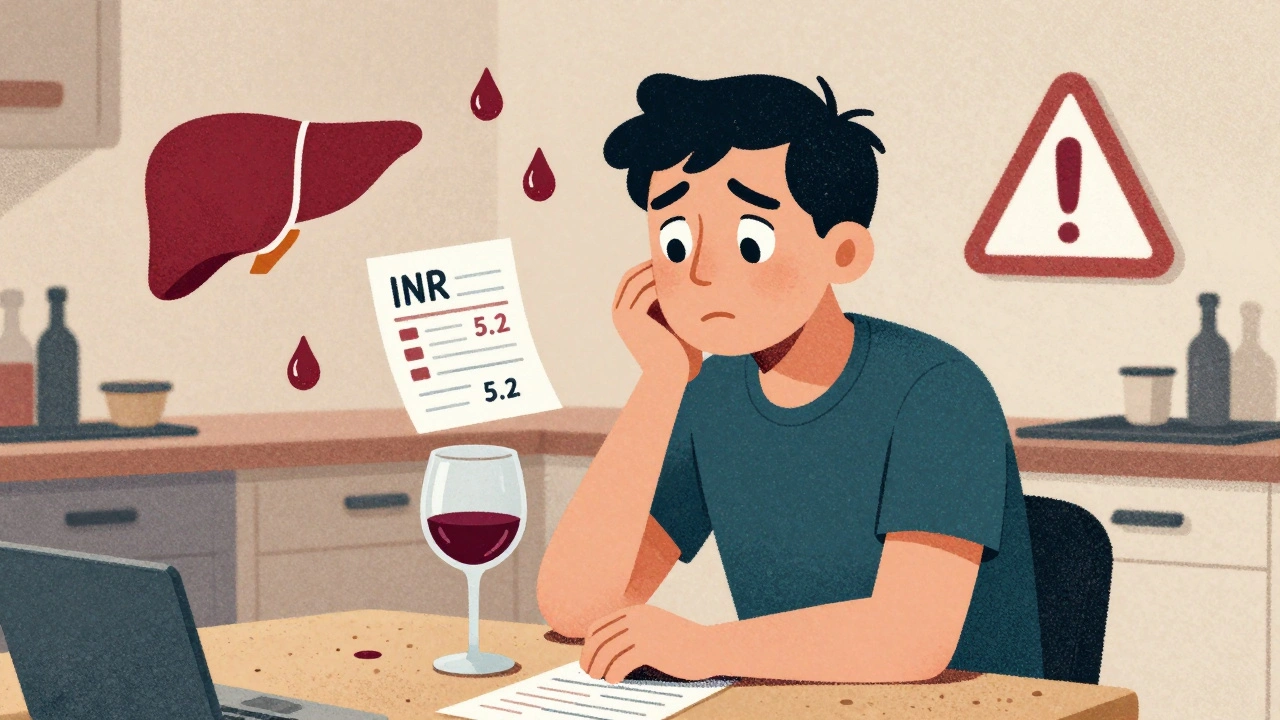
Alcohol can dangerously raise your INR levels when you're on warfarin, increasing bleeding risk. Learn how drinking affects your blood thinner, what safe limits are, and what to do if your INR spikes.